Too many recreational hunters are frequenting the forests of Aargau
The unchecked, round-the-clock occupation of wildlife habitats by recreational hunters represents a serious burden. The public and politicians are insufficiently aware of this.

Why are more and more recreational hunters pushing into the forest?
Too many perpetrators of violence believe they can do as they please in the forest — as if it were a lawless space.
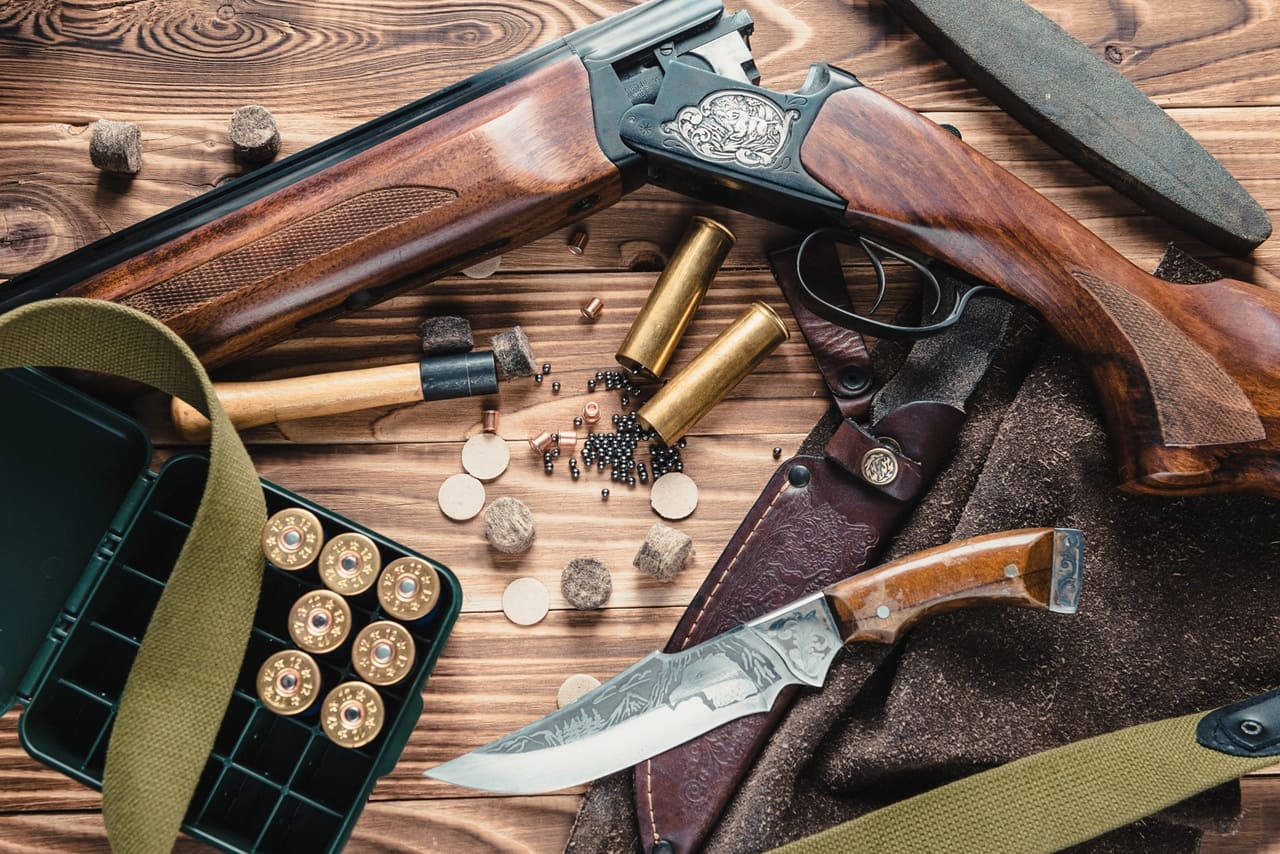
Modern recreational hunters use highly sophisticated equipment such as sound amplification devices, night-vision goggles, drones, binoculars, thermal imaging cameras, scent eliminators, GPS trackers, and more, in order to compensate for their inadequacies. These technologies enable recreational hunters to observe wildlife more effectively and hunt more efficiently, since hardly any recreational hunter would be capable of making a kill the way a true hunter from an indigenous people would. Recreational hunting in the 21st century has become increasingly unfair, with wildlife bearing the consequences.
A ban on night hunting applies in the forest with respect to wild boar — but not to foxes, badgers, or martens. Recreational hunters feel no sense of wrongdoing when they use state-of-the-art technology or drive their SUVs through the forest, discard rubbish, or make noise with their hunting dogs.
It is remarkable, for instance, to observe through a night-vision device how a sow scans her surroundings, adjusts her tactics, secures paths, and takes precautions to ensure her young do not fall into a trap. Shooting such an animal becomes an emotional matter. But of course we do it anyway — so said the outgoing president of Jagd Aargau, Rainer Klöti, in the Aargauer Zeitung in May 2025.
A wildlife warden in Geneva would not have shot the lead sow in that situation, simply because he is better trained than Rainer Klöti. This is also one of the reasons why there is a wild boar overpopulation problem in the canton of Aargau.
In the state of disarray in which nature finds itself after decades of so-called stewardship by such recreational hunters, the share of threatened species, according to the UN, is nowhere in the world as great as in Switzerland. Recreational hunters have been creating an ecological imbalance in the cultivated landscape for decades, with sometimes dramatic consequences (protective forests, diseases, agricultural damage, and much more).
Recreational hunting alone sustainably produces extremely fearful wild animals. Wild animals were made shy in the first place by hunting and not by leisure activists. Wild animals do not like recreational hunters. Wild animals, too, can distinguish between good and bad people. The recreational hunter is the enemy image from which wild animals flee in order to survive. Not infrequently, this flight ends in a collision with a car, leads to unnatural concentrations of animals in forests or in cities. Wild animals are constantly on the run, because hunting of one species or another is ongoing with virtually no interruption.
Many people have the impression that foxes, roe deer, red deer, hares and so on no longer exist in the wild at all. How are today’s children supposed to genuinely engage with nature in the future, if they can no longer experience it — given the unnaturalness created by hunters’ hands? Nature is degraded by recreational hunters into a staged spectacle, which represents an enormous reduction in quality of life for ordinary people and animals alike. Recreational hunters and their shooting activities create a climate and energy field of discomfort for both humans and animals in natural recreation areas.
Today’s recreational hunting destroys the normal social coexistence of wild animals, the ecological balance, natural behaviours, family structures and social bonds, the use of dens and hiding places, the shift from daytime to nocturnal activity, increased reproduction of certain animal species, intensified migration into unhunted residential areas, unnatural concentrations of animals in hotspots, lifelong health-damaging psychological and physical stress on wild animals, unhealthy game meat, and much more that is harmful.
Recreational hunters spread unspeakable suffering, terror and misery among both humans and wild animals. Virtually everything that is cruel, unnecessary and heartless is promoted by hunting associations — as a court in Bellinzona recently confirmed. Wild animals suffer because of recreational hunters. Wild animals. There is no hunting law that obliges recreational hunters to engage in small game hunting or to shoot birds such as jays. There is no culling plan for foxes, badgers and the like. These are fairy tales that hunting association presidents and recreational hunters like to tell. The many encounters with the approximately 2’100 recreational hunters active in the canton of Aargau place an enormous burden on wildlife and the population in the forests. There is no hunting law for this — it is pure political failure.
In Switzerland, every year there are more human injuries and fatalities caused by the risk group of recreational hunters than by Islamic terrorists, cults, the mafia, wolves and biker gangs combined.
More and more people feel harassed or threatened by recreational hunting in the 21st century. Recreational hunters are often trigger-happy or dim-witted alcoholics of retirement age, thrill killers who slaughter animals purely for pleasure and even pay for the privilege. Newly added to this group is Generation Z, seeking offline experiences with violence. Gen Z are digital natives who have been familiar with the internet, gaming consoles and social networks from an early age. Now they want to combine virtual experiences with offline ones. If young people today were genuinely interested in nature, biodiversity or healthy meat, any hunting club would be the least suitable place imaginable.
Anyone who obtains a hunting licence always receives two things: a licence to kill and a licence to become intellectually stunted. Many recreational hunters are weapons enthusiasts and active in shooting clubs. Recreational hunters commit a strikingly high number of violent offences, with only the tip of the iceberg appearing in the media. A look at hunting statistics, however, reveals the full extent of the culture of violence in this militant milieu.
Nature lovers actively create positive experiences in nature without executing wildlife in order to feel good about themselves. There are countless commendable people who also use, nurture and care for nature — performing sustainable, selfless work with the fire brigade, civil protection, animal welfare, Bergwaldprojekt, building dry-stone walls, maintaining biotopes, completing land service programmes, roe deer fawn rescue, wildlife stations, and so on. None of them would ever think of demanding a violent sacrifice in the form of a living creature for this purpose, as recreational hunters do.
Wildlife lives in constant fear because of recreational hunters. Particularly when they are actually being hunted, they produce enormous amounts of toxic hormones, adrenaline, etc., which combine in the meat with the other toxins and waste products already present. Meat hygiene among recreational hunters does not meet normal standards. The game often lies around for hours without refrigeration — proper handling in accordance with the usual legal regulations is not evident.
What do the authorities say about game meat? Processed game meat is carcinogenic, like cigarettes, asbestos or arsenic, states in particular the WHO.
Game shot by recreational hunters is fundamentally carrion and therefore not actually permissible for sale or consumption by ordinary people. In Canada, the sale of game meat shot by recreational hunters is generally prohibited in supermarkets or restaurants.
The Canton of Geneva as a model
For genuine wildlife stewardship, a handful of game wardens is sufficient, as the example of Geneva or entire countries with a hunting ban demonstrate. Wildlife would no longer be fairground targets for people with low ethical standards and psychological issues.
Before the hunting ban in 1974 in the Canton of Geneva, around 420 recreational hunting licences per year were sold and 7 Garde-Faune were active.
What hundreds of recreational hunters used to do pointlessly in the Canton of Geneva is today handled more exemplarily by a good dozen game wardens who share 3 full-time positions among themselves, alongside many other duties. From the Canton of Geneva it is also known that not only the supervision, monitoring, etc. of recreational hunters represented an enormous financial burden. Today the game wardens cost taxpayers the equivalent of a cup of coffee per year in salary costs, and the added value in biodiversity for the population is gigantic.
There are years in which, in the Canton of Geneva for example, not a single red deer, roe deer, red fox, badger, marten, brown hare, or jay is shot, according to the federal hunting statistics. This is because there are no hunting seasons for recreational hunters, as there are in other cantons. Wildlife in the Canton of Geneva enjoys a year-round closed season first and foremost. Many wild animals are visible and experienceable for the population, which is scientifically proven and valuable for the health of both animals and humans.
Sanitary and therapeutic culls carried out by wildlife wardens in Geneva are not the same as decimating hunting based on hunters' jargon or a misguided understanding of nature. According to biologists, recreational hunting does not necessarily mean fewer wild animals, but rather more births. Upon close analysis, recreational hunters do not perform a "corvée" for the public, and certainly not for wildlife. Recreational hunters would not perform any "corvée" if they were not permitted to kill.
Under federal law, no canton in Switzerland is required to provide for recreational hunting. It is the right of the cantons to decide whether recreational hunting is permitted or not. If a canton decides against recreational hunting — even only partially — it is free to do so under the Federal Constitution. The canton of Geneva made this exemplary choice long ago. Many cantons already locally prohibit recreational hunting through game sanctuaries, wildlife refuges, etc.
Added value:
- Game meat: Natural, healthy — or dangerous?
- Game meat from recreational hunters? — Carrion on the plate!
- According to studies, there are health risks associated with the consumption of game meat
- Nutrition: The civilised palate
- Game meat from hunters is carrion
- Game meat cannot be organic
- Meat from wild animals is not organic game
- Dementia: How harmful is venison?
- Venison makes you ill
- Lead residues in game meat products
- Game meat: Risks, lead and hunting myths
- Warning: Caution regarding game meat from recreational hunters
- Hunters also lie when selling meat
More on the subject of recreational hunting: In the dossier The Role and Criticism of Recreational Hunters we shed light on the training, power and self-image of recreational hunters. What the research says about this is shown by Hunting fact-checked: the state of research.
The position of IG Wild beim Wild: IG Wild beim Wild rejects recreational hunting. Our model is the canton of Geneva, which has managed without recreational hunting since 1974: without hunting seasons, without hunting dogs, without driven hunts, without high seats, without the animal cruelty and crime that go hand in hand with hunting season elsewhere. What has worked there for over fifty years disproves every position paper by JagdSchweiz. An association that bases its policy on claims it refutes in its own documents is not a professional organisation, but a factory for misinformation.