Shark Attacks: The Truth Behind the Fear
Films like “Jaws” shape the image of the shark as a bloodthirsty monster. Scientists in Florida are fighting back against the animals’ bad reputation with facts.

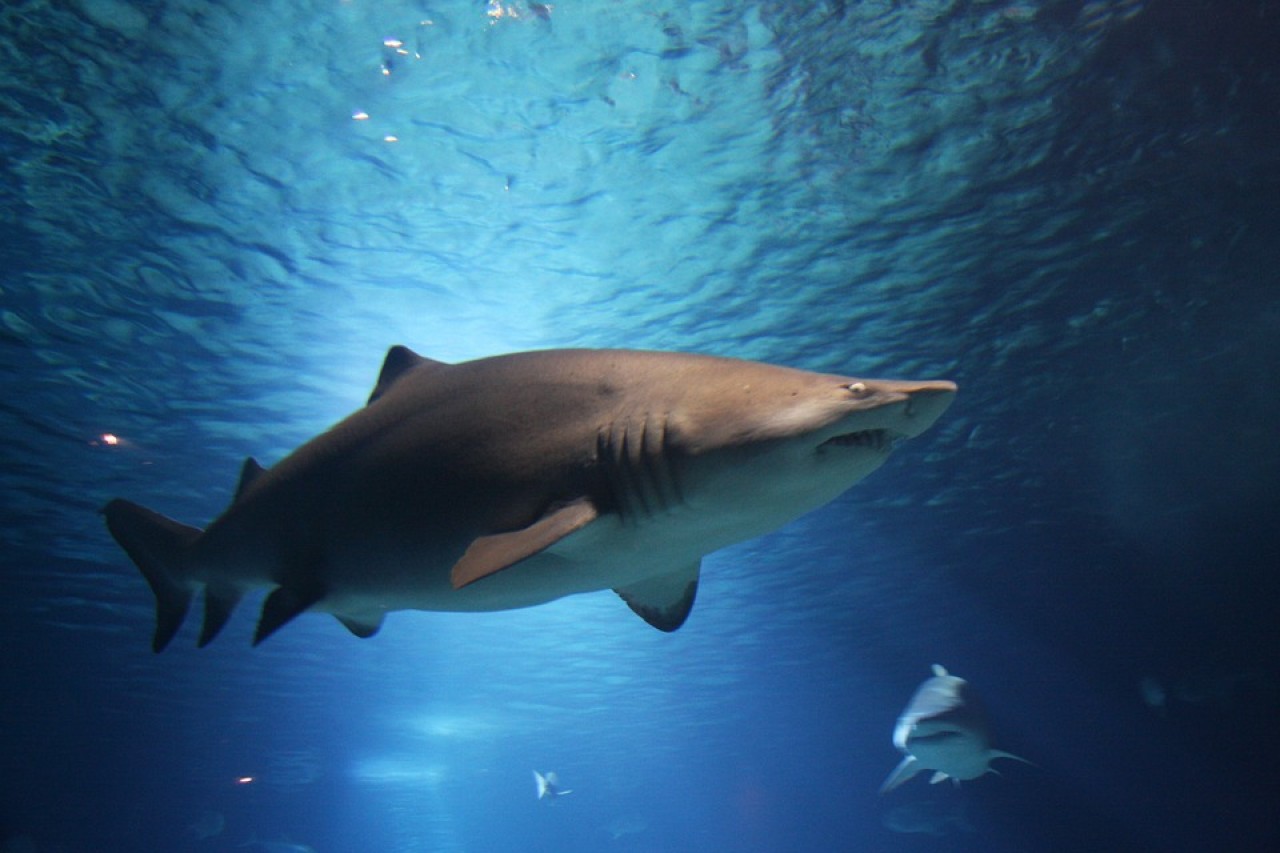
While the first sun-seekers are already lying on the beaches in particularly warm regions, headlines brand Florida as the world’s shark attack hotspot.
Scientists are now attempting to fight back against the scaremongering.
According to experts, a quarter of all shark attacks recorded last year did indeed occur in the US state — yet the risk of being bitten by a shark is extremely low even in Florida, the researchers argue.
Shark attacks extremely rare
The University of Florida’s statistics counted 69 unprovoked shark attacks worldwide in 2023, 16 of them off the coast of the US state. Given that official statistics recorded 135 million beachgoers on Florida’s shores last year, this number is nonetheless comparatively small.
Despite the statistically low risk of being bitten by a shark, fear of the predatory fish with their sharp teeth runs deep. Films like “Jaws” and the US documentary series “Shark Week”, which has been running for decades, continue to fuel it.
Attacks on humans merely “mistakes”
“When sharks are hunting fish in the water, humans occasionally get in their way, and the sharks make a mistake,” says Gavin Naylor, shark expert at the University of Florida and one of the authors of the annual shark report.
If sharks truly wanted to attack humans, it would be child’s play for them, Naylor explains: “Humans are essentially something like sausages drifting in the water.” Yet rather than attacking, sharks fundamentally keep out of humans’ way.
The shallow subtropical waters off Florida’s beaches are rich in nutrients and therefore also in prey fish, which is why they attract many sharks. Off the coast of New Smyrna Beach in Volusia County, eight people were attacked by sharks last year.
This earned the place the inglorious nickname «Shark Bite Capital of the World.» The sea there is popular with surfers, but the murky water limits the predators' visibility, which increases the likelihood that they will accidentally snap at a human.
Profiting from shark panic
Shark bites are like plane crashes — shocking, but rare, says Bruce Adams, who lives in New Smyrna Beach and has himself encountered the predators several times while surfing. He regrets that the animals' poor reputation is the result of sensationalism: "It drives sales," he comments on the activities of enterprising vendors who sell T-shirts in New Smyrna Beach bearing the inscription “Shark Bite Capital of The World.”
Most beachgoers in Florida have probably been in the water with sharks at some point without knowing it, says shark researcher Joe Miguez, another author of the annual report. “They don’t really want anything to do with us.”
Species protection instead of scaremongering
Some people even go to great lengths to encounter the predators. In Jupiter, about 150 kilometres north of Miami, Jonathan Campbell has taken more than 500 dives with people who wanted to swim with sharks. “You see sharks in films, and there they are terrifying monsters. But in the water they are more like shy puppies,” he says.
According to a recent study, the number of sharks worldwide has declined by 70 percent since 1970. Perhaps humans pose a greater danger to the predators than they do to us. “We should focus more on protecting these animals instead of being afraid that they are out to get us,” demands researcher Miguez.