Alexander Schwab: Recreational Hunters Against Animal Rights
Swiss recreational hunter and angler Alexander Schwab claims in an interview with the German Hunting Association that species conservation and animal rights are incompatible. A scientifically untenable nonsense. More on recreational hunting.


A new interview with Swiss recreational hunter and angler Alexander Schwab is circulating on the internet.
Title: «Species conservation and animal rights are incompatible». The interview was conducted and produced by theGerman Hunting Association.
Even at first glance, the title itself is utter nonsense. Is there any scientific or empirical evidence for this claim? No, there is not. It merely suggests that species conservation is the business of hunters.
Historically speaking, a more accurate title would be: «Hunters and species conservation are incompatible». It has always been hunters, among others, who have demonstrably played an active role in driving animal species to extinction. This is one reason why a hunting ban for pseudo-hunters was implemented in Canton Geneva in 1974, and why hunting laws exist.
The instinct-driven, impulsive hunter Alexander Schwab projects the inadequacies of his own kind onto others. One gets the impression that pitiful recreational hunters are not only tormented by advanced delusions and paranoid fantasies (the forced global introduction of veganism), but also suffer from schizophrenic and severe psychopathic disorders.
Hunters, in their self-aggrandisement, also refer to themselves as animal protectors and go about proselytising on this basis, even though courts have recently ruled:Hunters are not animal protectors.
At the end of the day, the authors of the interview are merely a minority of anachronistic and militant recreational hunters and anglers.
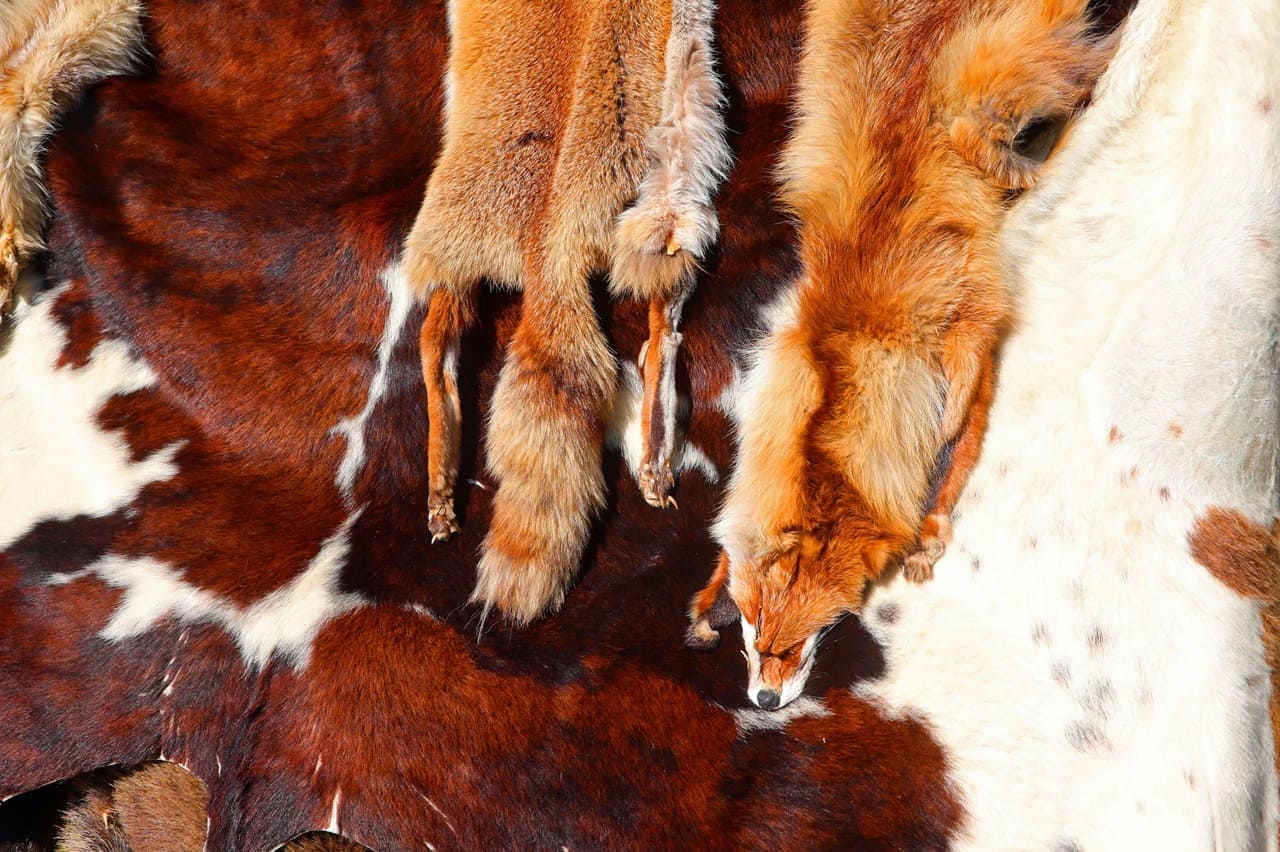
Responsible, ethical people with moral integrity who have arrived in the present day also wear clothes and set an example by doing so. Fur belongs to the animals.

DJV INTERVIEW WITH ALEXANDER SCHWAB: “SPECIES PROTECTION AND ANIMAL RIGHTS ARE INCOMPATIBLE”
The DJV spoke with Swiss publicist Alexander Schwab about philosophical approaches to the human-animal relationship and their implications for hunting and species protection. The interview offers insights into the bizarre worldview of the animal rights movement.
Animal liberation, animal rights, and animal welfare: there are now many theories addressing how humans might enable a better or fairer life for animals on this planet. The driving force is primarily philosophers who have been fuelling the animal cause ideologically since the late 1970s. The animal rights movement is a melting pot of highly diverse ideological currents, yet the core practical demands remain the same: animals have a right to life, liberty, and the pursuit of happiness. The logical consequence is the aspiration to abolish all use of animals, since such use always touches upon and violates their presumed rights. Regardless, the happiness pursuits of the wolf and the deer are hardly compatible. But there is, of course, the idea of “Paradise Engineering” — the genetic manipulation of carnivores. Swiss publicist Alexander Schwab explains in a DJV interview just how widely the ideas of the animal rights movement have already spread.
DJV: Bans on circus animals, break-ins into stables, or anti-hunting demonstrations: what are the actual goals pursued by the animal rights movement?
Alexander Schwab: The goal of the animal rights movement is to abolish all use of animals. This naturally includes hunting, animal agriculture, and zoos — as well as the forced global introduction of veganism. The consistent enforcement of animal rights would also mean, for example, that the training of guide dogs would no longer be possible, since no dog becomes a guide dog of its own free will. Accordingly, animal rights philosopher Klaus Petrus has placed on record that training a guide dog is equivalent to enslaving a human being. The same naturally applies to avalanche, police, and hunting dogs.
Note from Wild beim Wild: The issue is rather one of unjustified exploitation. Humans are capable of making choices and bear ethical and moral responsibility toward those in need of protection.
How widely has the philosophy of the animal rights movement already spread?
There is no single animal rights philosophy, but there is an animal rights movement, driven mainly by philosophers, theologians, sociologists, psychologists, and legal scholars. Over the years, it has made its way from universities into political advisory bodies and ethics commissions. There it has demonstrably had a major influence, which is reflected not only in the shaping of hunting legislation, but also in the EU constitution, where animal rights are enshrined in principle through the Treaties of Lisbon.
Note from Wild beim Wild: A wonderful and timely achievement. Hunters have no positive creativity or visions of any relevance.
And what does the situation look like in Switzerland?
In Switzerland, the “dignity of the animal” is enshrined in the constitution, which is likewise a great success of the animal rights movement. This concept of dignity is, according to some members of the relevant ethics commission, also to be extended to plants — which would turn tomato spaghetti into a moral dilemma. Also motivated by animal rights is the current initiative in the canton of Zurich aimed at abolishing civic hunting (public hunting, militia-style hunting) — the initiators gathered the required 6,000 signatures in no time at all. Equally straightforward was the signature collection for the initiative “Fundamental Rights for Great Apes” in the canton of Basel-City.
Note from Wild beim Wild: Bravo! The initiators deserve our wholehearted thanks.
In the view of animal rights advocates, animals have a right to life, liberty, and the pursuit of happiness. In real life, however, the wolf eats the deer and the raccoon threatens the eagle owl. How do animal rights hold up in that context?
It is a form of intellectual complacency born of affluence to place ideology above reality. The processes of nature revolve essentially around eating and being eaten, as well as reproduction. The “notions of happiness” held by animals are simply incompatible with one another. The wolf-deer dilemma given to us by evolution cannot be resolved “naturally.” The animal rights movement has great difficulty accepting nature as it is — including the acceptance that human beings must act within their basic living conditions in order to survive.
Note from Wild beim Wild: Scraping the bottom of the barrel in terms of argumentation. Recreational hunters, self-proclaimed predators, embrace a culture of senseless violence. The denial of reality by recreational hunters and their associations, along with the hunter-serving lobby, is deeply hostile toward creatures, animals, and life itself. Added to this is a lack of empathy, morality, and any form of ethics. It is not only the opinion of animal rights advocates that animals have a right to life, liberty, and the pursuit of happiness. Every child intuitively knows this. Hunters continually disturb, manipulate, and mistreat nature because they are intellectually and spiritually incapable of truly comprehending it. And yes, the conscious human being must act: ethically, nonviolently, and responsibly. Nonviolence is what distinguishes the civilized person from the predator in the animal world. Most animals are vegan and peace-loving.
And how does the animal rights movement intend to resolve this dilemma?
Philosophically speaking, it cannot resolve it, because evolution cannot be overridden by wishful thinking and hair-splitting at the nano level.
Note from Wild beim Wild: Unnecessary polemics. Does the animal rights movement even need or want to resolve this dilemma?
There is also the concept of “Paradise Engineering” …
Exactly. The British philosopher David Pearce believes that we could eliminate suffering from the world entirely by genetically reprogramming predators into herbivores, thereby creating paradise-like conditions: the wolf grazes peacefully beside the deer. Pearce argues that the technical prerequisites for this already exist. These are dangerous fantasies of omnipotence. This is the stuff nightmares are made of.
Note from Wild beim Wild: Every passing wind gets worked into the interview.
The federal government has committed itself in international agreements to preserving biodiversity. What should species protection look like from the perspective of the animal rights movement?
No idea — you would need to consult an animal rights philosopher for that. For leading figures of the animal rights movement, the right to life of the individual animal takes precedence over any economic or ecological interests. This essentially means the end of all hunting interventions in the cultivated landscape. Within this romanticism of self-regulation, a few exceptions are made as a concession to reality — such as self-defense or preventing a species from complete extinction. Interventions are therefore only legitimate when the house is already in flames. If an avalanche protection forest were threatened by red deer nibbling on trees, the right to life of individual animals would take precedence over the goal of preserving the protection forest — because red deer are not threatened with extinction. The animal rights movement's denial of reality is profoundly hostile to humanity. Furthermore, the exceptions mentioned, and others, are — on closer inspection — in contradiction with the fundamental right to life of an individual animal. Species protection and animal rights are incompatible.
Note from Wild beim Wild: Completely misguided analysis of causes. Hunters have been parking and breeding red deer in forests for decades. Forest is a rather atypical habitat for a grazing species. As soon as lynx and wolves help regulate populations, the exposed hunters are the first to stir up opposition, because they are no longer allowed to kill. Predators are fought by hunters to the point of poaching — which frustrates not only forestry professionals — and not by the animal rights movement. Hunters are the total failure, not only when it comes to wildlife management. Apart from primitive lashing out, hunters — unlike the general public — know no other way of resolving conflicts.
Philosophers of the animal rights movement clearly have different approaches. What are the origins and what actually lies behind them?
Alexander Schwab: It is important to know that the animal rights movement consists of two distinct philosophical schools of thought: animal liberation and animal rights. Between animal rights advocates and animal liberationists lies an infinitely deep philosophical divide. Yet it is so narrow that they can easily pull together in the same direction and form the animal rights movement, which opposes any use of animals.
Note from Wild beim Wild: Hunters always react reluctantly to common-sense initiatives. Animal and species conservationists have brought greater wildlife protection to hunting practices — such as the abolition of leg-hold traps or the ban on catching birds with limed sticks, and so on. Common sense has been and continues to be the driving force behind restricting hunting seasons and reducing the number of huntable species. To prevent the extinction of animal species, animal welfare advocates have imposed on hunters a moral obligation to care for and manage wildlife. The ethics of hunters (if such a thing even exists) have traditionally always lagged behind the spirit of the times.
At present, hunting revisions are taking place at both the federal and cantonal level. Once again, it is easy to see clearly who is standing up for and who is standing against animal and species protection — for example, to ban cruel hunting methods such as driven hunts, push hunts, or earth hunts. The fact is, without animal rights activists and animal welfare advocates, there would be no upper limit to hunting-related nonsense and the exploitation of wildlife. Hunters must be kept on a tight leash.
What is behind animal liberation?
In 1975, Peter Singer published the book “Animal Liberation” and overnight, the animal rights movement was born. His philosophy can be outlined as follows: all sentient beings have interests. These must be taken into account, regardless of whether the being in question is human or animal. Central to understanding his view: only the capacity to suffer matters — what does not suffer has no interests and need not be given moral consideration. Peter Singer’s philosophy is not based on rights, but on the weighing of interests in relation to the capacity to suffer. Nevertheless, Singer speaks of “rights” because, as he says, “rights” are propagandistically useful.
A moral value for humans, animals, and the environment — what does that mean?
A stone is not capable of suffering, and therefore has absolutely no moral value. By the same logic, our environment is also worthless, since it too is not capable of suffering. Corpses are not capable of suffering, and so for Peter Singer, sex with corpses is not fundamentally a moral problem. A butterfly, assumed not to suffer, may be caught and mistreated at will — what does not suffer is morally worthless.
Note from Wild beim Wild: This is arguing from the lowest possible drawer. Peter Singer's statements are his personal opinion — if he even meant them that way and Mr. Alexander Schwab is not once again distorting facts and opinions. Philosophy cannot be defined in universally valid terms, because everyone who philosophizes develops their own view of things. Therefore, there are approximately as many possible answers to given questions as there are philosophers. And accordingly, even more foolish answers from pseudo-hunters.
Are there no differences between humans and animals?
No, that boundary has been abolished. Humans and animals are viewed solely through the lens of their capacity to suffer and are morally “judged” accordingly. Singer's balancing of interests does not favor humans a priori and is difficult to follow. According to Singer, for example, a sick person — such as an Alzheimer's patient — may be euthanized, while a healthy chicken has a right to a natural death.
And what do the animal rights advocates have to say?
Animal rights advocates, by contrast, draw on Tom Regan and his book “The Case for Animal Rights” (1983): every living being that possesses some form of consciousness is a “subject of a life.” From this fundamental position, Tom Regan derives rights for animals. Animal rights are individual rights — a school of herring, for example, cannot be a rights-holder because it is not a “subject of a life.” The same applies to the environment and biodiversity. This means that even within animal rights philosophy, we have no moral obligation toward the very foundations of our existence — which has something self-destructive about it. For Tom Regan and his followers, the suffering of animals is irrelevant. It is exclusively about the rights of animals.
Note from Wild beim Wild: The basis for animal rights is often ethical concepts that proceed from the assumption that animals possess the capacity to suffer and feel pain.
And what is the position of classical animal welfare regarding the ideas of the animal rights movement?
The foundation of animal welfare today consists of a bundle of diverse ideas from past and present. Traditional animal welfare is not a radical ideology for improving the world, unlike animal liberation and animal rights philosophy, and can be summed up in a single sentence: “Never torment an animal for fun, for it feels pain just as you do.” Here, the focus is on passive protection and the prevention of suffering.
Animal welfare and animal use: are they compatible?
Traditional animal welfare affirms the use and consumption of animals by humans, provided that certain standards and conditions are met. For example, farm animals and pets must be kept in a species-appropriate manner. A guide dog poses no fundamental problem for traditional animal welfare. When it comes to species conservation, a pragmatic approach is taken, even though animal welfare is also fundamentally concerned with individual animals.
So is there a strict separation between animal welfare and the animal rights movement?
Perhaps twenty years ago there was. Animal welfare is increasingly adopting the language and content of the animal rights movement and is turning more and more towards an active principle: the well-being of animals. The major animal welfare organisations today are clearly moving in the direction of animal rights — or have already arrived there — and conversely, animal rights advocates frequently hide behind animal welfare arguments. This gives rise to hybrid positions of great practical significance, such as the dignity of animals enshrined in the Swiss Federal Constitution and Article 13 of the European Constitution, where the “welfare of animals” is established as a fundamental principle.
Note from Wild beim Wild: Let us hope that animal welfare, animal rights, ethics, and morality do not entirely go against the grain for Mr Alexander Schwab. Psychopathy describes a severe personality disorder characterised by an extensive or complete absence of empathy and conscience. At first glance, psychopaths can appear charming and are skilled at forming superficial relationships. They can also be highly manipulative in pursuit of their goals. Psychopaths often lack long-term goals, and tend to be impulsive and irresponsible.
More on the subject of recreational hunting: In the dossier The Role and Criticism of Recreational Hunters we shed light on the training, power and self-image of recreational hunters. The scientific evidence is presented in the overview Studies on the Effects of Recreational Hunting.
The position of IG Wild beim Wild: IG Wild beim Wild rejects recreational hunting. Our model is the canton of Geneva, which has managed without recreational hunting since 1974: without hunting seasons, without hunting dogs, without driven hunts, without high seats, without the animal cruelty and crime that go hand in hand with hunting season elsewhere. What has worked there for over fifty years disproves every position paper by JagdSchweiz. An association that bases its policy on claims it refutes in its own documents is not a professional organisation, but a factory for misinformation.