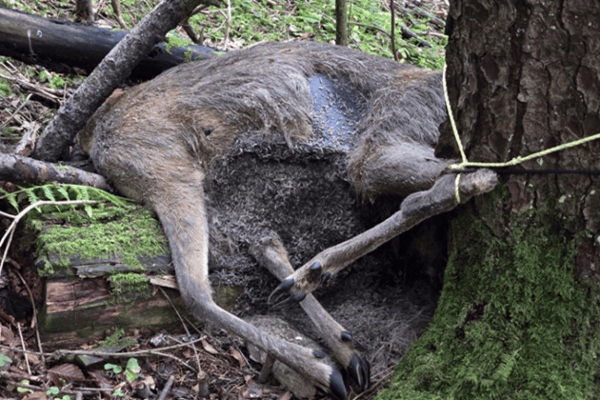
Schwyz: not a single wolf drew attention in 2026, yet four young wolves were killed
In its reply to the interpellation, the cantonal government confirms that no wolf displayed undesirable behaviour — and nevertheless demands more leeway for kills.
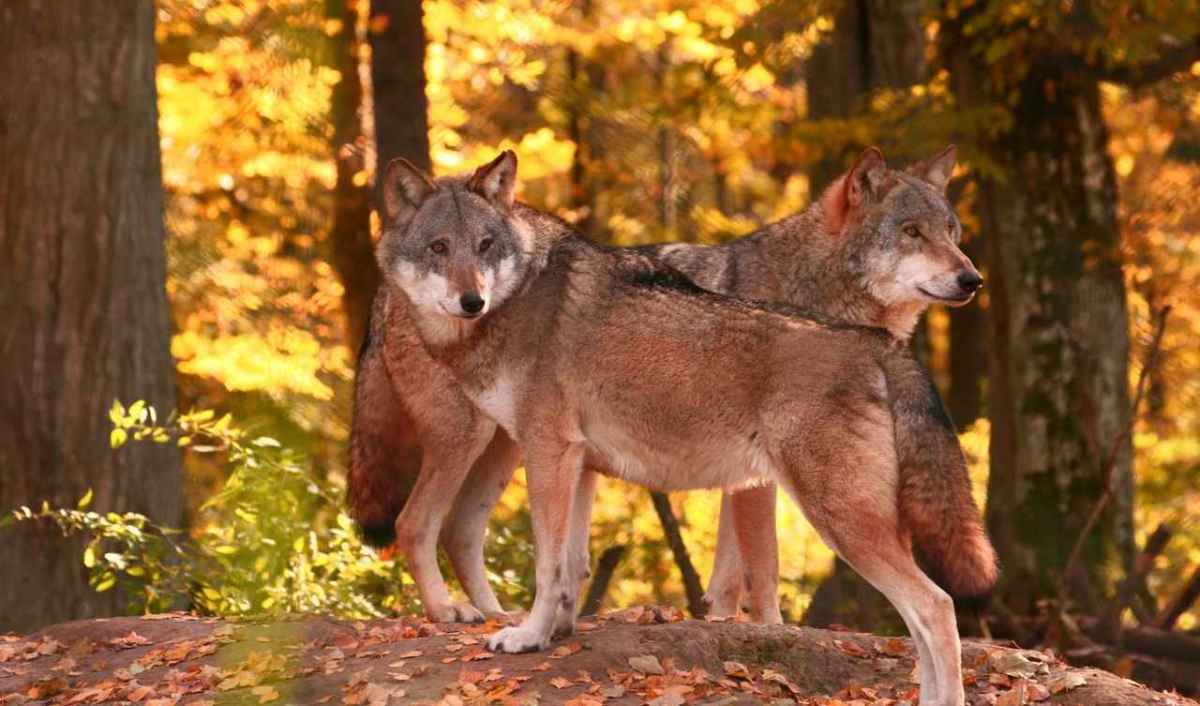
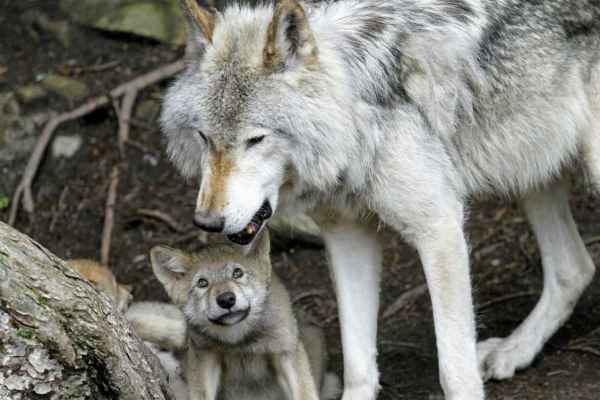
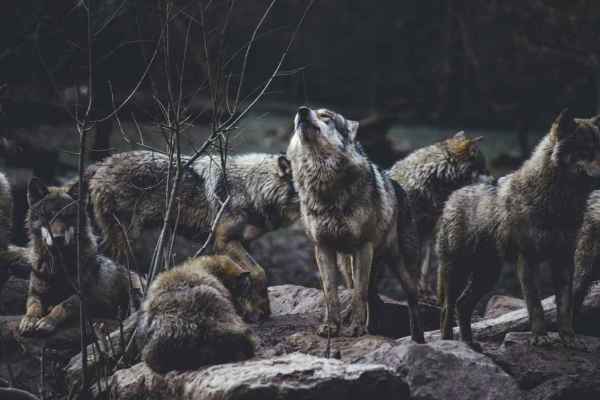
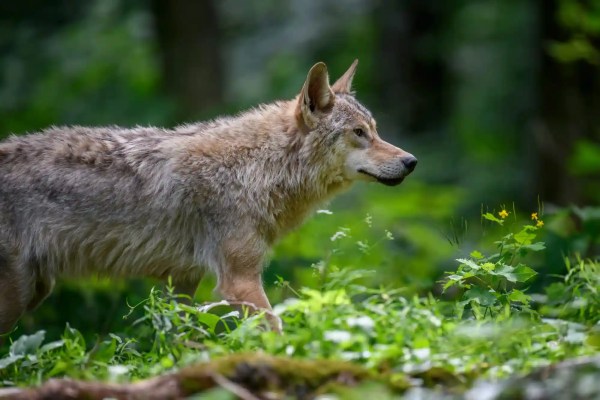
Symbolic image. Photo: Wild Spirit / Unsplash
In Reserve
In the canton of Schwyz, in the assessment of the cantonal government, not a single wolf displayed behaviour in 2026 that counts as «undesirable» under federal law. The cantonal government states this in its reply to interpellation I 27/26 «Wolf management in the canton of Schwyz» (Government Council Decision No. 862/2026 of 17 November, published on 24 November). In the same document it notes that three young wolves were killed in the Chöpfenberg pack in 2025 and four in 2026, and that this regulation is to continue.
What the interpellation wanted to know
The motion was submitted on 9 September 2026 by The Centre cantonal councillors Andrea Burtschi and Anni Zehnder-Nussbaumer together with cantonal councillor Christian Schuler. The trigger was three predation events at the end of August involving at least eleven sheep and one goat, two of them close to settlements or to a farm. The authors themselves noted in the motion: «Herd protection, however, was not ensured.» Just how patchy it was had already been documented by the canton in its reply to the short enquiry KA 22/26, which we covered in the article «Schwyz: Basic protection was missing in three out of four predation incidents».
What the cantonal government replies
The key statements from the Government Council decision:
- According to current knowledge, around eight wolves live permanently in the canton. Following the regulation in autumn 2026, the Chöpfenberg pack still consists of two adult wolves, one wolf from the 2025 litter and two young wolves from this year. In addition there is a pair of wolves and possibly a single wolf in the Alpthal/Rothenthurm area.
- According to the government, the spread is proceeding «from a technical point of view within the range of what had to be expected», measured against habitat and prey animals, in particular red deer. The cantonal government nevertheless takes a «critical view» of it.
- «In 2026, no undesirable behaviour within the meaning of the federal Hunting Ordinance was recorded in the canton of Schwyz.»
- If a wolf kills an unprotected farm animal close to a settlement, the Konzept Wolf Schweiz states that «one must still assume ‹unproblematic behaviour›». Such kills are neither compensated nor counted towards future culls.
- The government rates the medium-term risk to the population as low. Since the return of the wolf, no attacks on humans are known in Switzerland.
- Tourists had «taken down herd protection fences, cut through them and thus rendered them ineffective». In rare cases, hiking trails have to be closed or rerouted.
Wolves were killed anyway — and pre-emptively, as a precaution
The answer draws a clean distinction between two instruments: the kill in cases of «undesirable behaviour» and the «proactive regulation» of entire packs. The first instrument was never an option in 2026 for lack of any occasion. The seven young wolves killed in 2025 and 2026 are assigned by the cantonal government itself to the second: the pack had been «proactively regulated from the outset». These kills are not tied to any specific misbehaviour.
How this approach unfolded in 2026 is traced in our article «Chöpfenberg pack: Schwyz kills four pups, not the proven livestock killers» : the Federal Office for the Environment gave its approval before the canton had even reported a single kill for that year, and the individually attributed kills went back to older wolves, not to the cubs that were shot. The response to the interpellation changes nothing about this finding. It does not contradict it.
More leeway, even though the existing rules have «proved their worth»
The reasoning on federal legislation is remarkable. On the one hand, the cantonal government writes that the rules in force since February 2025 have «so far proved their worth» and that interventions are feasible «despite the narrow room for manoeuvre». On the other hand, it intends to campaign for the cantons to be given more leeway and for national wolf management to enable «swift and uncomplicated action by the cantons». It expressly supports motions 25.3715 (wolf culls in federal game reserves) and 25.3549 (problem wolf within a pack). As for Fabio Regazzi's motion 25.4464, which calls for a threshold value for the wolf population, it expects the Federal Council to implement it «promptly». What these parliamentary initiatives mean is explained in our articles on the wolf threshold value and on the wolf culls in federal game reserves.
Commentary: The problem lies with the fence, not with the pack
With its own reply, the Schwyz government delivers the arguments against its own demand. Not a single wolf drew attention to itself. The risk to people is low. The kills that triggered the motion happened on herds without functioning protection. And the conflicts the cantonal government fears for the future are described by it as conflicts between livestock keepers and tourists who cut through fences.
None of this is solved by a rifle. Anyone who treats eight wolves in an entire canton as a threat while at the same time noting that their spread is within the expected range is engaging in symbolic politics at the expense of young wolves that have done nothing. What would make sense are binding checks on basic protection, advice for livestock keepers, clear information for hikers and sanctions for destroying herd protection fences. Schwyz does not need a threshold value from Bern for that.
We keep a running record of the number of wolves killed per canton and pack in the Counter of wolf kills in Switzerland.
Do you have a tip, a source or a correction for this article? Write to us.
Seen something yourself?
A driven hunt next to a hiking trail, a shot fired near houses, a trap in the forest or an injured wild animal: report it to the Recreational Hunter Radar. We check every tip-off and treat your details confidentially.
More on the subject of recreational hunting: In our dossiers on the criticism of recreational hunting gather fact-checks, analyses and background reports. The scientific evidence is presented in the overview Studies on the Effects of Recreational Hunting.
The position of IG Wild beim Wild: IG Wild beim Wild rejects recreational hunting. Our model is the canton of Geneva, which has managed without recreational hunting since 1974: without hunting seasons, without hunting dogs, without driven hunts, without high seats, without the animal cruelty and crime that go hand in hand with hunting season elsewhere. What has worked there for over fifty years disproves every position paper by JagdSchweiz. An association that bases its policy on claims it refutes in its own documents is not a professional organisation, but a factory for misinformation.
Wild animals need a voice
Investigations, petitions and background on recreational hunting. As a thank-you, you will immediately receive our free guide «Recreational hunting on your doorstep: what you can do».
Support our work
With your donation you help protect animals and give their voice a hearing.
Donate now →