Price, Import and Self-Sufficiency Effects of the Food Initiative
On 13 August 2025, the Federal Council adopted the dispatch on the popular initiative “For secure nutrition – by strengthening sustainable domestic production, more plant-based foods and clean drinking water (Food Initiative)”.

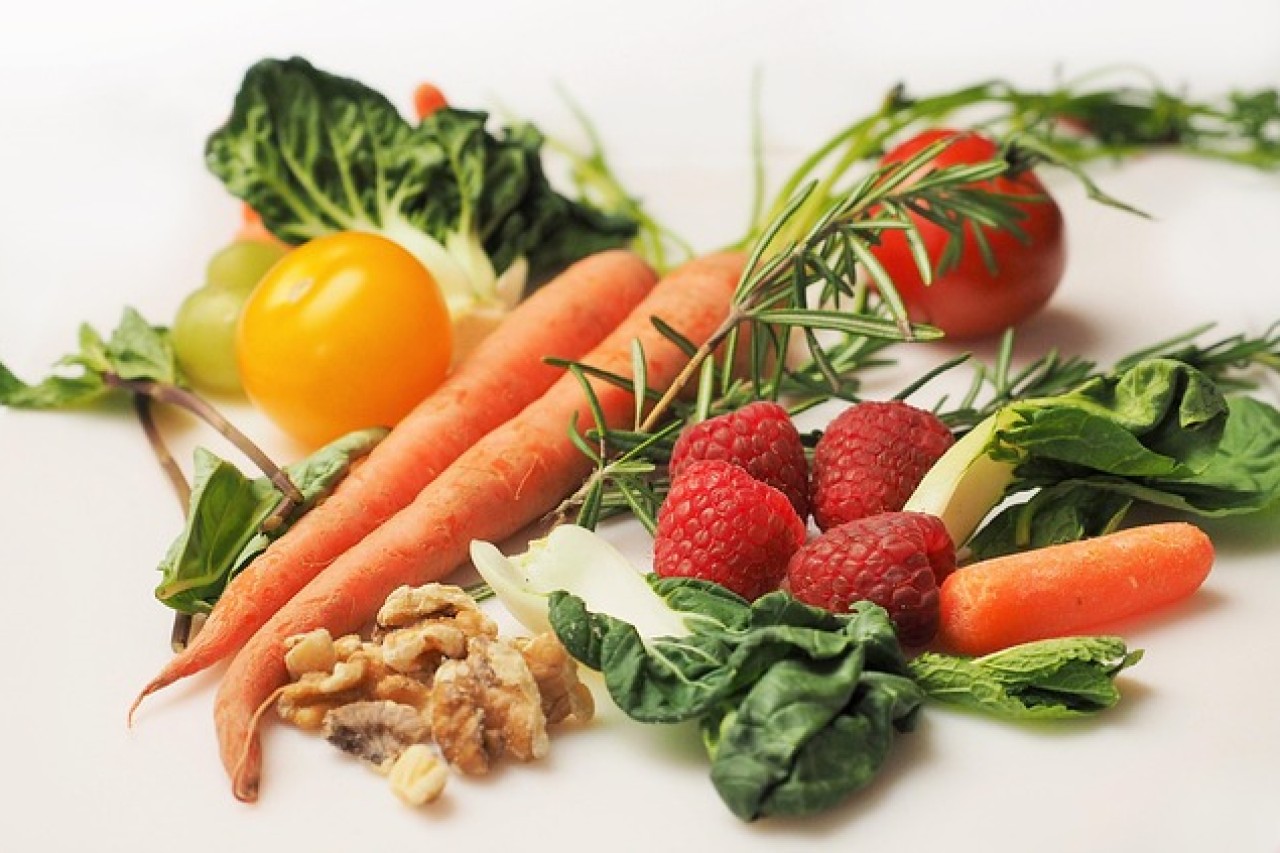
On 16 August 2024, the so-called «Food Initiative» was submitted.
It provides for the strengthening of self-sufficiency, the safeguarding of groundwater resources and the promotion of a sustainable agricultural and food economy, and demands, among other things, that the agricultural and food sector increasingly focus on the production and consumption of plant-based rather than animal-based foods. Furthermore, the initiative calls for ensuring sufficient clean drinking water, biodiversity and soil fertility.
The maximum values for fertiliser and nutrient inputs into the environment set out in the environmental objectives for agriculture must no longer be exceeded. The objectives are to be achieved within 10 years of the initiative being adopted.
The «Food Initiative» aims to increase food security by having Switzerland:
- produce and consume more plant-based rather than animal-based foods,
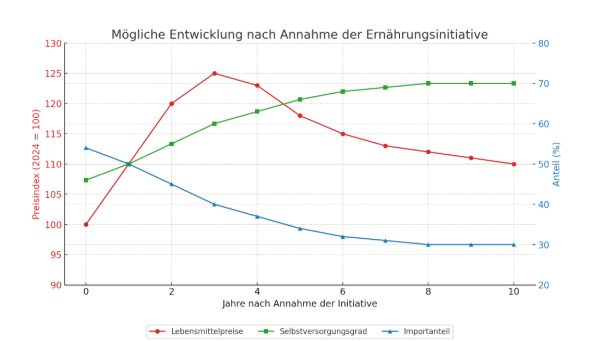
- increase the net self-sufficiency rate from the current 46% to at least 70%,
- ensure clean drinking water, biodiversity and soil fertility,
- strictly comply with the environmental objectives for agriculture (limit values for nutrient inputs) – all within 10 years of adoption.
The Federal Council considers these objectives to be sensible in part, but does not regard them as realistic within the given timeframes, because:
- massive state intervention in agriculture and consumption would be required,
- meat production would have to be drastically reduced and plant-based production significantly increased,
- existing infrastructure would not be amortised,
Here is an assessment of how the adoption of the nutrition initiative is likely to affect food prices and imports:
1. Food prices
- Short-term (1–5 years)
- Price increases likely: Shifting to more plant-based production and reducing animal products could require investments, conversions, and new production methods.
- Meat, dairy products, and eggs would likely become significantly more expensive as supply decreases.
- Basic plant-based foods (e.g. grains, legumes, vegetables) could be more expensive domestically than today, as production costs in Switzerland are higher than for imports.
- Medium-term (5–10 years)
- Prices could partially stabilize as production becomes more efficient and consumers adjust their eating habits.
- A persistently high price increase would be possible if Switzerland achieves its production targets inefficiently.
2. Imports
- Decline in certain products:
- Animal products (especially meat, milk powder) would be imported less as consumption declines.
- Increase in intermediate and semi-processed products:
- Plant-based proteins, seeds, and specialty ingredients could be increasingly imported until domestic production is established.
- Self-sufficiency target (70%) would mean that the share of imported calories drops significantly – but this could only be achieved if consumption habits change considerably.
3. Overall economic impact
- Likely higher household expenditure on food, especially in the first few years.
- Agricultural export sector (e.g. cheese) could suffer if resources are redirected toward plant-based production.
- Adjustment pressure on the hospitality and processing industries, as menus and recipes would need to be more strongly shifted to a plant-based basis.
From the perspective of IG Wild beim Wild, the nutrition initiative represents a further opportunity for a healthy future – for us, our children, and our environment. It strengthens sustainable domestic agriculture, promotes more plant-based and climate-friendly foods, and safeguards clean drinking water. In doing so, we are choosing quality, regionality, and responsibility over dependency and environmental damage. A yes vote means greater resilience, more health and greater appreciation for our domestic producers.
More on the subject of recreational hunting: What the research says about this is shown by Hunting fact-checked: the state of research.
The position of IG Wild beim Wild: IG Wild beim Wild rejects recreational hunting. Our model is the canton of Geneva, which has managed without recreational hunting since 1974: without hunting seasons, without hunting dogs, without driven hunts, without high seats, without the animal cruelty and crime that go hand in hand with hunting season elsewhere. What has worked there for over fifty years disproves every position paper by JagdSchweiz. An association that bases its policy on claims it refutes in its own documents is not a professional organisation, but a factory for misinformation.