India's Prime Minister: Fighting the Climate Crisis at the Dinner Table
Narendra Modi emphasized that every individual can contribute to protecting the planet through their own behavior.

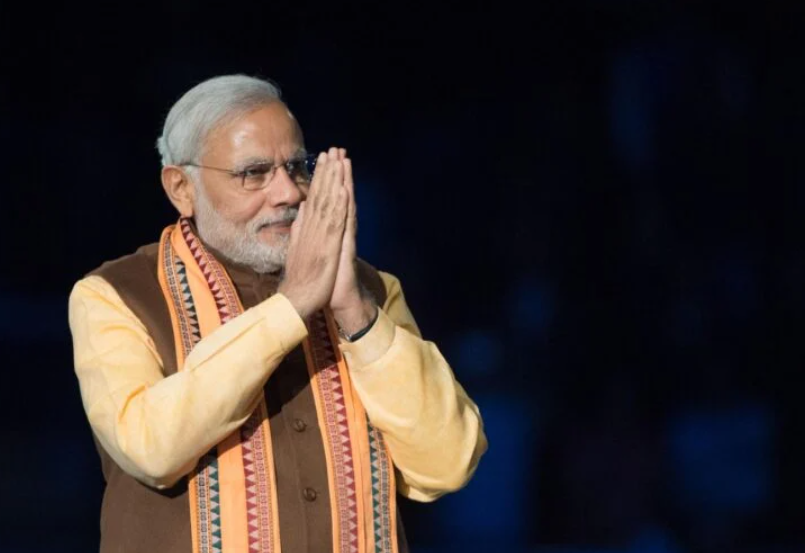
India's Prime Minister Narendra Modi has stated that the climate crisis cannot be solved at conference tables alone.
Rather, the actions of each individual also play an important role.
The vegetarian expressed his views at a World Bank event entitled Making it Personal: How Behavioural Change Can Tackle Climate Change, which took place on 14 April.
«When an idea moves from discussion tables to dining tables, it becomes a mass movement,» said Modi. «If we make every family and every individual aware that their choices can help the planet, this can have a great impact and be implemented quickly.»
Promoting Sustainable Habits in India
Modi pointed out that financial support will be necessary to assist households in adopting more sustainable practices. This came after the World Bank pledged to increase its climate funding by nine percent, prompting Modi to state that alongside procedural initiatives, «behavioural initiatives» must also be funded in order to bring about lasting change.
Modi did not explicitly recommend a particular type of sustainable diet, but advocated for more plant-based components in the food system. This included references to nature-based agriculture, commonly associated with regenerative farming, and the promotion of millet grains in the daily diet.
Modi also elaborated extensively on India's climate initiative Mission LiFE, which aims to educate the country's population in the responsible use of resources. The focus is on sustainability efforts to conserve water and energy while encouraging the Indian population to adopt a «healthy lifestyle».
Fighting the climate crisis with plant-based foods
India is an important driving force for the plant-based sector, even though the country still consumes large quantities of animal products.
Figures show that India will consume four million tonnes of poultry in 2022. In addition, sales of meat, including «seafood», have risen annually since 2014.
Alongside meat consumption, India has the world's largest dairy sector. Given the environmental damage caused by meat and dairy production, these factors contribute significantly to the climate crisis.
Greenpeace reports that agriculture and deforestation together account for a quarter of all greenhouse gas emissions. Furthermore, 60 percent of all agricultural emissions are attributed to livestock farming, it states. As a result, experts have begun recommending a plant-based diet to alleviate the symptoms of the climate crisis.
Currently, around 574 million people in India follow a meat-free diet. However, only nine percent of the population use the term «vegan».
Narendra Modi emphasised that every individual can contribute to protecting the planet through their own behaviour.
| You can help all animals and our planet with compassion. Choose empathy on your plate and in your glass. Go vegan. |
More on the subject of recreational hunting: The scientific evidence is presented in the overview Studies on the Effects of Recreational Hunting.
The position of IG Wild beim Wild: IG Wild beim Wild rejects recreational hunting. Our model is the canton of Geneva, which has managed without recreational hunting since 1974: without hunting seasons, without hunting dogs, without driven hunts, without high seats, without the animal cruelty and crime that go hand in hand with hunting season elsewhere. What has worked there for over fifty years disproves every position paper by JagdSchweiz. An association that bases its policy on claims it refutes in its own documents is not a professional organisation, but a factory for misinformation.