‘I enjoy killing animals’: what recreational hunting conceals
France's top hunting official has publicly admitted that he takes pleasure in killing animals, providing a rare acknowledgement of a motive that recreational hunting otherwise hides behind terms such as tradition and necessity.
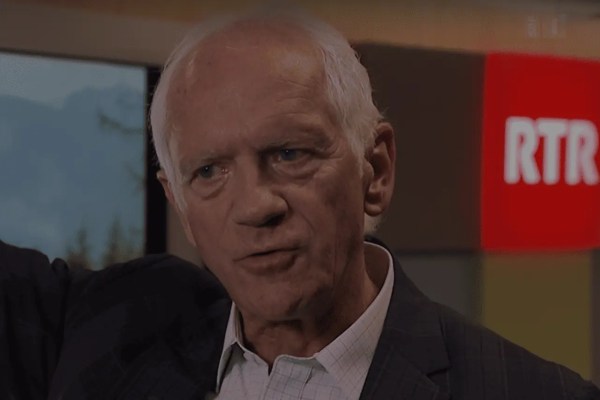
Willy Schraen, president of the French hunting umbrella organisation Fédération Nationale des Chasseurs, stated verbatim on the programme «Morandini Live» on CNews that killing an animal is «not violent at all».
When asked whether pursuing and killing gave him pleasure, he replied: «The answer is yes. I enjoy killing animals in the context of hunting.»
What is striking is not the brutality of the statement, but its candour. Where associations otherwise speak of «wildlife management», «service to nature» or «care», here a top official names the actual motivation: the pleasure of killing. This is precisely the point at the heart of the critical debate on hunting, as also described in the psychoanalysis of recreational hunting.
When necessity falls away, pleasure remains
Schraen provides the refutation of his own justification himself. He concedes that one does not need to hunt in order to feed oneself, but that it is «a great pleasure». That settles the question of nutrition. What remains as a justification is desire.
This self-disclosure tallies with research into the motivations of recreational hunters. A study published in 2024 in the journal «Animals» on a wild boar hunting community concluded that hunting is predominantly understood as a leisure activity offering excitement, contact with nature and a sense of group belonging. The act of killing is regularly romanticised as a «service to nature», even though in many cases there is no ecological necessity. From the perspective of the psychology of violence, the moral threshold drops as soon as killing is framed as a hobby, ritual or status signal, as the analysis what brain research reveals about violence, empathy and recreational hunting shows in detail.
Why children choose the apple first
Schraen's claim that it is «abnormal» not to go hunting turns matters upside down. For the spontaneous reaction of most people, and of children in particular, is the opposite. Faced with a living animal, children show curiosity and compassion, not a desire to kill. Only habituation, peer pressure and the example of authority figures shift this basic attitude.
Researchers refer to this as desensitisation — the gradual erosion of natural inhibitions through repeated exposure. In its "General Comment 26" (2023), the UN Committee on the Rights of the Child recognised that witnessing violence against animals can impair children's capacity for empathy. Introducing children to killing at an early age normalises violence rather than questioning it. This is precisely the mechanism described in the dossier on children, hunting and the socialisation of violence. That the child's perspective is often morally superior to that of the adult is also illustrated by the report on a driven hunt in Switzerland.
What the statement really reveals
Schraen's candour is unintentionally revealing. It shows that killing in recreational hunting is not a regrettable side effect of a nature conservation mission, but the very core of the pleasure. A large majority of the French population opposes hunting in surveys — especially the chase. Common sense sees nothing normal about killing defenceless animals; quite the opposite. For a deeper look, see the dossier on Hunting and Children.
More on the subject of recreational hunting: In our dossiers on the criticism of recreational hunting gather fact-checks, analyses and background reports. The scientific evidence is presented in the overview Studies on the Effects of Recreational Hunting.
The position of IG Wild beim Wild: IG Wild beim Wild rejects recreational hunting. Our model is the canton of Geneva, which has managed without recreational hunting since 1974: without hunting seasons, without hunting dogs, without driven hunts, without high seats, without the animal cruelty and crime that go hand in hand with hunting season elsewhere. What has worked there for over fifty years disproves every position paper by JagdSchweiz. An association that bases its policy on claims it refutes in its own documents is not a professional organisation, but a factory for misinformation.