France urged to stop over-exploitation of frogs
A group of more than 500 scientists and conservation organisations has called on the French government to take action against the over-exploitation of frogs, driven primarily by France's insatiable appetite for frog legs.

3’000 tonnes of frogs per year
Experts from the academic, veterinary and conservation sector have called on French President Emmanuel Macron to end the exploitation of frogs and improve the protection of the most heavily traded species.
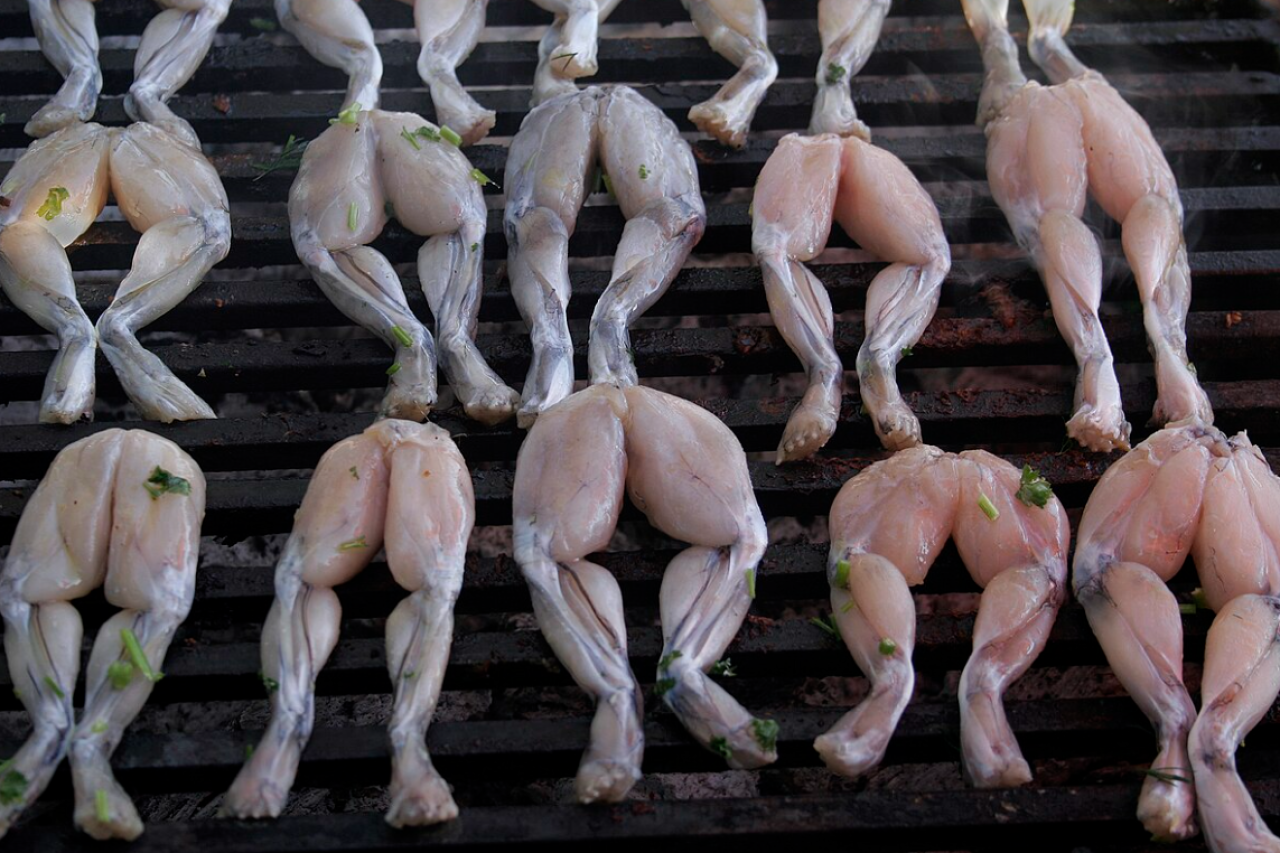
France consumes more frog legs than any other country in the European Union, often fried in batter or sautéed with garlic and parsley.
According to the environmentalist group Robin des Bois, which organised the letter, and Pro Wildlife, the country removes 3’000 tonnes of frogs per year.
The scientists propose that France should seek to enforce global protection measures for endangered frog species under the Convention on International Trade in Endangered Species of Wild Fauna and Flora (CITES), which combats the illegal trade in plants and animals.
80 to 200 million frogs imported annually
In February, 46 environmental non-governmental organisations (NGOs) submitted a similar request to the French Ministry of the Environment. Each year, the European Union imports 80 to 200 million frogs, the majority of which are consumed in France and originate from Indonesia, Turkey and Albania, as well as from farms in Vietnam.
Despite EU legislation to protect European frog populations, the trade continues and is putting amphibians in the countries of origin at risk.
Dr. Sandra Altherr, scientific director of Pro Wildlife, emphasized how absurd it is that natural frog populations in Europe are protected by EU law. “But the EU continues to tolerate the collection of millions of animals in other countries, even when this threatens frog populations there. This is entirely inconsistent with the EU’s recent Biodiversity Strategy ” she said.
Turkish frogs extinct by 2030?
Frogs play an important role in ecosystems and on farms. Tadpoles can improve the water quality of ponds, while frogs can help farmers use fewer pesticides. They can also help prevent infectious diseases by eating mosquitoes.
The scientists emphasized that the extinction of many frog species is a global problem that is being further exacerbated by a handful of European countries. They also warned that the large-bodied frogs of Turkey could become extinct by 2030 due to high demand.
Alain Moussu, president of Vétérinaires pour la Biodiversité, a third group that organized the letter, said that veterinarians have joined the initiative in large numbers. “They are sensitive to the cruelty that prevails in this market and concerned about the ecological imbalance caused by the collapse of amphibian populations,” he said.
Conservationists are calling for strict laws to protect amphibian populations and ecosystems. They are pushing for open data collection and monitoring to ensure sustainable harvesting methods. Urgent initiatives include listing endangered frog species in international protection agreements and raising consumer awareness of the ethical and ecological consequences of frog leg consumption.
| You can help all animals and our planet with compassion. Choose compassion on your plate and in your glass. Go vegan. |
More on the subject of recreational hunting: What the research says about this is shown by Hunting fact-checked: the state of research.
The position of IG Wild beim Wild: IG Wild beim Wild rejects recreational hunting. Our model is the canton of Geneva, which has managed without recreational hunting since 1974: without hunting seasons, without hunting dogs, without driven hunts, without high seats, without the animal cruelty and crime that go hand in hand with hunting season elsewhere. What has worked there for over fifty years disproves every position paper by JagdSchweiz. An association that bases its policy on claims it refutes in its own documents is not a professional organisation, but a factory for misinformation.