EU must drive dietary transition and climate protection
An EU report warns: Europe is not prepared for climate risks. Fewer livestock, more plant-based food, and better animal welfare are needed.

Europe not prepared for climate risks
A new report underscores that Europe is not prepared for the rapidly growing risks of climate change .
The EU action plan should therefore include concrete policy measures that reduce the number of animals bred for food purposes, prioritise resilient agricultural practices with higher animal welfare standards , and support a shift towards plant-based diets.
In response to the publication of the very first European climate risk assessment by the European Environment Agency (EEA), which analysed the risks of climate change in the EU and the areas that must be addressed urgently, the European Commission (EC) has issued a communication presenting proposals for measures in six areas of impact, including ecosystems and food.
Fewer animals, better conditions
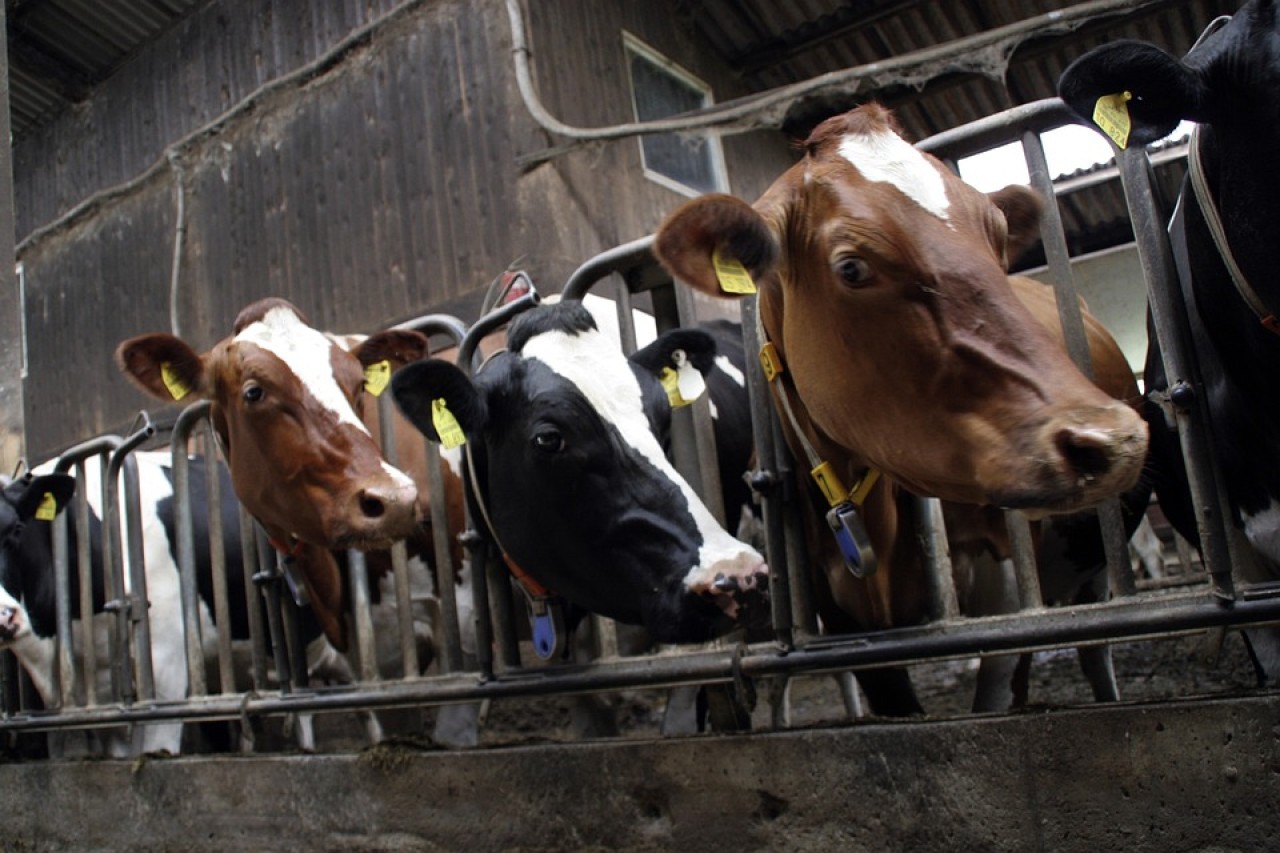
Among the greatest risks facing Europe are those in the context of plant production: two thirds of agricultural land in the EU is used for animal production, the largest share of which is devoted to growing crops for intensive livestock farming. Future-proof and nature-based solutions can only be achieved if fewer animals are kept under better conditions. This is supported by a study recently published by Harvard Law School , which clearly shows that emissions from livestock farming must decline rapidly from 2025 onwards.
While the EEA report clearly demonstrates that current EU policy is unable to effectively address climate risks, the future of important legislative EU commitments that would improve resilience, such as the revision of animal welfare regulations and the framework for sustainable food systems, remains uncertain.
Dietary shift urgently needed
The European Commission's communication acknowledges that measures for sustainable agriculture and fisheries are insufficient to address climate risks, and that long-term policy measures are needed to support a shift in diets and make healthy and sustainable food affordable and accessible. It is therefore disappointing that the recently published 2040 climate target does not adequately address the role of dietary change and the significant impact of agricultural emissions from livestock farming .
As it becomes increasingly clear that systemic transitions are required to address climate risks to food production, ecosystems and health, enhanced EU efforts and binding policy measures that can support this transition are indispensable.
«Science repeatedly shows us that maintaining the status quo is not an option. Only by raising fewer animals under better animal welfare conditions and creating food environments that support a dietary shift can the EU truly address the looming climate risks. Unfortunately, the proposed exemptions to CAP environmental measures will take us even further away from climate adaptation and resilience. To support the transition and investments in future-proof solutions, the European Commission must present the promised legislative proposals on animal welfare and the framework for sustainable food systems without further delay.»
Camilla Björkbom, Policy Advisor on Food Policy, Eurogroup for Animals.
| You can help all animals and our planet with compassion. Choose empathy on your plate and in your glass. Go vegan. |
More on the subject of recreational hunting: The scientific evidence is presented in the overview Studies on the Effects of Recreational Hunting.
The position of IG Wild beim Wild: IG Wild beim Wild rejects recreational hunting. Our model is the canton of Geneva, which has managed without recreational hunting since 1974: without hunting seasons, without hunting dogs, without driven hunts, without high seats, without the animal cruelty and crime that go hand in hand with hunting season elsewhere. What has worked there for over fifty years disproves every position paper by JagdSchweiz. An association that bases its policy on claims it refutes in its own documents is not a professional organisation, but a factory for misinformation.