
Pass hunting
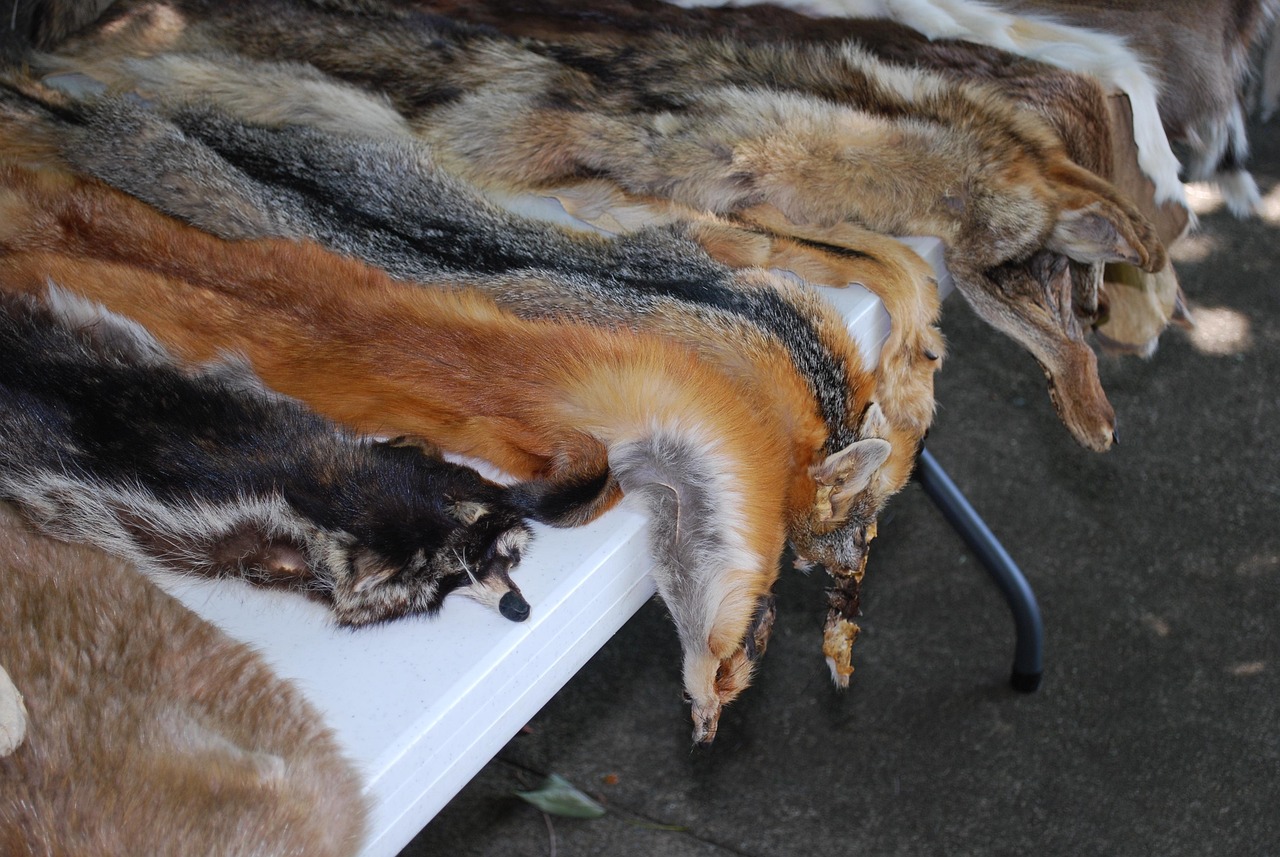
Pass hunting is a form of ambush hunting: A hunter positions themselves at a pre-selected location – at wildlife crossings, passages, forest edges or clearings – and waits for wildlife within shooting distance. It is considered a quiet, controlled form of hunting because no beating groups are employed. Upon closer examination, it becomes clear: Even passive presence creates stress. And on Swiss pass hunting, more happens: Wolves, lynx and golden jackals have been mistakenly shot at bait sites during winter pass hunting in recent years because they were confused with foxes – the actual target species.
The research is unequivocal: Wildlife react more strongly to human presence than to natural predators. A study from Polish forests that compared stress hormones in areas with and without predators came to the surprising result: The highest cortisol levels were found in areas without predators, but with strong human influence from hunting pressure, roads and settlements. Pass hunting is quiet for the hunter. For the wildlife, it is a chronic threat.
What awaits you here
- What pass hunting is and how it differs from other hunting methods: Method, procedure and the structural characteristic of passive violence.
- Repetition as a stress factor: What behavioral ecology shows: How recurring presence at fixed crossing points permanently changes wildlife behavior.
- Stress hormones and human presence: What research measures: Cortisol studies that show stress occurs even without shooting.
- Erroneous shootings and protected species: The Swiss problem at bait sites: Wolves, lynx and golden jackals as victims of pass hunting – documentation and classification.
- Bullet backstops, safety angles and risks to third parties: What cantonal shooting safety regulations say – and where they fall short.
- Ethical Questions: When efficiency is prioritized over empathy: What hunting ethics research and wildlife protection organizations say about pass hunting.
- Demands: What real control and transparency in pass hunting would mean.
- Arguments: Responses to the most common justifications.
- Quick Links: All evidence, studies and dossier contributions.
What pass hunting is and how it differs
Pass hunting is a form of ambush hunting defined by its location: Not the elevated blind in the middle of the forest, but the wildlife corridor – the natural movement path that wild animals regularly use. At forest edges, clearings, transitions and bait sites, the hunting person waits in cover for passing animals. In Switzerland, pass hunting is particularly used in low hunting, mainly for foxes. Pass hunting is often practiced during evening and night hours and in winter, when fox populations are active and visibility conditions are limited.
The difference from driven hunting: The animal comes of its own accord. The difference from an elevated blind in the habitat: The hunting person does not sit in the living space, but at the edge of a natural movement route. This is precisely what makes the method relevant to animal welfare in a specific way: Animals that regularly take the same path repeatedly experience a threat on that very path. This changes their spatial behavior – not through a shot, but through presence.
More on this: Ambush hunting: Waiting, technique and risks and Hunting in Switzerland: Numbers, systems and the end of a narrative
Repetition as a stress factor: What behavioral ecology shows
Wild animals recognize recurring patterns in their environment. When people regularly appear at a wildlife crossing, a process of behavioral adaptation begins: Animals avoid, change activity times, relocate routes. A thesis from the hunting management context (Haller 2021) notes: «Wild animals are under significantly more pressure than before due to the new circumstances and react to these additional disturbances with stress. This can manifest in increased shyness and less visibility, with dramatic consequences.»
A current study (2025) shows: The constant human presence in wildlife habitats creates a permanent source of fear. Animals try to stay away from humans – but because humans are almost everywhere, they find themselves in a cycle of constant tension. This persistent stress can destabilize the population, even without direct hunting kills. Behavioral adaptation costs energy: More vigilance means less rest time, shorter feeding times, more escape routes – especially in winter, when every calorie counts.
More on this: Studies on the impact of hunting on wildlife and hunters and Hunting and animal welfare: What the practice does to wild animals
Stress hormones and human presence: What research measures
Stress physiology provides clear measurement data. In Polish forests, stress hormones in ungulates were compared in areas with predators and without predators. The result: The highest cortisol levels were found in areas without predators, but with high human hunting pressure, high road density and strong settlement influence. Humans generate more stress for wild animals than wolves and bears.
A study on red deer (2022) shows that the beginning of hunting season changes the behavior and spatial distribution of red deer more than other seasonal factors. White-tailed deer demonstrably adapt their spatial behavior to human threats. A meta-analysis on flight reactions of ungulates to human disturbance (Stankowich & Blumstein 2008) consolidates these findings: Hunting pressure and human approach are consistently associated with flight and increased distance behavior.
Important for a balanced perspective: A 2024 study on mouflon concludes that stalking showed no strong long-term welfare effect in the studied population – and discusses possible habituation. This demonstrates: Not every hunting method produces the same stress effect in every species under every condition. However, the absence of measurable long-term effects does not mean no stress occurs – short-term stress is also relevant to animal welfare even when no long-term impact is measurable.
More on this: Wild Animals, Mortal Fear and Lack of Anesthesia and Hunting Myths: 12 Claims You Should Critically Examine
Missed Shots and Protected Species: Switzerland's Problem at Bait Sites
Gruppe Wolf Schweiz documents a specific, severe side effect of Swiss pass hunting: In recent years, wolves, lynx and golden jackals have repeatedly been shot by mistake at bait sites during winter pass hunts because they were confused with foxes – the target species.
Gruppe Wolf's assessment is clear: In relation to the total number of foxes killed, the number of missed shots involving protected species is low. However, for predators with small populations, even individual missed shots have a significantly negative impact. This is not a hypothetical scenario – it is documented Swiss practice. Those waiting for foxes shoot in poor light conditions at a moving animal. The confusion of animals with similar silhouettes and movement patterns is not individual failure. It is a structural risk of this hunting method.
Wildtierschutz Schweiz goes further: It describes low hunting and pass hunting as hunting methods that 'originate from another era yet remain reality today,' and demands an end to cruel hunting practices in Switzerland.
More on this: Wolf: Ecological Function and Political Reality and Fox Hunting Without Facts: How a Tradition Ignores Scientific Foundations
Bullet Stops, Safety Angles and Risks to Third Parties
Pass hunting often takes place along forest edges and transitions – precisely where hiking trails, forest roads and settlements are not far away. The cantonal guidelines for safe shooting in Canton Solothurn state: 'Every shot must have a suitable bullet stop (natural ground) that completely binds the projectile.' An impact angle flatter than 5° is considered problematic even with a good bullet stop – and this angle is undercut in flat terrain at shooting distances of just 60 meters.
Pass hunting for foxes often takes place at dusk or at night. Visibility conditions, residual light and the dynamics of a moving animal make shooting angles and bullet stops harder to calculate than when hunting from a blind in broad daylight. The requirement for safe shooting is therefore not merely a declarative statement – it is a demand for training, experience and situational awareness that is not always reliably met.
More on this: Hunting Accidents in Switzerland: Numbers, Risks and Structural Failure and Hunting and Weapons: An Unregulated Connection
Ethical Questions: Efficiency Over Empathy
From an animal welfare ethics perspective, pass hunting raises not primarily the question of how controlled a shot can be, but why killing is the standard response at all. Pass hunting at bait sites operates on an attraction principle: animals are lured to a specific location through bait or animal carcasses and shot there. The attraction principle creates the same ethical problem as box traps with scent lures: an animal is attracted by a signal that promises food and safety – and encounters threat and death.
Wildlife are sentient beings with their own interests. When wildlife research measures that human presence creates more stress than natural predators, this is a finding that must be discussed by society. The shot alone is not the problem. It is the system: the recurring presence at natural movement routes, the normalization of threat as a hunting instrument, and the structural invisibility of the suffering associated with it.
More on this: Trap hunting: The cruel practice behind the euphemism and Psychology of hunting
What would need to change
- Ban on ambush hunting at bait stations in areas with predators: Where wolves, lynx and other protected species are present, ambush hunting for fox poses an unacceptable risk of mistaken shooting.
- Transparency obligation for mistaken shootings: Every erroneous shooting of a protected species is reported immediately and publicly. No procedural incentive for non-self-reporting through lenient penalty practices.
- Independent monitoring of ambush hunting in protected areas: In areas of heightened conservation relevance (wildlife corridors, protected areas, predator habitats), ambush hunting only takes place with prior official authorization and accompanying monitoring.
- No bait stations without official approval: Local lure sites for ambush hunting are registered, controlled and disclosed in hunting transparency reports.
- Priority for non-lethal alternatives: In conflicts with foxes in residential areas, prevention (securing chicken coops, waste management, structural protection) takes precedence over ambush hunting as a response. Model initiatives: Template texts for hunting-critical initiatives and Ban on animal-torturing trap and lure hunting
Argumentation
«Ambush hunting is the most animal-friendly hunting method because no disturbance is created.» The animal is not actively disturbed – but the place of its natural movement becomes a danger zone. Recurring presence at fixed crossing points changes spatial behavior, increases energy consumption and creates physiologically measurable stress. No shot, no dog, no beater group – but still chronic threat.
«Mistaken shootings of protected predators are rare exceptions.» They are documented and have occurred repeatedly. For wolves and lynx with small populations, every mistaken shooting is population-relevant. The fact that the majority of hunters apply the method correctly does not change the structural risk: Anyone who shoots at night at a moving animal with a similar silhouette can be wrong in limited visibility – and must reckon with this.
«Ambush hunting for fox is necessary because foxes harm small game.» This statement demands evidence: Which population suffers in which hunting area under which measurable influence of which fox population? In most cases, this proof is lacking. Fox populations generally regulate themselves. And where a real conflict exists, prevention and habitat improvement for the affected small game are more effective and sustainable.
«Ambush hunting is legal and standardized in Switzerland.» That something is legal does not mean it is ethically justifiable. To this day, there is a lack of independent statistics on mistaken shootings in ambush hunting, a public register of bait stations, and monitoring of the impact on wildlife populations in protected areas. Legal practice without transparency is not an animal welfare standard.
Quick links
Articles on Wild beim Wild:
- Studies on the impact of hunting on wildlife and hunters
- Ambush hunting: Waiting, technology and risks
- Drive hunting in Switzerland: What happens, who suffers, what needs to change
- Ban on animal-torturing trap and lure hunting (model initiative)
Related dossiers:
- Hunting and wildlife diseases
- Night hunting and high-tech hunting: How thermal cameras, night vision scopes, drones and digital lures expose the fairy tale of fair hunting
- Hunting dogs: Use, suffering and animal welfare
- Lead ammunition and environmental toxins from recreational hunting: How a toxic legacy burdens birds of prey, soils and humans
- High hunting in Switzerland: Traditional ritual, violence zone and stress test for wildlife
- African swine fever: How an animal disease becomes justification for recreational hunting
- Hunting accidents in Switzerland
- Hunting and animal welfare: What the practice does to wildlife
- Hunting and weapons
- Driven hunting in Switzerland
- Stand hunting: Waiting, technique and risks
- Burrow hunting
- Trap hunting
- Pass hunting
- Special hunting in Graubünden
Our standards
Pass hunting is considered the quietest form of recreational hunting. This dossier shows why 'quiet' does not mean 'harmless': Recurring presence on natural movement routes creates physiologically measurable stress, bait sites create structural misfire risks for protected species, and the scientific evidence shows that human hunting pressure is more stressful for wildlife than the presence of natural predators. IG Wild beim Wild demands transparency, independent monitoring and priority for non-lethal alternatives. Anyone who knows of a specific case from pass hunting or has a question about the legal situation can contact us: Contact.
More on the topic of recreational hunting: In our Hunting dossier we bundle fact checks, analyses and background reports.