Chicory brings vitamins from the darkness
Chicory heads bring a wealth of nutrients to the plate. Cultivation is labour-intensive and takes place in several stages.

The largest growing areas for chicory are in Belgium, the Netherlands and France.
Chicory is also grown in Switzerland: in 2023, around 3,467 tonnes were harvested domestically, with a further 4,600 tonnes imported from abroad. Annual per capita consumption stands at 950 grams.
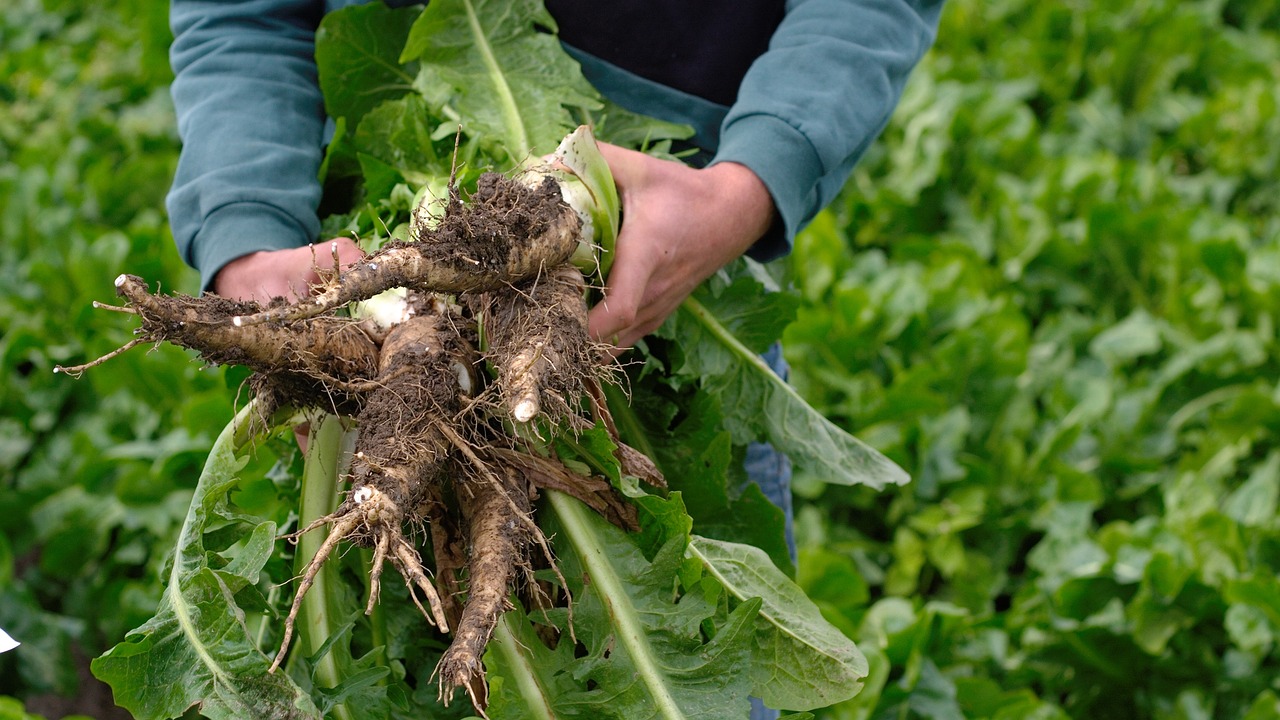
Chicory cultivation is relatively labour-intensive. Root production begins in May with outdoor sowing. Initial development is slow: the forcing chicory grows only gradually and the root penetrates deep into the soil. In autumn, the roots are lifted and stored in cold rooms. When kept cold, the roots can be stored for months.
The actual production of the heads only begins thereafter: chicory dislikes light and responds to it with bitterness. The roots are therefore placed in warm, light-tight rooms in complete darkness, where they sprout and the chicory can finally be harvested. For this reason, chicory is yellowish with at most a delicate hint of green. Chicory does nonetheless carry a certain bitter note, which is also part of its character.
Chicory divide, not Rösti divide
Chicory is at its peak in winter and — when prepared correctly — brings many vitamins and minerals to the winter plate. Chicory is low in calories, easily digestible and contains a whole range of valuable minerals such as potassium, phosphorus, calcium, magnesium, sodium and iron, as well as vitamins B1, B2, C and PP.
In German-speaking Switzerland, chicory is eaten primarily as a raw salad — often served with citrus fruits or apple — with the healthy bitter compound intybin providing the characteristic flavour of the leaf buds. In French-speaking Switzerland, by contrast, chicory is frequently used as a vegetable, steamed, boiled in salted water, or lightly sautéed. Cooking causes chicory to lose most of its bitter taste. The pale heads also make an excellent gratin or served with béchamel sauce.
Various Theories on Its Origins
In 1846, the then head gardener at the Botanical Garden in Brussels is said to have cultivated the first chicory: after allowing the roots to grow in the open ground, he covered them to block out all light, causing them to form shoots. The heads that developed from the roots proved to be delicious.
Another traditional theory speculates that the discovery of chicory was the result of a particularly abundant chicory root harvest: chicory roots were once used as a substitute for expensive coffee beans, and dried and ground chicory roots continue to this day to be used as a caffeine-free coffee alternative. In 1870, Belgian farmers are said to have brought in such a bountiful harvest that they no longer knew what to do with it. They stored the roots in a greenhouse, where shoots with crisp white leaves — «wit loof», meaning white foliage — eventually formed.
Whether in the Botanical Garden or by chance in a farmer's greenhouse: the history of chicory is firmly intertwined with that of Belgium — the name «Brüsseler» points to this connection to this day.
| You can help all animals and our planet with compassion. Choose mercy on your plate and in your glass. Go vegan. |
More on the subject of recreational hunting: The scientific evidence is presented in the overview Studies on the Effects of Recreational Hunting.
The position of IG Wild beim Wild: IG Wild beim Wild rejects recreational hunting. Our model is the canton of Geneva, which has managed without recreational hunting since 1974: without hunting seasons, without hunting dogs, without driven hunts, without high seats, without the animal cruelty and crime that go hand in hand with hunting season elsewhere. What has worked there for over fifty years disproves every position paper by JagdSchweiz. An association that bases its policy on claims it refutes in its own documents is not a professional organisation, but a factory for misinformation.