Castile and León: Court halts recreational hunting of woodcock, lapwing and three other bird species
The High Court of Castile and León provisionally sets the kill quotas for five bird species to zero for the 2026/27 season. In Madrid, a similar hunting ban was lifted again on the same day.

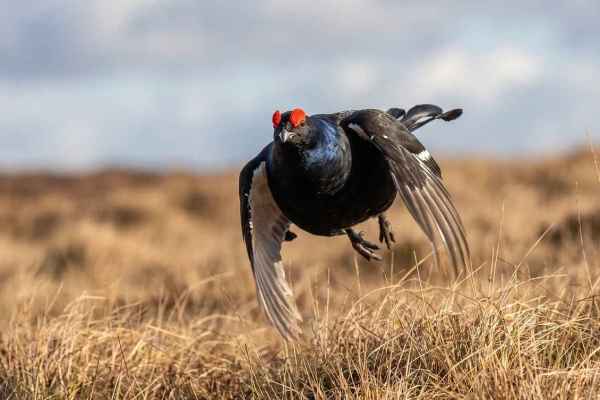
Photo: Daniil Komov / Unsplash
Who Is Left
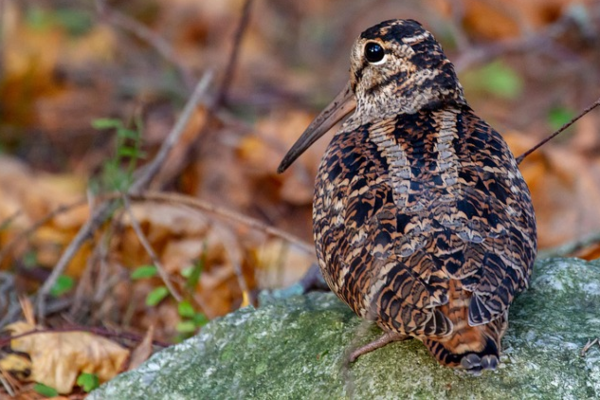
The High Court of the Spanish region of Castile and León has provisionally halted recreational hunting of five bird species. In a ruling of 4 November 2026, the administrative chamber of the Tribunal Superior de Justicia (TSJ) set the kill quota for woodcock, lapwing, common snipe, jack snipe and Eurasian wigeon to zero for the current 2026/27 season. The application was submitted by the bird conservation organisation SEO/BirdLife.
What the court decided
SEO/BirdLife is challenging the regional hunting ordinance, which sets the kill quotas for individual species. According to the Spanish hunting federation RFEC, the organisation applied to have the kill quotas for the five bird species provisionally set to zero. A mere suspension of the ordinance would not have prevented recreational hunting, as the huntable species and hunting seasons are laid down in the regional hunting act. The court granted the application: the permitted kills per recreational hunter per day for the five species are now zero.
The zero quota was ordered as an immediate provisional measure without first hearing the regional government, which was given three days to submit its position. In the further proceedings the court may confirm, amend or lift the measure. The responsible regional ministry for agriculture, livestock, rural affairs and environmental policy, headed by Joaquín Antonio Pino, intends to contest the ruling, and the hunting association RFEC announced legal action. The Directorate-General for Hunting informed the hunting grounds directly about the halt. The recreational hunters' associations speak of a “legal ordeal”, while representatives of rural tourism complain of losses because woodcock hunting brings paying guests to the region.
Madrid: hunting halt lifted again after four weeks
Castile and León is not the first case. On 6 October 2026, at the request of SEO/BirdLife, the High Court of the Madrid region provisionally suspended recreational hunting of nine bird species, including woodcock, quail, red-legged partridge, stock dove, redwing and mistle thrush. On 4 November, the same day as the decision in Castile and León, the Madrid court lifted this measure again. The main proceedings continue.
The two cases show how provisional such urgent rulings are: while the court in Castile and León initially intervened without hearing the regional government, the Madrid court lifted a previously ordered halt after examining the objections. For now, this means a differing situation: in Castile and León, killing the five affected bird species is prohibited, whereas the provisional hunting halt in Madrid has been lifted. A final judicial resolution is still pending.
Background: more than half of huntable bird species are in decline
SEO/BirdLife bases its position on its report on recreational hunting and bird protection in Spain, which the organisation presented in July 2026. According to its figures, 20 of 35 huntable bird species on the Spanish mainland and the Balearic Islands show a negative population trend, or 57 per cent. For the red-legged partridge, the organisation puts the decline since 1998 at 57.6 per cent, and for the quail at 60.4 per cent. For a further nine species, breeding populations are very small or the data are insufficient, including woodcock, common snipe and lapwing. For such species, SEO/BirdLife demands that recreational hunting only be permitted once it has been shown to be compatible with protecting the populations. At the same time, more non-human animals are being shot in Spain than ever before, even though the number of recreational hunters is falling, as WBW has already has reported on.
Spain is not the only country in southern Europe where courts are stepping in. At the end of October, the administrative court in Palermo annulled the 2026/27 hunting calendar for the whole of Sicily because the region lacks an up-to-date wildlife plan. The regional government has since issued a new hunting calendar that permits recreational hunting again from 11 November. Animal welfare organisations have once again filed an urgent application against it.
And in Switzerland?
The woodcock, which is at issue in both Spanish proceedings, may also be hunted in Switzerland, even though it is classed as vulnerable on the Red List of breeding birds. In the canton of Fribourg, for example, it may be shot from 1 November to 14 December. At the same time, the canton itself acknowledges that the species has disappeared from all forests in the Fribourg Mittelland. WBW has repeatedly criticised woodcock hunting despite the Red List. A similar pattern can be seen with the rock ptarmigan: France protects it, while in Switzerland it continues to be shot.
Commentary: Where politics fails, courts must apply the brakes
That a court has to set kill quotas to zero is a damning indictment of the authorities. Anyone who continues to release species for killing despite declining populations or an inadequate data basis is putting the interests of recreational hunting above precautionary species protection. The Madrid case also shows how quickly such protection can be lost again. Anyone who authorises kills should be required to demonstrate, on the basis of reliable population data, that these are compatible with the protection of the population concerned. Missing data must not become a free pass for further killing. That applies in Spain just as much as in Switzerland, where the woodcock is still being shot while it disappears from entire regions.
More on the subject of recreational hunting: What the research says about this is shown by Hunting fact-checked: the state of research.
The position of IG Wild beim Wild: IG Wild beim Wild rejects recreational hunting. Our model is the canton of Geneva, which has managed without recreational hunting since 1974: without hunting seasons, without hunting dogs, without driven hunts, without high seats, without the animal cruelty and crime that go hand in hand with hunting season elsewhere. What has worked there for over fifty years disproves every position paper by JagdSchweiz. An association that bases its policy on claims it refutes in its own documents is not a professional organisation, but a factory for misinformation.
Wild animals need a voice
Once a week: research, petitions and background information on recreational hunting. Free of charge and can be unsubscribed from at any time.

All articles are written by IG Wild beim Wild as well as by external co-authors. Research, structuring and editorial processes may be supported by AI-assisted tools.
Support our work
With your donation you help protect animals and give their voice a hearing.
Donate now →