Bulgaria's parliament unanimously bans fur farms, hunting pelts remain exempt
Parliament in Sofia bans fur farming, including for mink, fox, chinchilla and raccoon dog. One loophole remains: pelts from legal recreational hunting are exempt.

Photo: Erik Karits / Unsplash
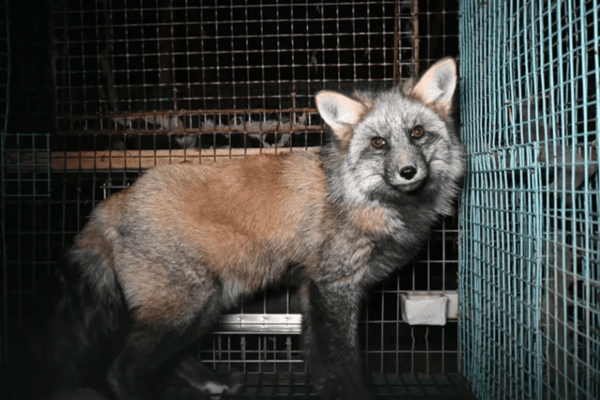
Bulgaria's parliament has banned the farming of non-human animals for fur. On 13 November 2026, the National Assembly in Sofia passed the ban in its second reading by 173 votes to 0 with no abstentions, backed by all parliamentary groups. It covers farming solely for fur production, including American mink, foxes, chinchillas and raccoon dogs. Pelts from legal recreational hunting are not covered.
What the law prohibits
The legal basis is a set of amendments to the Veterinary Activity Act. They prohibit the keeping, breeding and killing of animals for the production of fur. An amendment to the Animal Protection Act also explicitly classifies these practices as animal cruelty. The Agriculture Committee had approved the bill on 10 November by 17 votes to 0.
Anyone who violates the ban faces fines. According to dnes.dir.bg, private individuals pay 800 to 1,500 euros, and 2,000 to 6,000 euros for repeat offences. For companies the fines are 2,500 to 4,500 euros, and 4,500 to 10,000 euros for repeat offences. After the parliamentary vote, according to agro.bg, the presidential decree promulgating the law and its publication in the State Gazette are still outstanding.
The exemption for hunting pelts
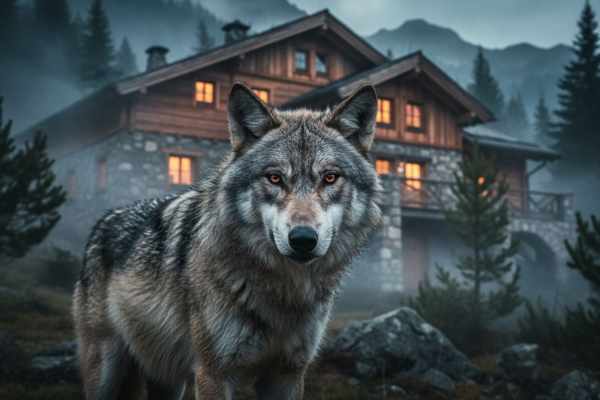
Not covered are hides and pelts that arise as by-products of food production, nor pelts from legal recreational hunting. This is reported consistently by Novinite and dnes.dir.bg. A fox bred and killed in a cage is thus regarded as a victim of animal cruelty. A fox shot in the forest may still be processed into fur.
Switzerland knows the same logic. At the Grisons fur market in Thusis, pelts from recreational hunting are traded; for a fox, the dealer paid around 8 francs. In total, in Switzerland, during the Fox hunting every year around 20,000 foxes are killed.
From mink ban to law
Back in 2022, the Bulgarian Ministry of Agriculture had breeding and import of mink banned by decree. A lengthy legal dispute followed over the remaining farms. The country's last mink farm, near Madzherito in the Stara Zagora region, closed in early 2025, according to Eurogroup for Animals. The new law now bans fur farming comprehensively at statutory level.
The Bulgarian animal welfare organisation CAAI had campaigned for the ban for years. According to agro.bg, MP Anton Kutev (Progressive Bulgaria) spoke of the “end of a long process”. According to Novinite, Kutev said there are no active fur producers left in Bulgaria. An important aim, he said, is to ensure that producers from other European countries do not relocate to Bulgaria.
Europe is going fur-free, step by step
According to Eurogroup for Animals, 24 European countries have now banned or severely restricted fur farming. Poland, previously one of the largest producers, passed a ban in December 2025; the farms must close by the end of 2033. Denmark has also decided to phase out mink farming. In 2024, Romania had already banned fur farming. In Rome, the city council also has before it a motion seeking to ban the display of fur goods in shop windows. Rome would thus be the first Italian city with such a ban. The animal welfare organisation Humane World for Animals is collecting signatures for it; the motion has not yet been debated.
The European Food Safety Authority EFSA concluded in 2025 that most of the key animal welfare problems in today's cage systems on fur farms can neither be prevented nor substantially reduced (more on this). The EU Commission's decision on the European Citizens' Initiative “Fur Free Europe”, which calls for an EU-wide ban, is still pending. On 2 October 2026, Switzerland enshrined a ban on the import and trade of fur produced with cruelty to animals in law. The import ban applies from 1 July 2029, the trade ban from 1 July 2030.
Comment: Protection must not end at the cage
173 to 0: a parliament could hardly be more unanimous in declaring that fur from farms is animal cruelty. That is an important step forward. All the more reason why the exception weighs so heavily. Criticism of cage farming does not answer the question of whether free-living foxes may be killed for their fur. Bulgaria leaves it open, and so does Switzerland: it will in future ban the import of fur produced with cruelty, while every year around 20,000 foxes are killed by recreational hunters. Fox pelts are traded for a few francs at the Grisons fur market, among other places. Anyone who rejects fur consistently must also talk about hunting pelts.
More on the subject of recreational hunting: The scientific evidence is presented in the overview Studies on the Effects of Recreational Hunting.
The position of IG Wild beim Wild: IG Wild beim Wild rejects recreational hunting. Our model is the canton of Geneva, which has managed without recreational hunting since 1974: without hunting seasons, without hunting dogs, without driven hunts, without high seats, without the animal cruelty and crime that go hand in hand with hunting season elsewhere. What has worked there for over fifty years disproves every position paper by JagdSchweiz. An association that bases its policy on claims it refutes in its own documents is not a professional organisation, but a factory for misinformation.
Wild animals need a voice
Once a week: research, petitions and background information on recreational hunting. Free of charge and can be unsubscribed from at any time.
Support our work
With your donation you help protect animals and give their voice a hearing.
Donate now →