
Cantonal popular initiative – Canton Appenzell Ausserrhoden
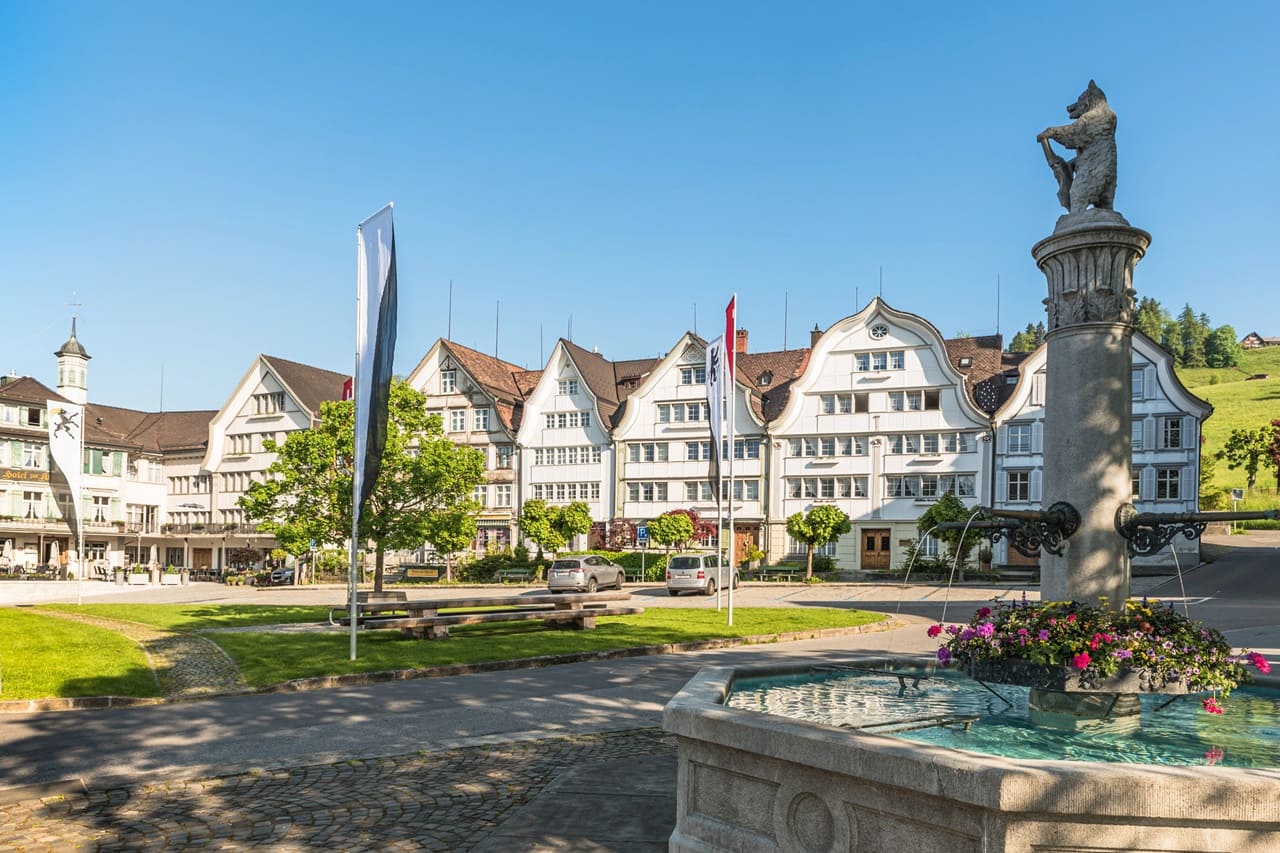
«For professional wildlife protection»
Constitutional initiative in the form of a detailed draft
Based on Art. 60 ff. of the Constitution of Canton Appenzell Ausserrhoden of 30 April 1995 and on the legislation on political rights
Submitted by the initiative committee [date of submission]
Initiative text
The undersigned persons entitled to vote in Canton Appenzell Ausserrhoden hereby submit the following constitutional initiative:
The Constitution of Canton Appenzell Ausserrhoden of 30 April 1995 is supplemented by the following articles:
Art. [new] Professional wildlife protection
1 The practice of hunting by private individuals (licensed hunting, recreational hunting) is prohibited throughout the territory of Canton Appenzell Ausserrhoden.
2 The protection, care and, where necessary, regulation of wild animals is the exclusive responsibility of professionally trained wildlife managers in the service of the canton.
3 The culling of wild animals is only permissible as a last resort when all other suitable measures for damage prevention or hazard prevention have been exhausted or are insufficient. It requires prior approval from the wildlife commission.
4 The canton establishes an independent wildlife commission composed of representatives from animal and nature protection organizations, science and the relevant authorities. The commission supervises wildlife management and decides on regulation measures.
5 The canton promotes the natural regulation of wildlife populations, the connectivity of habitats and the coexistence of humans and wildlife.
6 The details are regulated by law.
Art. [new] Protection of endangered and protected wildlife species
1 The canton refrains from submitting applications for preventive population regulation of protected wildlife species under the Federal Act on Hunting and the Protection of Wild Mammals and Birds, particularly wolf, lynx, bear, beaver, otter, golden jackal, golden eagle, goosander and other species protected under federal law.
2 It focuses on promoting coexistence between humans and wildlife, passive damage prevention, ecological enhancement of habitats and scientific monitoring of wildlife presence.
3 Measures against individual wild animals that pose an immediate and significant threat to humans are reserved. They must be limited to the minimum and carried out by the competent specialist agency of the canton.
4 The canton actively advocates for the protection and conservation of endangered wildlife species within the framework of inter-cantonal cooperation and vis-à-vis the federal government.
Transitional provision
1 The Government Council shall issue the necessary implementing regulations within two years of the adoption of this constitutional amendment.
2 Existing hunting licenses expire upon entry into force of the implementing regulations. Patent fees already paid for the current hunting season will be refunded proportionally.
3 The Government Council ensures the continuity of wildlife management during the transition phase.
Explanations
1. Initial situation
The canton of Appenzell Ausserrhoden covers 243 km² and has around 55,000 inhabitants. The hilly, pre-alpine area is characterized by scattered settlements, agriculture and a high proportion of forest. The canton borders St. Gallen, Appenzell Innerrhoden and Thurgau.
Recreational hunting in Appenzell Ausserrhoden is organized as patent hunting. Private individuals obtain a cantonal patent and hunt without fixed territory responsibility. The patent system generates no professional added value compared to professional wildlife management: It does not bind hobby hunters to a specific area and complicates coordinated wildlife management (cf. the Psychology of recreational hunting in the canton of Appenzell Ausserrhoden as well as the critical analysis of hunting education on wildbeimwild.com).
The claim that ecological balance would collapse without recreational hunting has been empirically refuted by the Geneva model for over 50 years (cf. the comprehensive dossier on the Geneva hunting ban on wildbeimwild.com). Appenzell Ausserrhoden has a comparable area of 243 km² to Geneva (282 km²). If professional wildlife protection has worked on 282 km² for over 50 years, there is no reason why it should not work on 243 km².
In parallel, more and more protected wildlife species are coming under pressure at the federal level. Political pressure on species such as lynx, beaver, otter and goosander is steadily increasing (cf. the analysis of hunting policy on wildbeimwild.com).
2. The model: Canton of Geneva
On 19 May 1974, around two-thirds of voters in the canton of Geneva voted to abolish militia recreational hunting. The experience since the recreational hunting ban is unambiguous:
– Biodiversity has increased markedly. The number of overwintering waterfowl has multiplied from a few hundred to around 30,000. Geneva today hosts the largest brown hare population and one of the last partridge populations in Switzerland. Before the 1974 vote, the recreational hunting lobby claimed that brown hares would be exterminated by predators without recreational hunting. The opposite has occurred.
– The roe deer population has stabilized at a healthy level, with an annual selective cull by professional game wardens of only 20 to 36 animals.
– In 2005, 90 percent of Geneva's voters supported maintaining the ban on recreational hunting. The total costs amount to around 1.2 million francs annually, or about 2.40 francs per resident. The efficiency of the Geneva model is evident in direct comparison: A professional wildlife ranger in Geneva requires on average 8 hours and a maximum of 2 cartridges for the sanitary culling of a wild boar. A hobby hunter in Canton Zurich requires 60 to 80 hours and up to 15 cartridges for the same task. The brown hare density in Geneva is 17.7 animals per 100 hectares (highest in Switzerland), in Canton Zurich only 1.0 per 100 hectares (cf. Fact-check Zurich Government Council).
A detailed presentation can be found in the Dossier 'Geneva and the Hunting Ban' on wildbeimwild.com.
3. The Concept: Professional Wildlife Management Instead of Recreational Hunting
The initiative replaces recreational hunting with professional wildlife management according to the wildlife ranger model:
Professional competence instead of recreational activity. Professional wildlife managers act on a scientific basis, within the framework of a cantonal service mandate.
Last resort principle. Culling is only permitted when all non-lethal measures have been exhausted: electric fences, deterrent measures, habitat modification, structural protection measures.
Democratic control through a wildlife commission. The independent commission prevents political pressure from undermining wildlife management.
Natural self-regulation as guiding principle. Experience from Geneva, from national parks and from numerous scientific studies proves: Wildlife populations regulate themselves autonomously in most cases.
4. Why Appenzell Ausserrhoden?
Appenzell Ausserrhoden is suitable for this initiative for one outstanding reason:
Switzerland's lowest signature threshold: 300 signatures. For a cantonal popular initiative in Appenzell Ausserrhoden, only 300 valid signatures are required. This is the absolutely lowest threshold of all Swiss cantons with regular initiative rights. 300 signatures can be collected in just a few collection days. Even a small committee of three to five people can reach this number within a few weeks. The practical achievability of this threshold makes Appenzell Ausserrhoden the easiest entry canton for a popular initiative 'For Professional Wildlife Protection'.
Area comparable to Geneva. Appenzell Ausserrhoden has 243 km², Geneva 282 km². The canton is even smaller than the Geneva reference model. Both cantons have a similar landscape mix of settled areas, agriculture and forest.
Patent hunting = simple system change. As in Zug, no hunting lease contracts need to be dissolved and no municipalities compensated. The patents expire with the entry into force of the implementing regulations.
Signal effect from the Appenzell region. Success in Appenzell Ausserrhoden would be remarkable precisely because the canton is considered rural and tradition-conscious. The signal would be: If even in the Appenzell region a majority votes for professional wildlife protection, then the Geneva model can be implemented anywhere.
Challenge: Rural character. Appenzell Ausserrhoden is not an urban canton. Agriculture and the associated hunting tradition carry different weight than in Basel or Zug. The campaign must therefore focus more strongly on the concrete benefits of the Geneva model for agriculture: less wildlife damage through professional prevention, relief for farmers through state-provided electric fences and deterrent measures, elimination of the conflict of interest between recreational hunting and actual damage management (cf. wildbeimwild.com on wildlife in settlement areas).
5. On the Initiative Text
The initiative text corresponds to the patent hunting variant (like Zug). Cantonal competence is undisputed: The federal hunting law (JSG) expressly leaves the organization of hunting operations to the cantons (Art. 3 Para. 1 JSG). The three hunting systems – patent hunting, territory hunting and state hunting – are equivalent. The Canton of Geneva has practiced state hunting since 1974 in accordance with federal law. Existing hunting patents expire when the implementing regulations come into force, patent fees are refunded proportionally.
The second paragraph on the protection of protected species is relevant for Appenzell Ausserrhoden because the canton lies at the interface between the Mittelland and the pre-Alps. The lynx occurs in the adjacent St. Gallen and Thurgau forest areas. The return of the wolf to eastern Switzerland is a matter of time. The beaver is spreading along eastern Switzerland's waterways. A constitutional waiver of protection against preventive regulation would be a forward-looking signal (cf. the analysis of wolf politics on wildbeimwild.com).
6. Cost implications: Concrete budget for Appenzell Ausserrhoden
The Geneva reference budget
In Geneva, which at 282 km² is somewhat larger than Appenzell Ausserrhoden and has around 500,000 inhabitants, the total costs of professional wildlife management amount to around 1.2 million francs annually.
Conservative projection for Appenzell Ausserrhoden
For Appenzell Ausserrhoden with 243 km² area and around 55,000 inhabitants, the following deliberately conservative cost estimate results. This takes into account the hilly to pre-alpine topography at the edge of the Alpstein:
Personnel costs: 240,000 to 420,000 francs annually. Required are 2 to 3 full-time positions. Appenzell Ausserrhoden is smaller than Geneva and lies at the edge of the Alpstein. The hilly to pre-alpine topography requires specialists with terrain knowledge.
Material costs: 50,000 to 90,000 francs annually.
Damage compensation: 25,000 to 60,000 francs annually.
Herd protection start-up investment: 200,000 to 350,000 francs. One-time investment over three to five years for the Alpstein border areas: livestock protection dog programs, mobile fences, night enclosures.
Total costs: 315,000 to 570,000 francs annually (gross).
Savings and counter-financing
These are offset by savings: No hunting examinations, no patent administration, no shooting planning, no hunting supervision. A single senselessly killed wolf costs the public around 35,000 francs. Compensatory reproduction – the artificially increased reproduction rate caused by hunting pressure – subsides within a few years after the system change.
Lost revenue
With the abolition of recreational hunting, patent fees of an estimated 120,000 to 200,000 francs annually are eliminated. However, this is offset by the never-accounted external costs of militia hunting – wildlife accidents, hunting-related browsing damage in protection forests, administrative expenses, police and court deployments – which amount to a multiple of this revenue. In the Canton of Geneva, this revenue has been eliminated since 1974 – without financial problems: Before the hunting ban, over 400 hobby hunters were active, today three full-time positions do the same job better. Sanitary and therapeutic culling by professional game wardens is not the same as regulatory hunting based on hunters' folklore or misunderstood 'nature experience' of recreational hunters. A full cost accounting shows: Militia hunting costs taxpayers significantly more than it brings in (cf. 'What recreational hunting really costs Switzerland' on wildbeimwild.com).
Recreational hunters in politics vote against nature conservation. The recreational hunting lobby systematically opposes biodiversity and species protection initiatives. In 2024, it fought the biodiversity initiative (63 percent No). In 2020, the hunting law it helped shape failed at the ballot box (51.9 percent No). In 2016, the Ticino hunting association torpedoed the Parc Adula National Park. During the 2015-2019 legislative period, hobby hunters in parliament predominantly voted against environmental concerns. Anyone claiming hobby hunters are conservationists ignores their voting record (cf. Ticino Hunting Association: 30 Years of Nonsense and Cost Dossier).
The net additional costs are likely to be 150,000 to 350,000 francs annually . In absolute terms modest: 150,000 to 350,000 francs for a canton with a total budget of around 604 million francs (State Accounts 2024, FFA) (cf. Hunting Myths Fact Check on wildbeimwild.com).
7. Compatibility with Higher-Level Law
The initiative is compliant with federal law. The same legal argumentation applies as for all previous cantonal proposals: Art. 3 Para. 1 JSG, the three equivalent hunting systems, over 50 years of unchallenged practice in Geneva. Art. 7a JSG enables cantons to implement preventive regulation but does not oblige them to do so. The initiative preserves unity of subject matter.
8. Anticipating Foreseeable Objections
'Appenzell is a rural canton – the Geneva model doesn't fit here'
The facts: Geneva also has significant agricultural areas, viticulture and forests and at 282 km² is even larger than Appenzell Ausserrhoden (243 km²). Professional wildlife management has functioned there for over 50 years, including in rural communities. The objection that Geneva is 'an urban canton' ignores the reality of Geneva's hinterland.
Communicative short formula: 'Geneva has vineyards, fields and forests across 282 km². Appenzell has hills, pastures and forests across 243 km². Geneva has been demonstrating this for 50 years.'
'The per-capita costs are too high'
The facts: The higher per-capita costs are a mathematical consequence of the small population, not a sign of inefficiency. In absolute terms, professional wildlife management in Appenzell Ausserrhoden costs less than a quarter of Geneva's budget. And Geneva proves that these costs are an investment that pays off multiple times through higher biodiversity, fewer wildlife damages and more professional management (cf. Hunting Myths Fact Check on wildbeimwild.com).
Communicative short formula: 'Under 5 francs per person per year. That's one coffee. For professional wildlife protection instead of hobby hunting.'
'300 signatures are too few for such a far-reaching initiative'
The facts: The signature threshold of 300 is enshrined in the cantonal constitution. It applies to every popular initiative, regardless of scope. Democratic legitimacy is not created during signature collection, but at the vote, where all eligible voters participate. 300 signatures are the threshold for a matter to be voted on. The vote itself decides.
Communicative short formula: '300 signatures open the door to the vote. There, the people decide.'
9. Summary
This initiative gives the Ausserrhoden population the opportunity to support modern, evidence-based wildlife management. With only 300 signatures – the lowest threshold in Switzerland – the path to a vote is shorter than in any other canton. The area is smaller than that of Geneva, and the proven Geneva model shows that professional wildlife protection also functions in a mixed landscape with agriculture and forests.
Initiative Committee 'For Professional Wildlife Protection'
[Name 1], [Name 2], [Name 3] …
(Committee members according to cantonal law, residing in the canton)
Contact address: [Committee address]
Appendix: Further Documentation
Geneva Model in Detail: wildbeimwild.com/dossiers/genf-und-das-jagdverbot – Comprehensive overview of Geneva's wildlife management since 1974.
Scientific studies: wildbeimwild.com/studien-ueber-die-auswirkung-der-jagd-auf-wildtiere-und-jaeger – Collection of scientific studies on self-regulation of wildlife populations.
Hunting in Switzerland: wildbeimwild.com/warum-die-hobby-jagd-in-der-schweiz-kein-naturschutz-ist – Continuously updated overview of Swiss hunting policy.
Psychology of recreational hunting in Canton Appenzell Ausserrhoden: wildbeimwild.com – Psychology of recreational hunting in Canton AR – Motives, justifications and social dynamics.
Psychology of recreational hunting: wildbeimwild.com/category/psychologie-jagd – Analyses of motives, justifications and social dynamics of recreational hunting.
Wolf dossier: wildbeimwild.com/dossiers/wolf-in-der-schweiz-fakten-politik-und-die-grenzen-der-jagd – Current developments in wolf policy in Switzerland.
Wildlife and predators: wildbeimwild.com/category/wildtiere – Information on wildlife, predators and coexistence between humans and wildlife.
Hunting myths: wildbeimwild.com/dossiers/jagdmythen – Fact-check of the most common claims by the recreational hunting lobby.
Cantonal popular initiative Basel-Stadt: Model text of the initiative in Canton Basel-Stadt.
Note on procedure
The initiative committee submits the initiative text to the Canton Chancellery of Appenzell Ausserrhoden for preliminary review before beginning signature collection. 300 valid signatures are required for the initiative to come about. No deadline for collecting signatures is provided in Canton Appenzell Ausserrhoden. The submission procedures follow cantonal legislation on political rights.
Strategic briefing for activists
Popular initiative «For professional wildlife protection» – Canton Appenzell Ausserrhoden Internal working document – Status March 2026
Summary
Appenzell Ausserrhoden offers the absolutely lowest threshold in Switzerland for a cantonal popular initiative with only 300 required signatures. At 243 km², the canton is smaller than Geneva. The greatest challenge is the rural character of the canton, which requires a different campaign strategy than in urban cantons. The strongest argument: If the initiative comes to a vote and succeeds even in Appenzellerland, the Geneva model can be implemented anywhere.
1. Why Appenzell Ausserrhoden?
300 signatures. The lowest threshold in Switzerland. On a single Saturday at the weekly market in Herisau, over 50 signatures can be collected with good organization. The initiative can be submitted after six Saturdays. No other canton offers such low-threshold access to direct democracy.
243 km² – smaller than Geneva. The area comparison refutes any «not comparable» argument.
Patent hunting = simple system change. No lease contracts, no municipal compensation.
Signal effect from rural areas. Success in Appenzellerland would be the strongest possible signal: If it works here, it works everywhere.
2. The special challenge: Rural canton
Unlike Basel or Zug, Appenzell Ausserrhoden is not an urban canton. The campaign must therefore be conducted differently:
Agricultural proximity as an argument for the initiative. Professional wildlife managers are better partners for farmers than hobby hunters. The canton provides electric fences and deterrent devices, professional specialists respond faster and more competently to wildlife damage, and the conflict of interest of recreational hunting (maintaining high populations of huntable species = more wildlife damage) is eliminated.
Factual tone. In a small canton where many people know each other, the campaign must remain factual. Personal attacks on hobby hunters would be counterproductive. The message must be: This is not against individuals, but for a better system (cf. the Psychology of Recreational Hunting in the Canton of Appenzell Ausserrhoden).
Emphasize Geneva as a rural model. Most people associate Geneva with the city. In fact, Geneva has an extensive hinterland with agriculture. This aspect must be strongly communicated in Appenzell.
3. Communication Strategy: The Three Core Messages
«300 signatures. That's all it takes to vote on professional wildlife protection.»
«Smaller than Geneva. What has worked there for 50 years will work even better here.»
«Professional instead of hobby. Specialists who work for farmers, not hunt for their pleasure.»
4. Opposition Analysis
License holders form a small group. In a canton with 55,000 inhabitants, every hobby hunter is personally known. The campaign must respect this fact and remain factual.
The Farmers' Association could appear as an ally or as an opponent. The answer: Professional wildlife management is better for farmers than recreational hunting because the conflict of interest is eliminated and damage prevention occurs more professionally.
The tradition argument will carry more weight in Appenzell than in Basel or Zug. The answer: In 1974, Geneva also voted against tradition. And 90 percent of Genevans would do it again.
5. Timeline
| Phase | Content | Timeframe |
|---|---|---|
| Committee formation & text pre-review | Involve lawyer; recruit committee members with AR residence | Month 1–3 |
| Submission for pre-review | Cantonal Chancellery Appenzell Ausserrhoden | Month 3–4 |
| Signature collection | 300 signatures; realistically achievable in a few weeks | Month 4–6 |
| Party contacts & coalition building | Contacts to parties and nature conservation associations; sound out Farmers' Association | Month 1–10 |
| Cantonal council debate | Parliamentary anchoring; media work | Month 8–14 |
| Voting campaign | Final mobilization, infographics, media presence | Month 14–20 |
6. Campaign Materials
- The Geneva Dossier on wildbeimwild.com as central argumentation.
- The Psychology of Recreational Hunting in the Canton of Appenzell Ausserrhoden as background material.
- Infographic: Area comparison AR/GE (243 vs. 282 km²) and «300 signatures» as central figure.
- Local media: Appenzeller Zeitung, Appenzeller Volksfreund, Radio FM1, TVO.
- Agriculture factsheet: Concrete benefits of professional wildlife management for farmers.
7. Further Sources
- Geneva hunting ban in detail
- Scientific studies
- Hunting in Switzerland: Criticism, facts, news
- Wolf dossier
- Hunting myths fact-check
- Psychology of Recreational Hunting in the Canton of Appenzell Ausserrhoden
- Federal hunting statistics (FOEN)
- Cantonal popular initiative Basel-Stadt
This document is a template text by IG Wild beim Wild. It can be freely used by activists, organizations or initiative committees and adapted to conditions in the Canton of Appenzell Ausserrhoden.
Fact-check: The claims of the recreational hunting lobby
The brochure «Hunting in Switzerland protects and benefits» by JagdSchweiz reads like an advertising prospectus – but the central claims do not withstand fact-checking. Ten narratives under scrutiny, from «state responsibility» through «biodiversity» to «80% approval»: Dossier: Fact-check JagdSchweiz brochure →