
Cantonal Popular Initiative: Canton of Schaffhausen
«For professional wildlife protection»
Constitutional initiative in the form of a drafted proposal
Based on Art. 27 of the Constitution of the Canton of Schaffhausen of 17 June 2002 and on the Act on Political Rights
Submitted by the initiative committee [date of submission]
Text of the initiative
The undersigned, persons entitled to vote in the canton of Schaffhausen, submit the following constitutional initiative:
The Constitution of the Canton of Schaffhausen of 17 June 2002 is amended to include the following articles:
Art. [new] Professional wildlife protection
1 The practice of hunting by private individuals (territorial hunting, recreational hunting) is prohibited throughout the entire territory of the canton of Schaffhausen. Existing hunting lease agreements between municipalities and hunting associations will not be renewed.
2 The protection, care and, where necessary, regulation of wild animals shall be the exclusive responsibility of professionally trained wildlife managers employed by the canton.
3 The killing of wild animals is only permitted as a last resort, when all other suitable measures for preventing damage or averting danger have been exhausted or are insufficient. It requires prior approval by the Wildlife Commission.
4 The canton shall establish an independent Wildlife Commission, composed of representatives of animal welfare and nature conservation organisations, the scientific community and the authorities concerned. The commission shall oversee wildlife management and decide on regulatory measures.
5 The canton shall promote the natural regulation of wildlife populations, the connectivity of habitats and the coexistence of humans and wild animals.
6 The canton shall compensate the municipalities for the loss of hunting lease income within the framework of implementing legislation.
7 Further details shall be regulated by law.
Art. [new] Protection of endangered and protected wild animal species
1 The canton refrains from regulating populations of protected wild animal species pursuant to Art. 7a of the Federal Act on Hunting and the Protection of Wild Mammals and Birds and does not grant kill permits for individual animals of protected species pursuant to Art. 12 para. 2 of this Act, in particular not for wolf, lynx, bear, beaver, otter, golden jackal, golden eagle, goosander and other species protected under federal law. Paragraph 3 remains reserved.
2 It relies on fostering coexistence between humans and wild animals, passive damage prevention, the ecological enhancement of habitats and the scientific monitoring of wild animal presence.
3 Measures against individual wild animals that pose an immediate and significant danger to humans remain reserved. They are to be limited to the minimum necessary and carried out by the canton's competent specialist authority.
4 The canton actively advocates for the protection and preservation of endangered wild animal species within the framework of inter-cantonal cooperation and towards the Confederation.
Transitional provision
1 The cantonal government shall issue the necessary implementing provisions within two years of the adoption of this constitutional amendment.
2 Existing hunting lease agreements shall expire at the respective next ordinary contract renewal date, but no later than within five years of the implementing legislation entering into force.
3 The Cantonal Council shall ensure the continuity of wildlife management during the transitional phase and shall regulate compensation for municipalities for lost hunting lease income.
Explanatory notes
1. Starting position
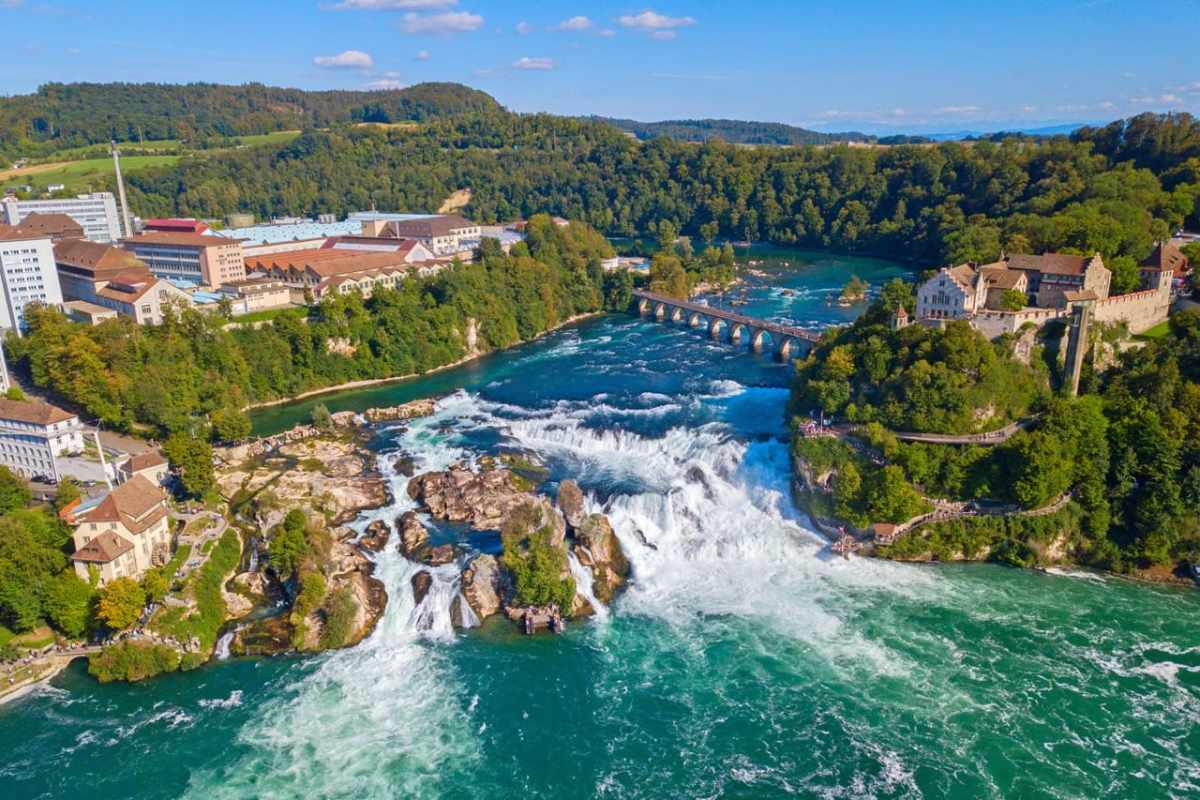
The canton of Schaffhausen covers 298 km² and has around 85,000 inhabitants. As the northernmost canton of Switzerland, it lies almost entirely on the right bank of the High Rhine, surrounded on three sides by German territory. Around 43 per cent of the canton's area consists of forest and around 40 per cent of agricultural land. The Randen, a foothill of the Jura, forms the canton's largest contiguous forest area.
Recreational hunting in Schaffhausen is organised as territorial hunting. Hunting rights belong to the political municipalities, which grant them by lease agreement to hunting associations. As in all territorial-hunting cantons, the Schaffhausen hunting associations are closed circles that lease the right to kill wild animals and whose composition and activities are largely shielded from public scrutiny (see the Psychology of recreational hunting in the canton of Schaffhausen as well as the critical analysis of hunting training on wildbeimwild.com).
The claim that without recreational hunting the ecological balance would collapse has been empirically disproven by the Geneva model for over 50 years (cf. the comprehensive dossier on the Geneva hunting ban on wildbeimwild.com). A particularly striking comparison: Schaffhausen records almost 2,000 kills of ungulates alone, as well as hundreds of Predators killed per year, while Geneva manages with around 327 wild boars, 36 roe deer and 19 red deer annually. Foxes, badgers, hares? Zero.
At the same time, more and more protected wild animal species are coming under pressure at the federal level. With the revision of the hunting act in December 2022, preventive regulation of the wolf was introduced. In the first two regulation periods 2023/2024 and 2024/2025, the FOEN approved the killing of a total of around 225 wolves; 147 animals were actually killed. Political pressure on other species such as lynx, beaver, otter and goosander is steadily increasing (cf. the analysis of hunting policy on wildbeimwild.com).
2. The role model: canton of Geneva
On 19 May 1974, a good 70 percent of those voting in the canton of Geneva voted in favour of abolishing militia-based recreational hunting. The experience since the ban on recreational hunting has been unequivocal:
- Biodiversity has increased markedly. The number of overwintering waterfowl has multiplied from a few hundred to around 30,000. Geneva is now home to the largest brown hare population and one of the last grey partridge populations in Switzerland.
- The roe deer population has settled at a healthy level, with an annual special cull by professional game wardens of only 20 to 36 animals. The professional wildlife wardens intervene selectively and to a minimal extent, rather than striving for the highest possible kill numbers as in recreational hunting.
- The ban has been in force continuously for over 50 years. Geneva has never repealed it.
- The total costs of professional wildlife management amount to around 1.2 million francs annually, i.e. around 2.40 francs per inhabitant. The efficiency of the Geneva model is shown in a direct comparison: a professional game warden in Geneva needs on average 8 hours and a maximum of 2 cartridges for a sanitary kill of a wild boar. A recreational hunter in the canton of Zurich needs 60 to 80 hours and up to 15 cartridges for the same task. The density of brown hares in Geneva is 17.7 animals per 100 hectares (the highest in Switzerland), whereas in the canton of Zurich it is only 1.0 per 100 hectares (cf. fact check by the Zurich Cantonal Council).
A detailed account can be found in the dossier «Geneva and the hunting ban» on wildbeimwild.com.
3. The concept: professional wildlife wardens instead of recreational hunting
The initiative replaces recreational hunting with professional wildlife management based on the game warden model:
Professional expertise instead of leisure pursuit. Professional wildlife managers act on a scientific basis, within the framework of a cantonal service mandate. Their goal is to preserve healthy wildlife populations, not to maximise kill numbers (cf. the critical analysis of hunting training on wildbeimwild.com).
Last-resort principle. A kill is only permitted once all non-lethal measures have been exhausted: electric fences, deterrence, habitat design, structural protective measures. In Geneva, the canton provides farmers with electric fences and protects fruit trees with nets. Coexistence is a question of will, not of technical possibility.
Democratic oversight through a wildlife commission. The independent commission prevents political pressure from diluting wildlife management.
Natural self-regulation as a guiding principle. Experience from Geneva, from national parks and from numerous scientific Studies documented: wildlife populations regulate themselves independently in most cases. Recreational hunting disrupts this process by destroying social structures and artificially increasing reproduction rates.
4. Why Schaffhausen?
Schaffhausen is particularly well suited for the introduction of professional wildlife protection for several reasons:
Low signature threshold. A cantonal popular initiative in Schaffhausen requires only 1'000 valid signatures. The threshold is lower only in Appenzell Outer Rhodes (300), Obwalden and Nidwalden (500 each) and Uri (600); in the Landsgemeinde cantons, a single person suffices. The 1'000 signatures are achievable even for a small committee.
Almost identical area to Geneva. Schaffhausen covers 298 km², Geneva 282 km². This size comparison is the strongest argument of the entire initiative: if professional wildlife protection has worked on 282 km² for over 50 years, it will also work on 298 km². The objection that Geneva is «not comparable» is refuted by the plain area figures. Both cantons have similar shares of forest and agricultural land, and Geneva even has a larger population (500'000 vs. 85'000), which tends to make wildlife management there more complex.
Compulsory voting as a strategic advantage. Schaffhausen is the only canton in Switzerland with compulsory voting. This means that an above-average turnout is to be expected in votes. The majority of the population not affiliated with hunting (who might otherwise stay home with voluntary participation) will take part in a vote. An initiative that is broadly communicated and presents the Geneva model convincingly benefits from compulsory voting.
Border location as an ecological opportunity. Schaffhausen borders Germany on three sides. The cross-border networking of wildlife corridors is a task that professional experts can handle better than recreational hunters with their ground-related interests. The Randen, as a contiguous forest area, offers ideal conditions for integrated wildlife management. With the Schwarzwald National Park and the Schwäbische Alb Biosphere Reserve, Germany already has professional structures that Schaffhausen could link up with (cf. wildbeimwild.com on wild animals in settlement areas).
Manageable recreational hunting lobby. In a canton with 85,000 residents, the number of active recreational hunters is small. Political feasibility is higher than in large cantons with thousands of licence holders.
No statutory collection period. The canton of Schaffhausen has no statutory collection period for popular initiatives. The signature collection can therefore be organised without time pressure. With only 1,000 signatures required, this is easily achievable. With good organisation, more than 100 signatures can be collected on a single Saturday at Fronwagplatz in Schaffhausen.
5. On the first paragraph: professional wildlife protection
Paragraph 1: Ban on recreational hunting and termination of hunting lease agreements
The ban on recreational hunting by private individuals is the core of the initiative. It corresponds to the Geneva model (Art. 162 of the Geneva cantonal constitution). The cantonal competence for this is undisputed: the federal hunting act (JSG) expressly leaves the organisation of hunting operations to the cantons (Art. 3 paras. 1 and 2 JSG). The three hunting systems in Switzerland (licence hunting, territorial hunting and state or regie hunting) are of equal standing. The canton of Geneva has practised regie hunting in conformity with federal law since 1974.
Territorial hunting in Schaffhausen functions as in the other territorial-hunting cantons: municipalities lease the hunting rights to hunting associations. The initiative ends this system by constitutionally enshrining the non-renewal of lease agreements and providing for cantonal compensation for the municipalities.
Paragraph 2: Professional wildlife management
Professionally trained wildlife managers in cantonal service take over all tasks of wildlife care and, where necessary, population regulation. In Geneva, this system has proven itself for over 50 years on a practically identical area.
Paragraph 3: Kill as a last resort
A kill is not the rule, but the exception. Passive measures take precedence. In Geneva, an average of around 250 wild boars are killed annually by game wardens, with lead animals explicitly spared for ethical reasons and to preserve the social stability of the sounders. The kill numbers are thus considerably lower than in Schaffhausen, where kills serve not only to avert damage but primarily the hobby.
Paragraph 4: Wildlife commission
The independent wildlife commission is modelled on the Geneva system. It ensures that animal and nature conservation organisations have a say in regulatory decisions, and that decisions are made on an evidence basis rather than on the hunting-ideological myths with which the recreational hunting lobby legitimises its practice.
Paragraph 5: Natural regulation and coexistence
In Schaffhausen, the cross-border connectivity of habitats is particularly important. Wildlife corridors between the Randen and the adjoining German forest areas are essential for genetic diversity and the natural spread of species. The current system of territorial hunting fragments these corridors, because each hunting association manages its hunting ground independently, without cross-border coordination.
Paragraph 6: Compensation for municipalities
As in Basel-Landschaft, the initiative provides for cantonal compensation for the loss of hunting lease income. For most Schaffhausen municipalities, the lease income is fiscally marginal.
Transitional provisions
The two-year deadline for implementing legislation and the five-year sunset clause for existing hunting lease contracts correspond to the Basel model. In Schaffhausen, the professional wildlife managers can be integrated into the existing cantonal administration.
6. On the second paragraph: Protection of endangered and protected wildlife species
For Schaffhausen, the second paragraph is particularly relevant owing to its border location: wild animals know no cantonal or national borders. The beaver has been documented along the High Rhine and its tributaries in Schaffhausen territory. The return of the lynx to the Randen is ecologically possible and desirable. The wolf regularly crosses border-adjacent areas on its migrations. A constitutional renunciation of protection from preventive regulation would send a signal beyond the canton (cf. the analysis of wolf policy on wildbeimwild.com).
The revised federal hunting act (Art. 7a JSG) authorises the cantons to carry out preventive regulation, but does not oblige them to do so. The same applies to kill permits for individual animals under Art. 12 para. 2 JSG. With this paragraph, the canton merely exercises its authority not to make use of a federal authorisation. The reservation for measures in the event of immediate danger ensures that the canton can fulfil its duty to avert danger.
7. Cost implications: Concrete budget for Schaffhausen
Projection
For Schaffhausen, with an area of 298 km² and around 85,000 inhabitants, the following cost estimate results:
Personnel costs: CHF 240,000 to 280,000 annually. Two full-time positions for professional wildlife managers are required. Schaffhausen is comparable in area to Geneva (282 km²), but has significantly fewer inhabitants. A full-time position in cantonal service costs, including ancillary costs, around CHF 120,000 to 140,000 annually.
Material costs: CHF 50,000 to 80,000 annually. Equipment, vehicles, deterrent devices, monitoring infrastructure, electric fences, public relations work.
Damage compensation: CHF 30,000 to 60,000 annually. Mainly wild boar damage to agricultural crops and browsing damage in forests. For comparison: wildlife damage in the canton of Geneva, which is almost the same size, amounts to around CHF 350,000, with a significant portion attributable to pigeon damage, which is less relevant in Schaffhausen.
Compensation to municipalities: CHF 50,000 to 100,000 annually. For the loss of hunting lease income.
Lost revenue
With the abolition of recreational hunting, the lease income from territorial hunting, estimated at CHF 150,000 to 300,000 annually, is lost. However, this is offset by the never-balanced external costs of militia hunting (wildlife-vehicle collisions, hunting-related browsing damage in protective forests, administrative expenses, police and court interventions), which are likely to significantly exceed this income. In the canton of Geneva, this income has been foregone since 1974 without any financial problems: before the hunting ban, more than 400 recreational hunters were active; today, three full-time positions do the same job better. Sanitary and therapeutic kills by professional game wardens are not the same as regulatory hunting based on hunters' lore or a misunderstood “nature experience” claimed by recreational hunters. A full-cost analysis shows that militia hunting costs taxpayers considerably more than it brings in (cf. «What recreational hunting really costs Switzerland» on wildbeimwild.com).
Recreational hunters in politics vote against nature conservation. The recreational hunting lobby systematically opposes biodiversity and species protection concerns. In 2024, it fought against the Biodiversity Initiative (63 per cent No). In 2020, the hunting act it had helped shape failed at the ballot box (51.9 per cent No). In 2016, the Ticino hunting association torpedoed the Parc Adula national park. During the 2015–2019 legislative period, recreational hunters in parliament voted predominantly against environmental concerns. Anyone who claims that recreational hunters are nature conservationists is ignoring their voting behaviour (cf. Ticino Hunting Association: 30 Years of Nonsense and Cost dossier).
Total costs: CHF 370,000 to 520,000 annually (gross). This corresponds to around CHF 4.35 to 6.10 per inhabitant per year.
Savings and net additional costs
These costs are offset by savings: the canton no longer has to administer hunting leases, conduct hunting examinations, or organise hunting supervision. Adjusted for these savings, the net additional costs are likely to be CHF 200,000 to 350,000 annually, which corresponds to aroundCHF 2.35 to 4.10 per inhabitant corresponds. The higher per-capita costs compared with Geneva (CHF 2.40) are explained by the smaller population with a comparable surface area. In absolute terms, the costs are of a magnitude that the cantonal budget can easily bear.
8. Compatibility with superior law
The initiative complies with federal law. The federal hunting act (JSG) expressly leaves it to the cantons to regulate hunting eligibility, the hunting system, the hunting area and hunting supervision (Art. 3 para. 1 and 2 JSG). The three hunting systems (licence hunting, territorial hunting and state-administered hunting) are equivalent. The canton of Geneva has practised state-administered hunting since 1974 and has never, in over 50 years, faced any objection under federal law.
Ending hunting lease contracts through non-renewal does not affect the guarantee of property, since hunting lease contracts are time-limited public-law contracts to which there is no legal entitlement of renewal. Art. 7a JSG enables cantons to carry out preventive regulation, but does not oblige them to do so. The initiative preserves the unity of subject matter.
9. Anticipating foreseeable objections
«Schaffhausen has forests and agriculture, that's not Geneva»
The facts: Geneva also has significant forest and agricultural areas and a comparable cantonal surface area (282 km² vs. 298 km²). Professional wildlife management has been functioning there for over 50 years. The objection is refuted by the direct size comparison.
Short communicative formula: «Schaffhausen has 298 km². Geneva has 282 km². Geneva has been demonstrating it for 50 years.»
«1,000 signatures are too few for genuine legitimacy»
The facts: 1,000 signatures correspond to the legal threshold that the canton of Schaffhausen sets for popular initiatives. Since there is no collection deadline, the signature-gathering can be organised carefully and with broad support. On a single Saturday at Fronwagplatz in Schaffhausen, with good organisation, more than 100 signatures can be collected.
Short communicative formula: «1,000 signatures. No deadline. Professional wildlife protection for everyone.»
«The lease income is lost»
The facts: The lease income is fiscally marginal for the municipalities of Schaffhausen. The initiative provides for cantonal compensation. And wild animals will no longer be killed for recreational pleasure.
Short communicative formula: «The lease income is small change in the municipal budget. The initiative provides compensation, and the animals live.»
«The per-capita costs are higher than in Geneva»
The facts:The per capita costs are higher because, with a comparable area, Schaffhausen has fewer inhabitants than Geneva. In absolute terms, however, professional wildlife management in Schaffhausen costs only around a third of Geneva's budget. And even the higher per capita costs amount to between 2.35 and 4.10 francs per person per year – less than a cup of coffee (cf. Hunting myths fact check on wildbeimwild.com).
Short communicative formula:«Around 2.35 to 4.10 francs per person per year. Less than a cup of coffee. For professional wildlife protection instead of recreational hunting.»
10. Summary
This initiative gives the population of Schaffhausen the opportunity to speak out in favour of modern, evidence-based wildlife management. With only 1,000 signatures required and a cantonal area almost identical to that of Geneva, Schaffhausen offers ideal conditions for introducing the proven Geneva model. The costs are manageable, the legal basis is secure, and compulsory voting ensures that the entire population is heard in a vote.
Initiative committee “For professional wildlife protection”
[Name 1], [Name 2], [Name 3] …
(Committee members in accordance with cantonal law, resident in the canton)
Contact address: [Committee address]
Appendix: Further documentation
The Geneva model in detail: wildbeimwild.com/dossiers/genf-und-das-jagdverbot. Comprehensive overview of Geneva’s wildlife management since 1974, including costs, population figures and biodiversity trends.
Scientific studies: wildbeimwild.com/studien-ueber-die-auswirkung-der-jagd-auf-wildtiere-und-jaeger. Collection of scientific studies on the self-regulation of wildlife populations.
Hunting in Switzerland: wildbeimwild.com/warum-die-hobby-jagd-in-der-schweiz-kein-naturschutz-ist. Continuously updated overview of Swiss hunting policy.
Psychology of recreational hunting in the canton of Schaffhausen: wildbeimwild.com: Psychology of recreational hunting in canton SH. Motives, justifications and social dynamics of recreational hunting in Schaffhausen.
Psychology of recreational hunting: wildbeimwild.com/category/psychologie-jagd. Analyses of motives, justifications and social dynamics of recreational hunting.
Wolf dossier: wildbeimwild.com/dossiers/wolf-in-der-schweiz-fakten-politik-und-die-grenzen-der-jagd. Current developments in wolf policy in Switzerland.
Wild animals and predators: wildbeimwild.com/category/wildtiere. Information on wild animals, predators and the coexistence of humans and wild animals.
Hunting myths: wildbeimwild.com/dossiers/jagdmythen. Fact check on the most common claims made by the recreational hunting lobby.
Cantonal popular initiative Basel-Stadt: Template text of the initiative in the canton of Basel-Stadt.
Note on the procedure
The initiative committee submits the text of the initiative to the State Chancellery of the canton of Schaffhausen for preliminary review before the collection of signatures begins. 1,000 valid signatures are required for the initiative to come about. There is no statutory collection deadline. However, the voting rights certificates may be no more than two months old at the time of submission (Art. 69 para. 2 no. 2 Electoral Act). The submission procedures are governed by the cantonal act on political rights.
Strategic briefing for activists
Popular initiative «For Professional Wildlife Protection», Canton of Schaffhausen Internal working document, as of March 2026
Summary
With only 1,000 signatures required and an area almost identical to Geneva's, Schaffhausen offers excellent conditions for an initiative «For Professional Wildlife Protection». Compulsory voting is a strategic advantage: the non-hunting-affiliated majority will not stay at home when it comes to a vote. The biggest challenge is the fact that Schaffhausen is not a classic animal welfare canton.
1. Why Schaffhausen?
The killer argument: 298 vs. 282 km². Schaffhausen covers 298 km², Geneva 282 km². This comparison is so simple and striking that it invalidates any counter-argument. Every infographic, every flyer, every social media post should include this comparison. Both cantons have comparable shares of forest and agricultural land. Geneva even has a population six times larger, which makes wildlife management there more complex.
Making use of compulsory voting. In no other canton will voter turnout be as high. The majority of the population, who are not recreational hunters, will vote along. Communication must reach this majority.
1,000 signatures. No collection deadline. Easily achievable even with a small committee.
Border location as an opportunity. Wildlife corridors across the national border require professional coordination, not recreational hunting. Germany, with the Black Forest National Park, already has professional structures that Schaffhausen can link up with.
2. Lessons from Zurich
Zurich's mistake 1: Confrontational title. «Game wardens instead of hunters» defined itself in opposition to the opponent. Our title «For Professional Wildlife Protection» is positive.
Zurich's mistake 2: The cost argument went unanswered. Our initiative contains a detailed budget calculation with verifiable figures.
Zurich's mistake 3: No party support. In Schaffhausen, contacts with the SP, the Greens and the GLP must be established early on.
Zurich's mistake 4: The Geneva model was not used enough. In Schaffhausen, the area comparison (298 vs. 282 km²) is so convincing that it could carry half the campaign on its own. The dossier «Geneva and the Hunting Ban» must become the central campaign document.
3. The second paragraph as coalition broadening
The species protection paragraph mobilises beyond the classic animal welfare scene. Particularly relevant for Schaffhausen:
Beavers on the High Rhine.The beaver has been documented along the Rhine and its tributaries in the canton of Schaffhausen. Since February 2025, cantons have been able to authorise the killing of individual beavers that cause significant damage. The initiative protects the beaver in the canton.
Lynx in the Randen.The return of the lynx to the Randen is ecologically feasible and would be a gain for biodiversity.
Cross-border connectivity.Constitutional species protection would enhance Schaffhausen's standing as a partner for cross-border conservation projects.
4. Opponent analysis
The hunting associationsare locally rooted and will lead the campaign against the initiative. In a small canton, personal relationships carry more weight than in Zurich or Basel. The campaign must be conducted factually, not personally.
The municipalitieswill lament the loss of lease revenue. The response: the amounts are marginal, and the initiative provides for cantonal compensation.
The cost argumentis more vulnerable given higher per-capita costs than in Geneva or Basel. The response: in absolute terms, the system costs around 370,000 to 520,000 francs. That is a fraction of the cantonal budget. And the area comparison with Geneva shows that the model has worked on exactly this scale for 50 years (cf. Psychology of recreational hunting in the canton of Schaffhausen).
5. Communication strategy: the three core messages
«Schaffhausen is the same size as Geneva. What has worked there for 50 years also works here.»The most compelling argument in the entire series: 298 vs. 282 km². This figure must appear in every communication.
«Professional instead of hobby.»The question is not whether wild animals are managed, but by whom: by professionals acting in the public interest, or by private individuals as a leisure activity.
«1,000 signatures, no deadline. That is all it takes.»One of the lowest hurdles in German-speaking Switzerland. A signal to the whole of Switzerland.
6. Timeline
| Phase | Content | Timeframe |
|---|---|---|
| Committee formation & preliminary text review | Engage a lawyer; recruit committee members resident in Schaffhausen | Month 1–3 |
| Submission for preliminary review | Schaffhausen State Chancellery | Month 3–4 |
| Publication & start of signature collection | No collection deadline; target: 1,500+ signatures as a buffer. | Month 4 |
| Party contacts & coalition building | Early talks with the SP, Greens, GLP; involve conservation organisations | Month 1–8 |
| Submission of signatures | State Chancellery, official verification | Month 10–12 |
| Cantonal parliament debate | Parliamentary anchoring; intensify media work | Month 13–20 |
| Voting campaign | Final mobilisation, infographics, compulsory-voting strategy | Month 20–26 |
7. Campaign material
- Geneva dossier on wildbeimwild.com as the central set of arguments.
- The Psychology of recreational hunting in the canton of Schaffhausen as background material for media contacts.
- Infographic: area comparison SH/GE (298 vs. 282 km²) as the central visual element.
- Local media: Schaffhauser Nachrichten, Schaffhauser AZ, Radio Munot, TeleTop.
- Compulsory-voting strategy: a broad awareness campaign, since everyone must take part in the vote.
8. Further sources
- Geneva's hunting ban in detail
- Scientific studies
- Hunting in Switzerland: Criticism, Facts, News
- Wolf dossier
- Hunting myths fact check
- Psychology of recreational hunting in the canton of Schaffhausen
- Federal hunting statistics (BAFU)
- Cantonal popular initiative Basel-Stadt
This document is a template text from IG Wild beim Wild. It may be freely used and adapted to the circumstances in the canton of Schaffhausen by activists, organisations or initiative committees.
Fact check: The claims of the recreational hunting lobby
The brochure «Die Jagd in der Schweiz schützt und nützt» (Hunting in Switzerland protects and benefits) by JagdSchweiz reads like an advertising flyer, yet its central claims do not withstand a fact check. Ten narratives put to the test, ranging from “state task” and “species diversity” to “80% approval”: Dossier: Fact check on the JagdSchweiz brochure →