Africa: People Are Losing Their Habitat Due to Trophy Hunting
With silent hammers and axe blows, Kenyan forest rangers and security forces moved into the Okiek village in the Mau Forest at the end of 2023 — one of the last hunter-gatherer communities in Africa.

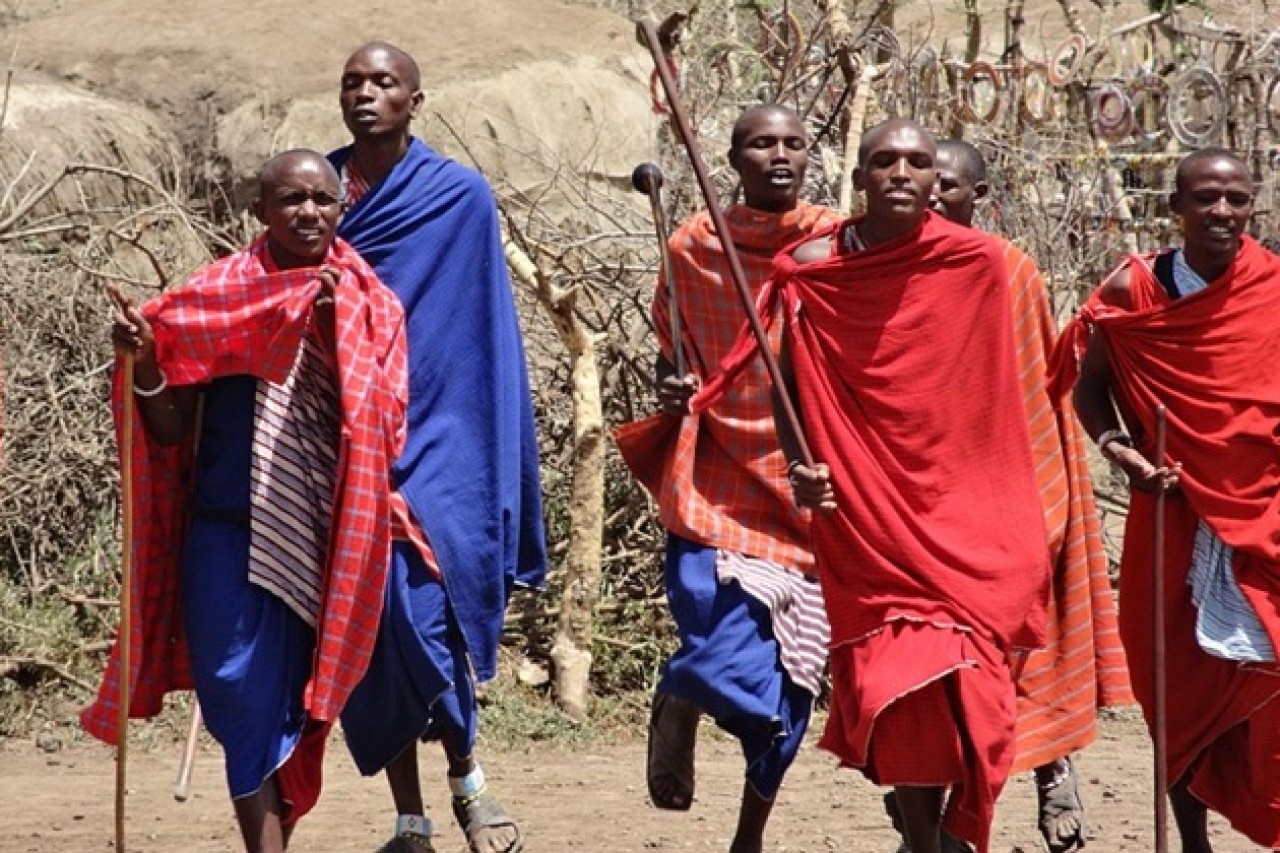
Within just a few days, hundreds of people were violently expelled from their ancestral forests without warning.
For many, only ash remains: crumbling wooden huts, scattered foundations, personal belongings destroyed — as in the case of Fred Ngusilo, who escaped with only one shoe and a sack of his former existence.
«I am so sad that tears come to my eyes.» These words come from Fred himself. He stands where his house once was, surrounded by broken wood and dust — in the shadow of the Rift Valley, just a few dozen kilometres from Narok. The emotional burden runs deep; his bond with the forest remains unshakeable, even as his physical home has been destroyed.
Legal Proceedings and Ignored Rulings
The Kenyan government justifies the forced evictions in the name of conservation. Yet rulings by the African Court on Human and Peoples’ Rights from 2017 and 2022 declared these expulsions unlawful. Nairobi was ordered to compensate the Okiek for their suffering — with demands amounting to over one million euros — and to recognise their land rights. To date, however, these rulings have not been implemented.
With the expulsion of the Okiek, it is not only a people that is being pushed to its limits: a unique way of life, deeply rooted in the natural environment, is being lost — in favour of economic interests and opaque policies. People who once lived without money, relying solely on what nature provided, must now endure external constraints — with little prospect of return.
In earlier centuries and during the colonial era, they were already systematically displaced to make room for hunting grounds for outside hobby-hunters to use.
Since the 1990s, disputes over land rights have become increasingly significant – in particular, land titles were not recognized, and their rights were undermined.
Even if the displacements are primarily carried out in the name of environmental protection and economic interests (e.g. carbon credits), this logic is similar to that of trophy hunting motives: indigenous communities are displaced so that profit interests – whether through hunting, tourism or CO₂ commercialization – can be more easily pursued.
The case of the Maasai in Tanzania: a clear link to trophy hunting
In neighboring Tanzania, there are further clearly documented cases in which indigenous people – primarily the Maasai – were violently displaced to make way for trophy hunting.
In the Loliondo area (near the Serengeti), in 2022 Maasai villages were attacked by police and military, houses were burned, and people were injured – in order to establish a 1’500 km² hunting area under the control of the Otterlo Business Corporation (OBC), allegedly on behalf of the royal family of the United Arab Emirates.
Authorities confiscated their livestock and blocked water supplies – so-called “voluntary resettlement” serves as a cover for forced dispossession.
Human rights organizations point to “fortress conservation” as a cloak for profit-driven hunting, while indigenous rights are trampled underfoot.
Indigenous communities are displaced, whether for profit-driven forest conservation (carbon credits) or for trophy hunting and safari tourism.
More on the subject of recreational hunting: In our dossiers on the criticism of recreational hunting gather fact-checks, analyses and background reports. What the research says about this is shown by Hunting fact-checked: the state of research.
The position of IG Wild beim Wild: IG Wild beim Wild rejects recreational hunting. Our model is the canton of Geneva, which has managed without recreational hunting since 1974: without hunting seasons, without hunting dogs, without driven hunts, without high seats, without the animal cruelty and crime that go hand in hand with hunting season elsewhere. What has worked there for over fifty years disproves every position paper by JagdSchweiz. An association that bases its policy on claims it refutes in its own documents is not a professional organisation, but a factory for misinformation.