Hunting Act rejected: Wolf remains protected
The Swiss electorate rejects the revised Hunting Act with 51.9%. The wolf remains protected. The recreational hunting lobby suffers a defeat.

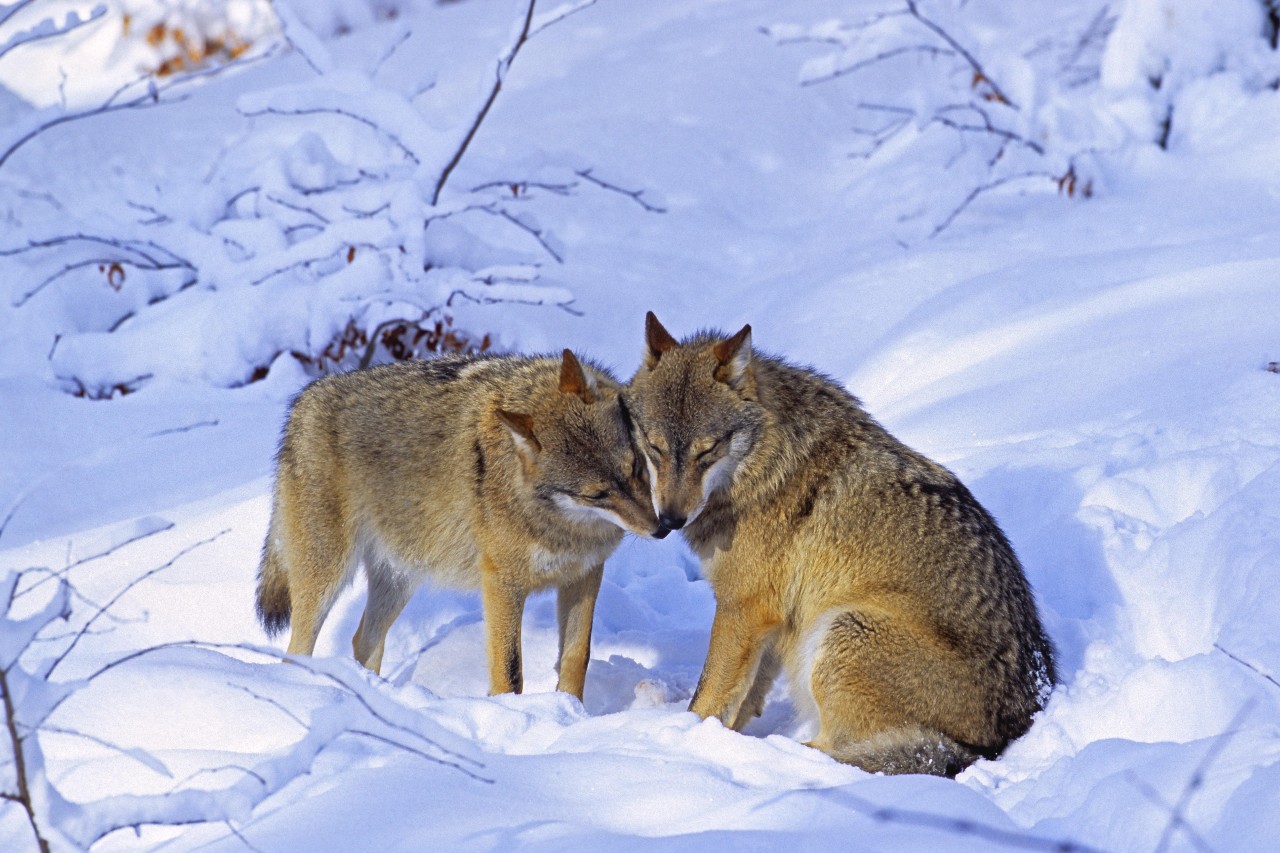
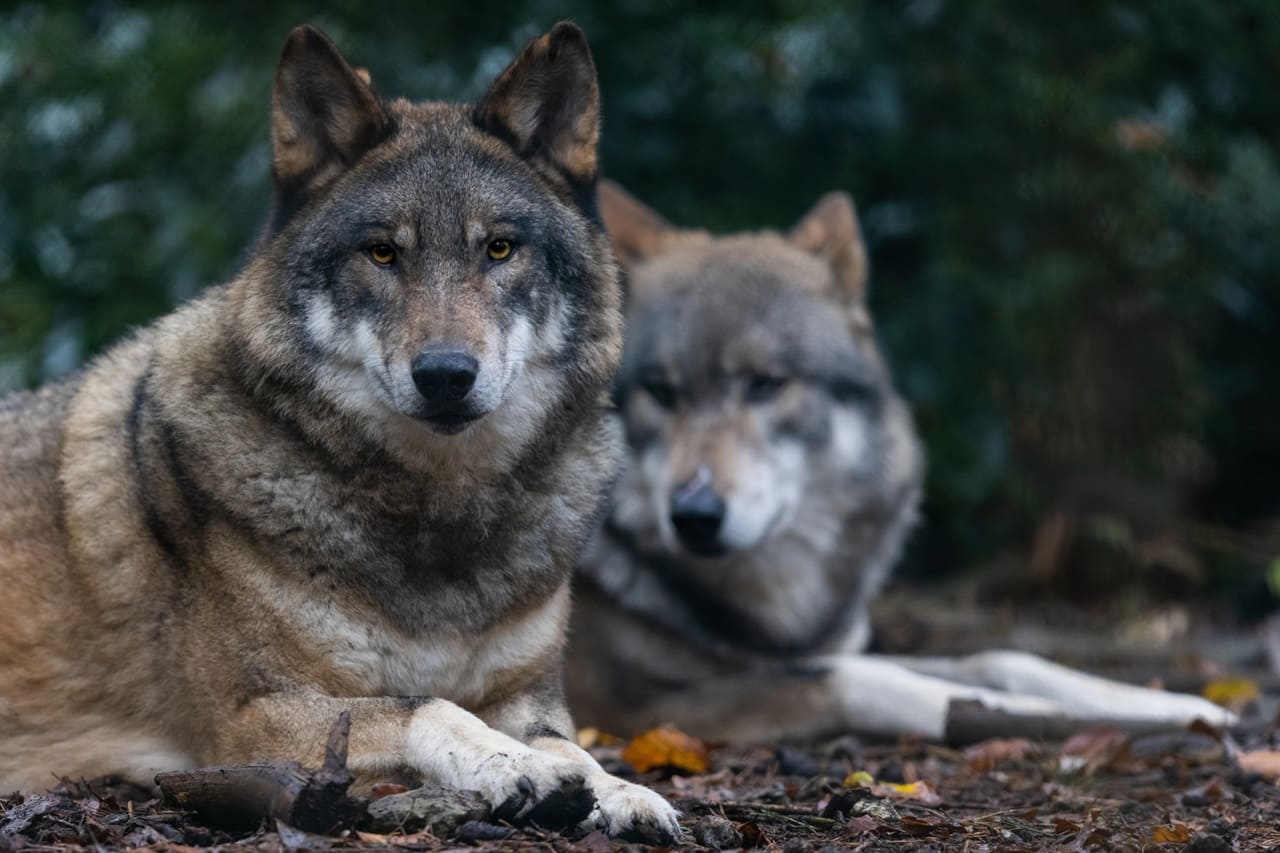
The Federal Council and Parliament wanted, among other things, to ease the protection of the wolf, as it is spreading rapidly across the country. The electorate voted against this.
The results from 27.9.2020 are close. 48.1% of eligible voters were in favour of the proposal, 51.9% against. Women and urban residents were quite clearly opposed to the law in surveys, while men and the rural population supported it. Political scientist Lukas Golder interpreted the outcome of the Hunting Act on SRF as follows: «The mountain regions and cantons of central Switzerland voted in favour of the Hunting Act. The large Mittelland together with western Switzerland, where many people live, tipped the balance towards a No today.»
The electorate wants improved protection for wildlife in Switzerland, without cantonal authority to regulate protected animals and without a regulatory list drawn up by the Federal Council. The rejection of the legislative revision clears the way for a better solution.
More on the subject of recreational hunting: In the dossier The Role and Criticism of Recreational Hunters we shed light on the training, power and self-image of recreational hunters. What the research says about this is shown by Hunting fact-checked: the state of research.
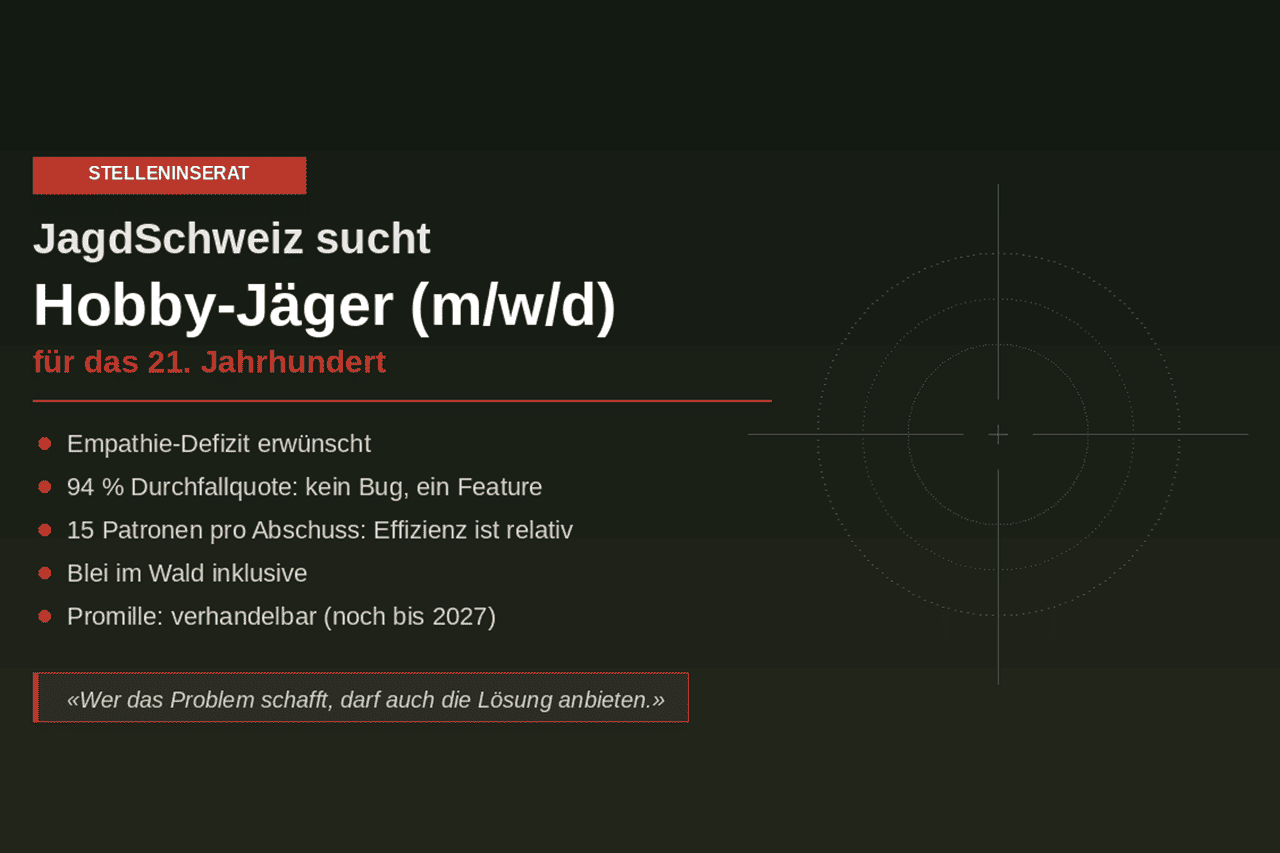
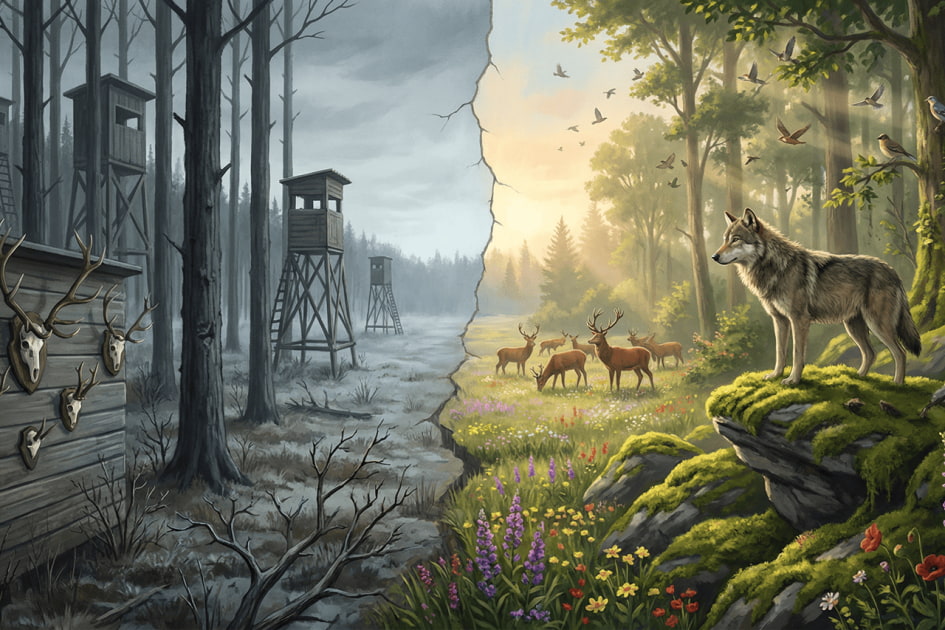
The position of IG Wild beim Wild: IG Wild beim Wild rejects recreational hunting. Our model is the canton of Geneva, which has managed without recreational hunting since 1974: without hunting seasons, without hunting dogs, without driven hunts, without high seats, without the animal cruelty and crime that go hand in hand with hunting season elsewhere. What has worked there for over fifty years disproves every position paper by JagdSchweiz. An association that bases its policy on claims it refutes in its own documents is not a professional organisation, but a factory for misinformation.