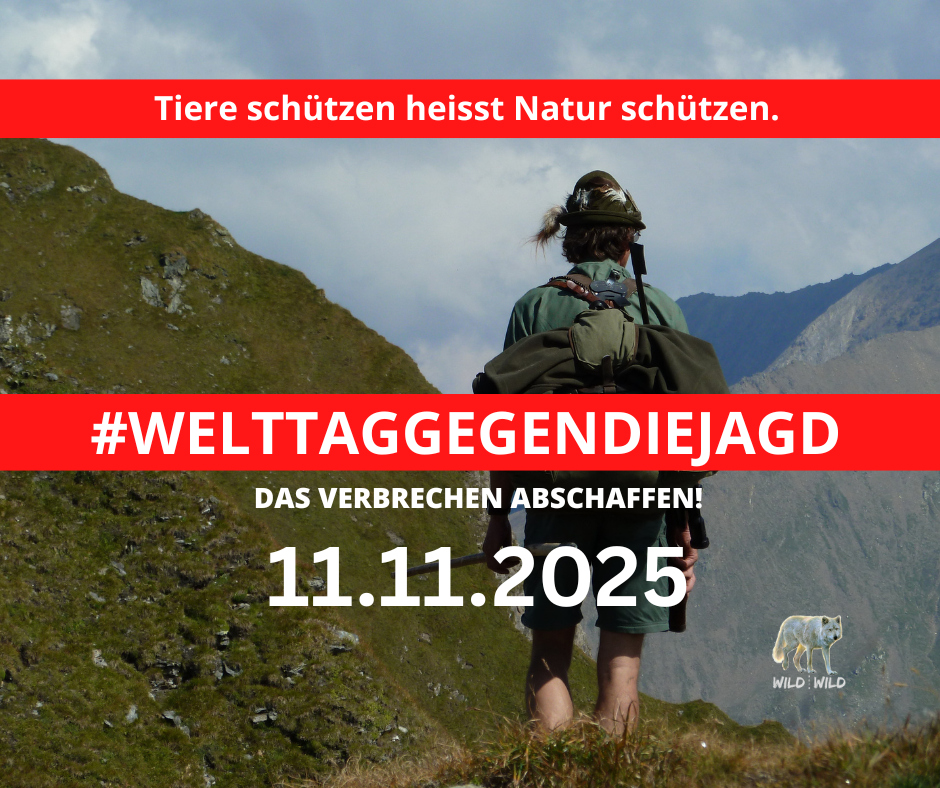
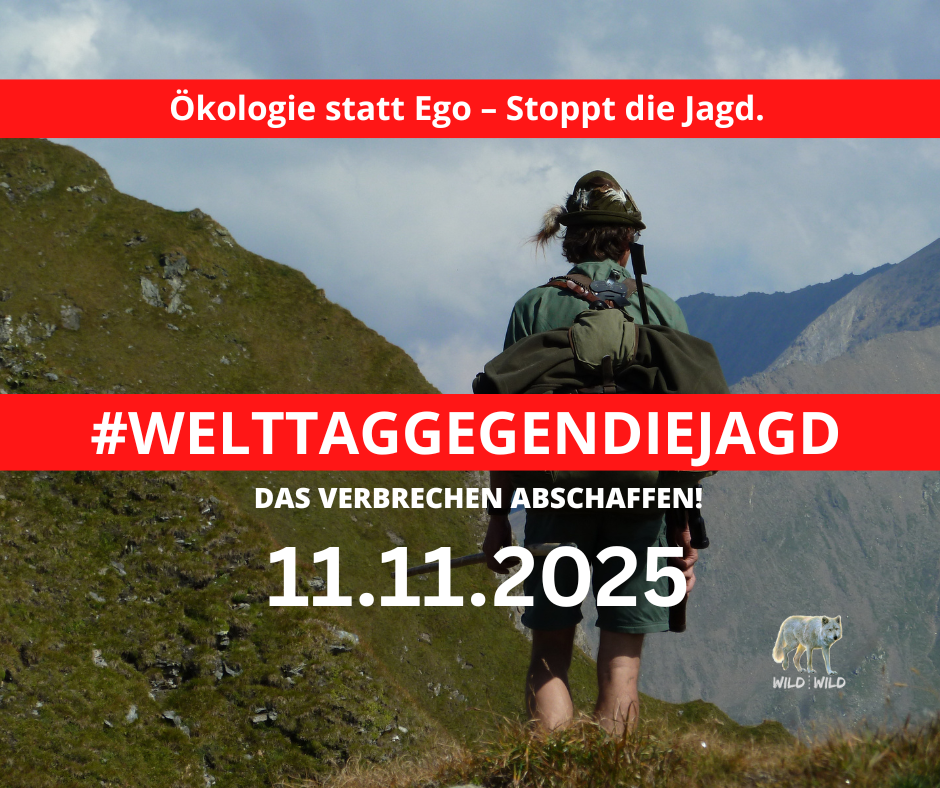
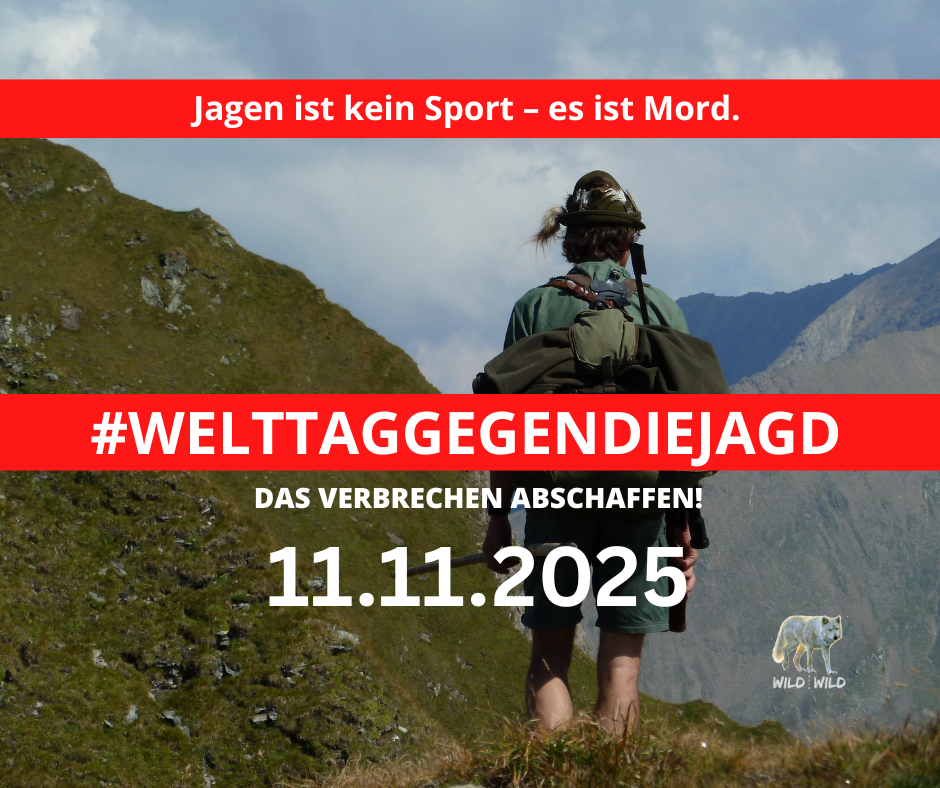
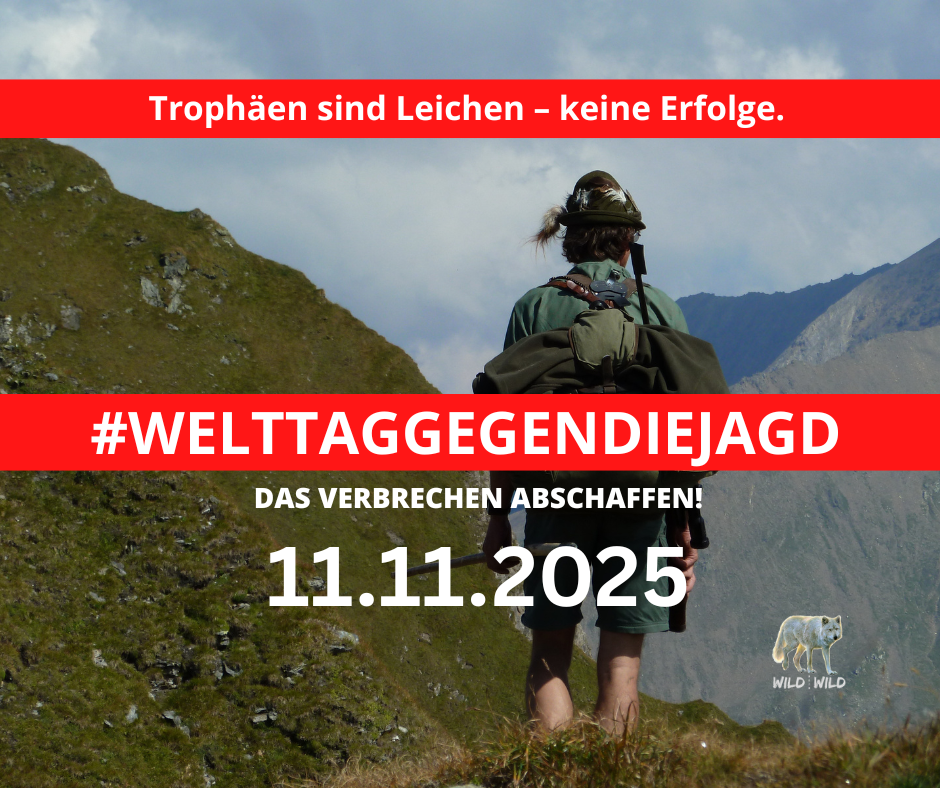
Why exactly a World Day Against Hunting?
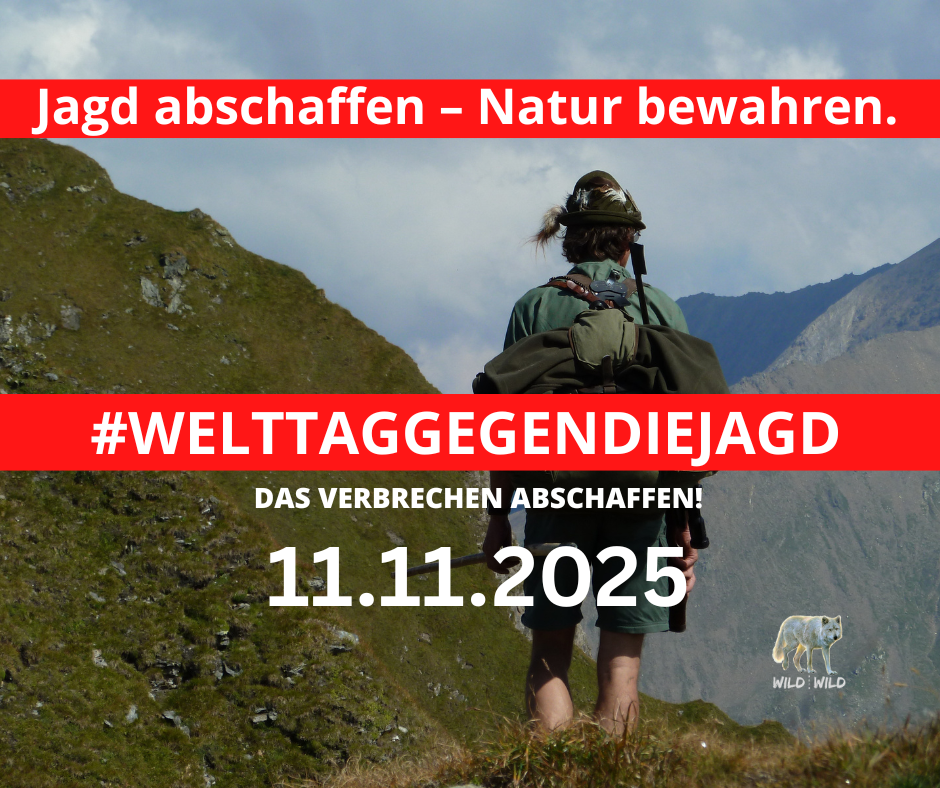
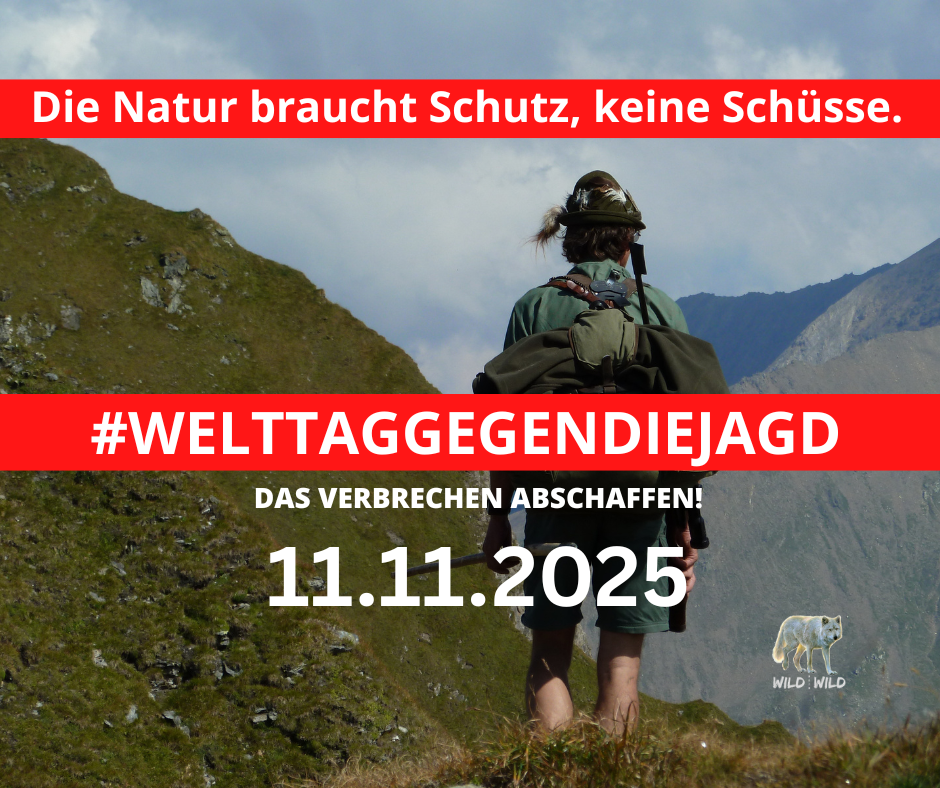
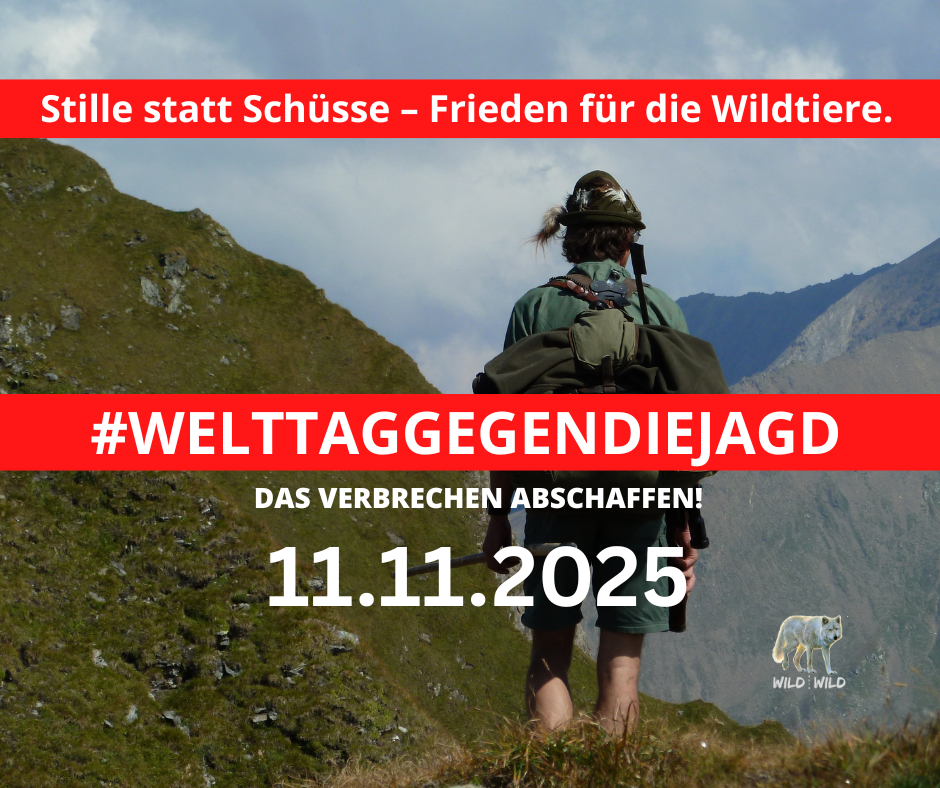
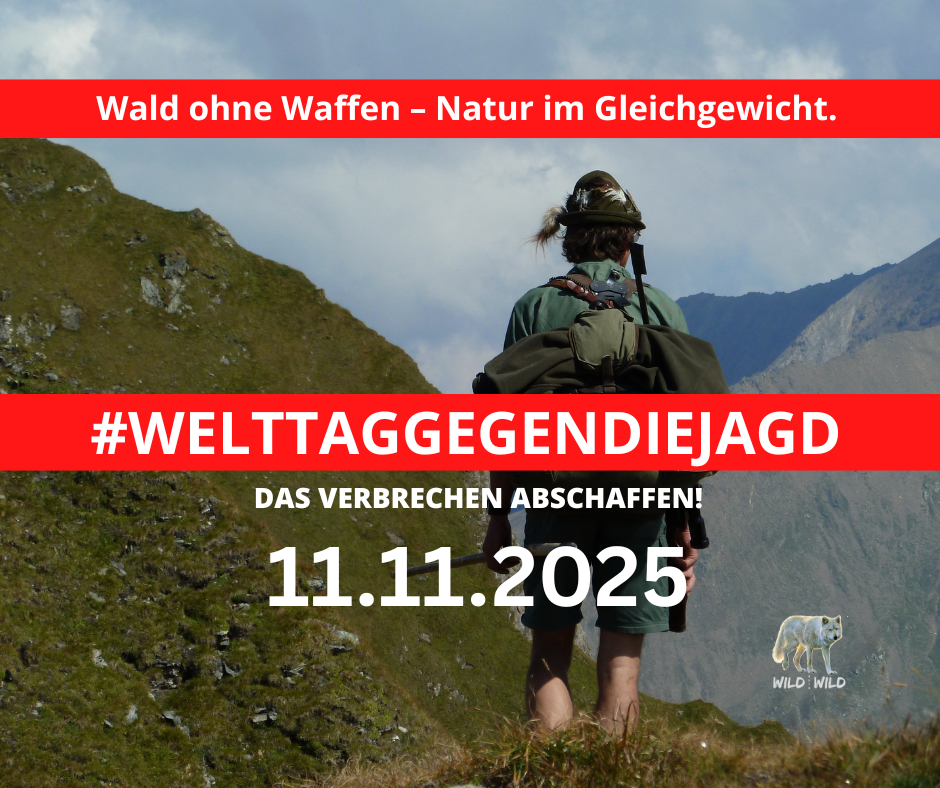
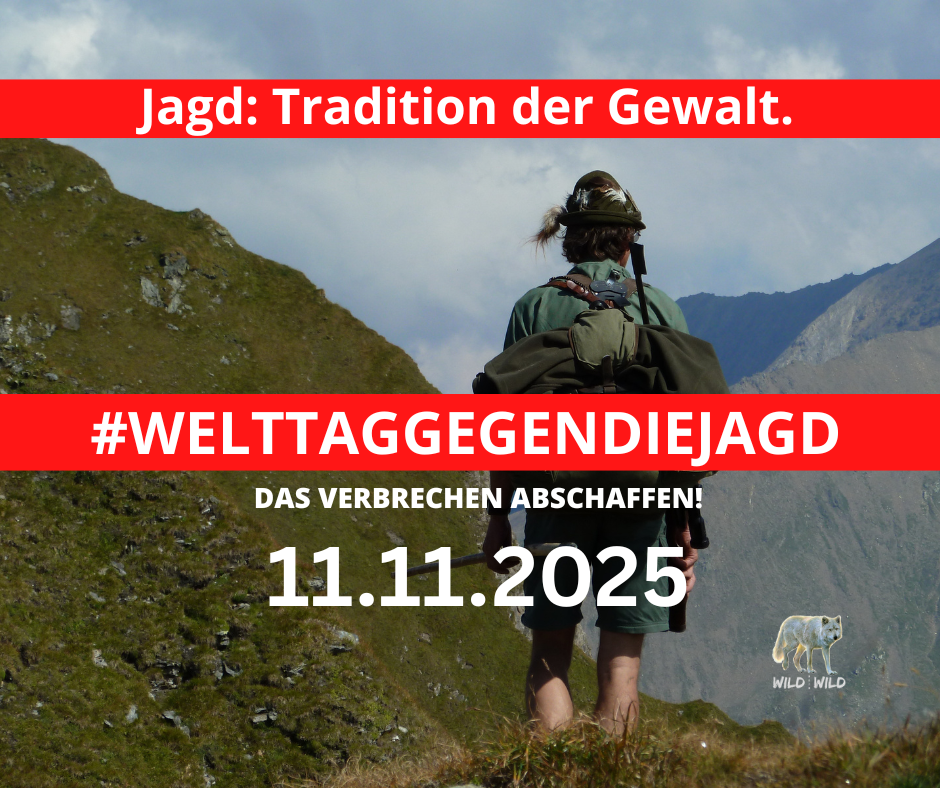
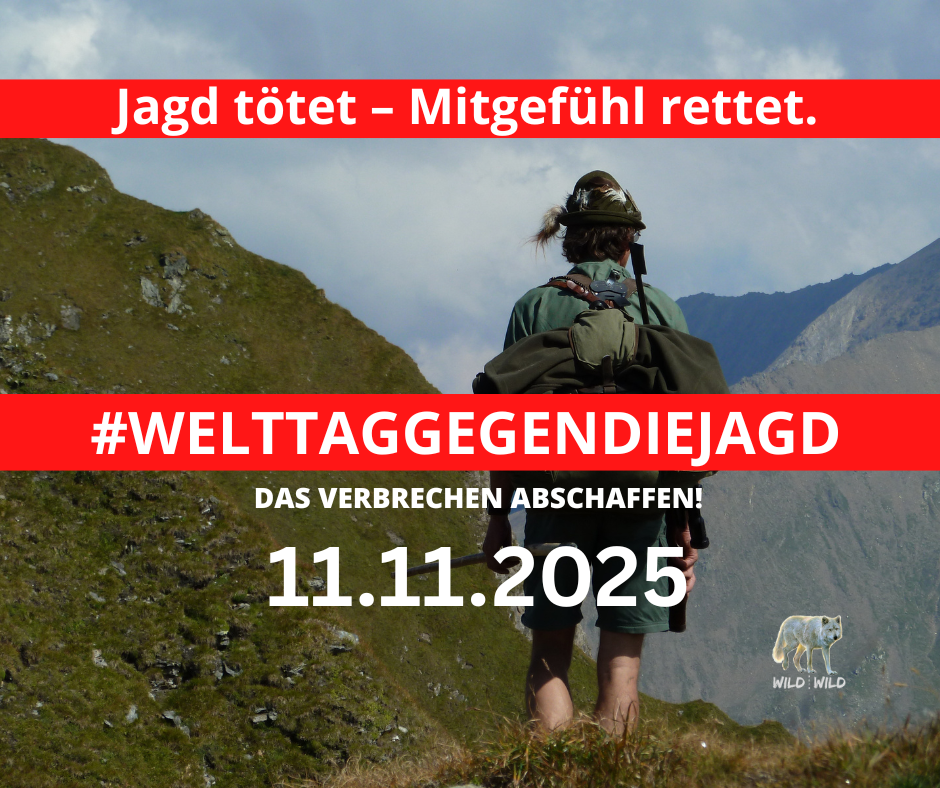
On 11 November, the initiative IG Wild beim Wild calls for a World Day Against Hunting — a day that is not merely symbolic, but demands action.

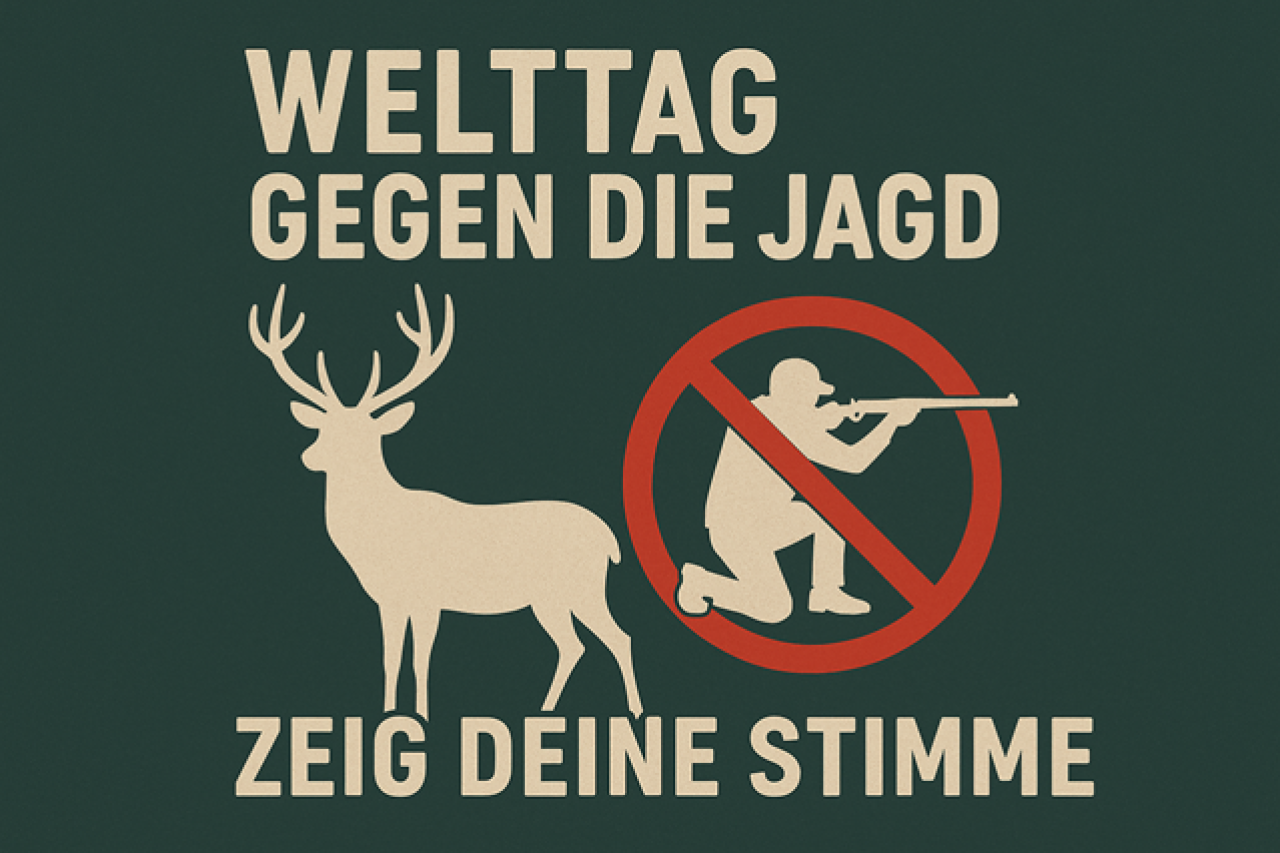
Why is recreational hunting problematic today, and what can every individual do on this day — and beyond — to make a lasting statement?
- Recreational hunting is portrayed by many of its advocates as tradition, nature stewardship, or wildlife population management. Yet reality reveals other facets: animal protection organisations argue that many animals suffer needlessly as a result of recreational hunting — not only those killed, but also those wounded who do not die immediately.
- IG Wild beim Wild makes clear that this day is directed against recreational hunting.
- Furthermore, the debate raises ethical questions: to what extent can the killing of wild animals for pleasure or as a hobby be legitimate, when we simultaneously uphold biodiversity and animal welfare as values enshrined in animal protection law? Issues such as animals' right to life, respect for their existence, and the disruption of ecosystems are all at stake.
The World Day on November 11 thus provides an occasion to reflect critically, exchange perspectives, and make concrete alternatives visible.
What can everyone do on this day?
Here is a list of activities – from small gestures to publicly visible actions:
- Inform & Share
- Read the IG Wild beim Wild appeal for November 11.
- Share posts on social media with hashtags such as #WorldDayAgainstHunting, #StopHobbyHunting or #WildlifeNotTrophy.
- Organise a small film or discussion evening with friends or family members on the topics of hunting, animal welfare, and biodiversity.
- Show Public Presence
- Wear a striking item of clothing or a sticker with a message against hunting (e.g. “Wildlife, not trophies”) during a walk or gathering on that day.
- Photograph a walk in the woods or a wild animal in its natural habitat, and post it with a brief explanation of why the World Day matters.
- Arrange a small walk/run through a forest or nature area together with others – visibly, in colour or with a placard – as a silent vigil against recreational hunting.
- Taking Action Locally
- Find out whether a local action or rally is taking place in your region (e.g. Switzerland/canton), for example organised by animal welfare or nature conservation associations.
- Visit a nature or wildlife reserve and recommend volunteering or making a donation there, so that habitats are protected without relying on recreational hunting as a “management tool”.
- Engage in conversation with farmers or forestry operations: What does sustainable wildlife population management look like without recreational hunting? What alternative strategies exist?
- Political and Structural Impact
- Write a short email or letter to your local municipal authority or the relevant environmental office, requesting transparency and opportunities for participation in hunting concessions and wildlife management.
- Support organisations that campaign against recreational and recreational hunting – whether through membership, donation, or active involvement.
- Research the hunting regulations in your canton/country (e.g. culling quotas, use of traps, wildlife damage) and publish or share your findings online – transparency creates pressure.
- Long-Term Behavioural Changes
- Reconsider your consumption habits: Do you purchase wild “game meat” or products associated with hunting (antlers, trophies)? Switch to alternatives.
- Get involved in education: Encourage schools, environmental groups, or youth organizations to offer modules or excursions on the topic of wildlife protection without hunting, so that the next generation can think critically and with nuance.
- Become part of a network: Connect with people who engage in wildlife photography, nature observation, or citizen science. Instead of recreational hunters, wonder and observation are cultivated here.
Why specifically on November 11?
The day was explicitly declared an action day by IG Wild beim Wild in order to create annual visibility. It also serves as a counterpoint to the hunting season routine in many places — a moment of reflection rather than driven hunts. In times when biodiversity loss and habitat destruction are reaching historic proportions, recreational hunting acts as a symbol of outdated understandings of nature: nature as a resource to be controlled and directed by humans, rather than respected in its autonomy.
Hunting is not simply “part of culture” and “nature stewardship,” as is frequently argued. Rather, it raises fundamental questions: Who decides over life and death in the wild? What role do we see ourselves playing in relation to non-human life? And what alternatives exist if we no longer accept recreational hunting as a cure-all in wildlife management?
The World Day Against Hunting on November 11 provides an opportunity to raise these questions loudly and publicly, and to be visible. It is not enough to talk about conservation — we must act. Every small gesture, every conscious decision, every conversation counts.
Join in: On this day, make your voice heard — for a wilderness without recreational killers, for a life of animals in the forest that is not threatened by bullets. Not only for November 11 — but on this day with extra visibility.




Natural Disaster: Recreational Hunters
In the disorder in which nature finds itself after decades of management and stewardship by hobby hunters is the share of threatened species is nowhere in the world as high as in Switzerland. For decades, these contract killers have been creating an ecological imbalance in the cultivated landscape, with sometimes dramatic consequences (protective forests, diseases, agricultural damage, and much more). Over a third of plant, wildlife and fungal species are considered threatened. Switzerland also ranks last in Europe when it comes to designating protected areas for biodiversity. It is precisely these circles of recreational hunters, through their lobbying work, who have been responsible for this via politics, media, and legislation for decades. They are the ones who notoriously block contemporary, ethical improvements in animal welfare and sabotage serious animal and species protection. Recreational hunters regularly oppose more national parks in Switzerland, because their concern is not nature, biodiversity, species protection, or animal welfare, but rather the pursuit of their perverse, bloody hobby.
Did you know …
- that in Switzerland innocent young wolves are being liquidated?
- that recreational hunters lie about assessing game meat quality and that according to the WHO, processed game meat is carcinogenic — like cigarettes, asbestos, or arsenic?
- that according to a study, nowhere is the lead contamination of golden eagles and bearded vultures higher than in the Swiss Alps, due to ammunition used by recreational hunters?
- that the fair chase ethic of recreational hunters directly contradicts animal welfare legislation and is nothing but a mirage?
- that hunting is war, where animal competitors are simply eliminated?
- that there are countless illegal and unmarked hunting blinds in our countryside, some so rotten that they pose a danger to children and can cost people their lives?
- that year after year, countless people are killed or injured by hunters' weapons — some so severely that they end up in wheelchairs or have limbs amputated?
- that in Switzerland, approximately 120,000 perfectly healthy roe deer, red deer, foxes, marmots, and chamois are killed each year, mostly without purpose?
- that because of recreational hunters, it has become nearly impossible to live in harmony with wildlife or even to observe wild animals?
- that shotgun blasts cause hares to scream like small children, and tear apart the entrails of “shot” roe deer and stags so that they leave a trail of blood for the tracker to follow?
- that the claims of recreational hunters that the cruel wildlife massacres are necessary to regulate animal populations have been scientifically refuted?
- that recreational hunters openly admit that hunting is about the “lust for killing” and “the joy of making a kill” — a pathological passion?
- that recreational hunters have no sixth sense and yet regularly claim to shoot only sick and weak animals, which is of course not true in practice?
- that recreational hunters travel abroad for trophy hunting, far beyond any species protection and hunting regulations, and that there are even Swiss recreational hunter travel operators offering such moronic hunting pleasures?
- that the vast majority are not legitimate professional hunters, but pursue hunting as a hobby, sport and leisure activity, which is unethical and effectively contradicts the Animal Protection Act?
- that 99.07% of civilised people in Switzerland are not recreational hunters, meaning only 0.3% of recreational hunters take pleasure in these bloody activities?
- that these wildlife killers do not hunt on the basis of scientific justifications?
- that protected species do not actually belong under hunting law, because recreational hunters are overwhelmed by species conservation and repeatedly shoot animals listed on the Red List — such as lynx, wolf, brown hare, partridge, quail, etc. — for fun?
- that recreational hunters deliberately decimate certain animal species in order to eliminate competition for their unnatural behaviour (fox, lynx, wolf, birds of prey, etc.)?
- that wildlife dies before the recreational hunter can even fire a single shot, that this must be prevented, and that this is arguably the central idea behind habitat stewardship, wildlife management, and hunting planning?
- that with wild boar (and foxes), normally only the lead sow produces young, but due to her being shot, all female animals within the sounder reproduce, which is also why we have a wild boar population explosion?
- that grazing animals — deer, roe deer, etc. — originally lived mainly as diurnal animals in fields and meadows, like goats, sheep, cows, etc., and not in forests?
- that the wolf is vitally important in the long term for maintaining the health of wild ungulates, because it hunts sick or weak animals with incredible precision, for example, and is thereby vastly superior to recreational hunters?
- that foxes usually end up in the rubbish after senseless hunting?
- that foxes are hunted today primarily so that there are more hares, etc. for recreational hunters to put in the frying pan? That the fox, however, feeds on hares in fewer than 10% of cases and would never catch a healthy hare?
- that in animal protection, one cannot deal with recreational hunters through gentleness alone, street festivals, prayer chains, etc. (you need to fight fire with fire)?
- that recreational hunters use hunters' tall tales to engage in a disrespectful mockery of living beings?
- that it is frowned upon to shoot big game at feeding stations or during mating season, yet recreational hunters have no scruples about doing exactly this to their competitor the fox?
- that in some cantons recreational hunters go hunting solely for the tender meat of a young animal?
- that recreational hunters shoot pregnant mother animals in front of their young, or target only young animals during the rearing season (post-special hunt)?
- that recreational hunters poison the environment, nature, humans and animals with their ammunition?
- that bestiality, barbarism, cruelty, bloodshed and senseless suffering cannot be considered cultural heritage in a civilised society?
- that recreational hunters shoot approximately 10’000 roe deer fawns every year?
- that recreational hunters in harsh winters lure starving animals with food only to shoot them in a treacherous and cowardly manner?
- that recreational hunters set provoked dogs on animals in their burrows in order to eliminate foxes and badgers (den hunting)?
- that recreational hunters lure peaceful living beings into box traps, where they may suffer for days awaiting their killer, or subject animals to an agonising death struggle lasting many hours (trap hunting)?
- that recreational hunters cowardly ambush and shoot or wound peaceful wild animals while they sleep or bask in the sun, using state-of-the-art precision weapons?
- that recreational hunters support awards, fur markets, prize ceremonies for trophy culture, trophy shows, the fur trade, and so on?
- that recreational hunters place firearms into the hands of underage schoolchildren and practise killing with them?
- that recreational hunters often carry out their cruel acts in isolation, which encourages animal cruelty?
- that recreational hunters frequently only seriously wound wild animals, leaving the victims to suffer for hours in tremendous pain and fear until a tracking dog finds them and they are shot?
- that recreational hunters (apart from vivisection) inflict the greatest suffering and abuse on animals, including through the manner in which they kill?
- that hunters' love of animals and nature does not take pleasure in the existence of the beloved object, but rather aims to possess the beloved creature body and soul, culminating in turning it into prey through the act of killing?
- that recreational hunters actively promote browsing damage through hunting pressure, particularly on predators such as foxes, lynx, and wolves?
- that recreational hunters open the door to antisocial, unethical, and unchristian behavior?
- that recreational hunters deprive the public of normal, natural wildlife observations and interactions?
- that there is no greater torment product, contaminated with ammunition, than game meat?
- that there is no uniform national regulation regarding vision tests, shooting practice, etc. for recreational hunters?
- that there is no psychological personality assessment for recreational hunters?
- that there is no alcohol ban for recreational hunters when they shoot at animals with their weapons?
- that recreational hunters intrude into educational institutions to push their hunters' tales and their violence onto children?
- that a court in Bellinzona recently confirmed that hunting associations promote practically everything that is cruel, unnecessary, and heartless?
- that the association «Jagd Schweiz» primarily cultivates disrespect and a culture of violence — the exact opposite of what a civilized person in our society should aspire to.
- that in the canton of Grisons alone, over 1’000 reports and fines are issued against recreational hunters every year?
More on the subject of recreational hunting: In the dossier The Role and Criticism of Recreational Hunters we shed light on the training, power and self-image of recreational hunters. The scientific evidence is presented in the overview Studies on the Effects of Recreational Hunting.
The position of IG Wild beim Wild: IG Wild beim Wild rejects recreational hunting. Our model is the canton of Geneva, which has managed without recreational hunting since 1974: without hunting seasons, without hunting dogs, without driven hunts, without high seats, without the animal cruelty and crime that go hand in hand with hunting season elsewhere. What has worked there for over fifty years disproves every position paper by JagdSchweiz. An association that bases its policy on claims it refutes in its own documents is not a professional organisation, but a factory for misinformation.