When Recreational Hunting Becomes a Danger to Domestic Animals
In the French region of Nièvre, an outrageous hunting tragedy is being brought before the courts: a 14-year-old competition mare, Altesse de la Serre, was found dead in a paddock — the result of a hunting projectile that first struck a wild boar before passing through the mare’s shoulder, fatally wounding her.


Five recreational hunters now face criminal court and must answer for charges including “hunting on private land without the owner’s consent” and “hunting in violation of the statutory hunting plan.”
The shooter himself is additionally charged with “involuntary harm to the life or physical integrity of a domestic animal.”
The fact that a projectile from a hunting weapon passed over a wild boar and struck a livestock facility highlights the grave risk posed by uncontrolled recreational hunting. For the owner, it was a nightmare scenario: the mare, a nationally successful competition horse valued at around 30’000 €, was suddenly found dead on her property.
Recreational hunting is often marketed as leisure activity or tradition, yet this case joins a series of situations in which the protection of wildlife, livestock and people clearly takes a back seat to the interests of hunting associations. Allowing hunters to discharge firearms in virtually any terrain creates irresponsible dangers.
The fact that five recreational hunters are facing charges at all demonstrates that controlled intervention was necessary here. The incident makes clear that legal regulations are insufficient when they are not coupled with effective oversight and consequences.
What this case means for the hunting and animal protection debate
For the animal protection movement, and in particular for critical voices within the hunting industry such as those of IG Wild beim Wild, this event serves as a stark warning: if even livestock are not safe, what does that mean for wild animals, who occupy a far less protected position?
Wild animals are deliberately hunted, but the “bycatch” — that is, the unintended harm to pets, livestock, and people — is a widespread consequence. This tragedy illustrates how far the erosion of safety boundaries by recreational hunting has already progressed.
Demands — and we must state this loudly and clearly
- Immediate tightening of safety regulations: Recreational hunters must not operate near residential areas or livestock in the same manner as they do in deep forests. Minimum distances, stricter licensing requirements, and clear liability obligations must be enforced.
- Independent oversight: It is not sufficient for individual recreational hunters or associations to carry out inspections. An independent state authority must regularly publish data on hunting practices, accident statistics, and damages.
- Compensation and liability for those affected: Livestock whose lives or health are impaired by hunting projectiles must have the right to restitution and compensation. A tournament horse worth €30’000 illustrates the scale of the issue.
- Fewer hunting areas — more wildlife sanctuaries: Freedom for recreational hunters must not automatically mean restrictions on wildlife habitats and livestock operations. There must be areas in which no hunting is permitted, in order to guarantee safety and nature conservation.
The case of Altesse de la Serre is not a tragic isolated incident — it is symptomatic of a system that defines recreational hunting as a right and a leisure activity, rather than as a privileged exception in the service of sustainable wildlife management and genuine animal protection. If even a valuable domestic and farm animal is not safe, how much protection remains for wild animals, whose interests are already marginalized in many regions?
This case highlights the problems of coexistence between recreational hunters and the rest of society, which are completely ignored. A recreational hunter is someone who carries a weapon and, by definition, poses a danger. Yet every year we witness a very high number of hunting accidents with victims, including hundreds of people.
For Wild beim Wild, one thing is clear: the focus must shift away from the recreational hunting industry and toward consistent responsibility for animals of all categories. And this case, too, must serve as an occasion to finally take concrete action.
More on the subject of recreational hunting: In the dossier The Role and Criticism of Recreational Hunters we shed light on the training, power and self-image of recreational hunters. What the research says about this is shown by Hunting fact-checked: the state of research.
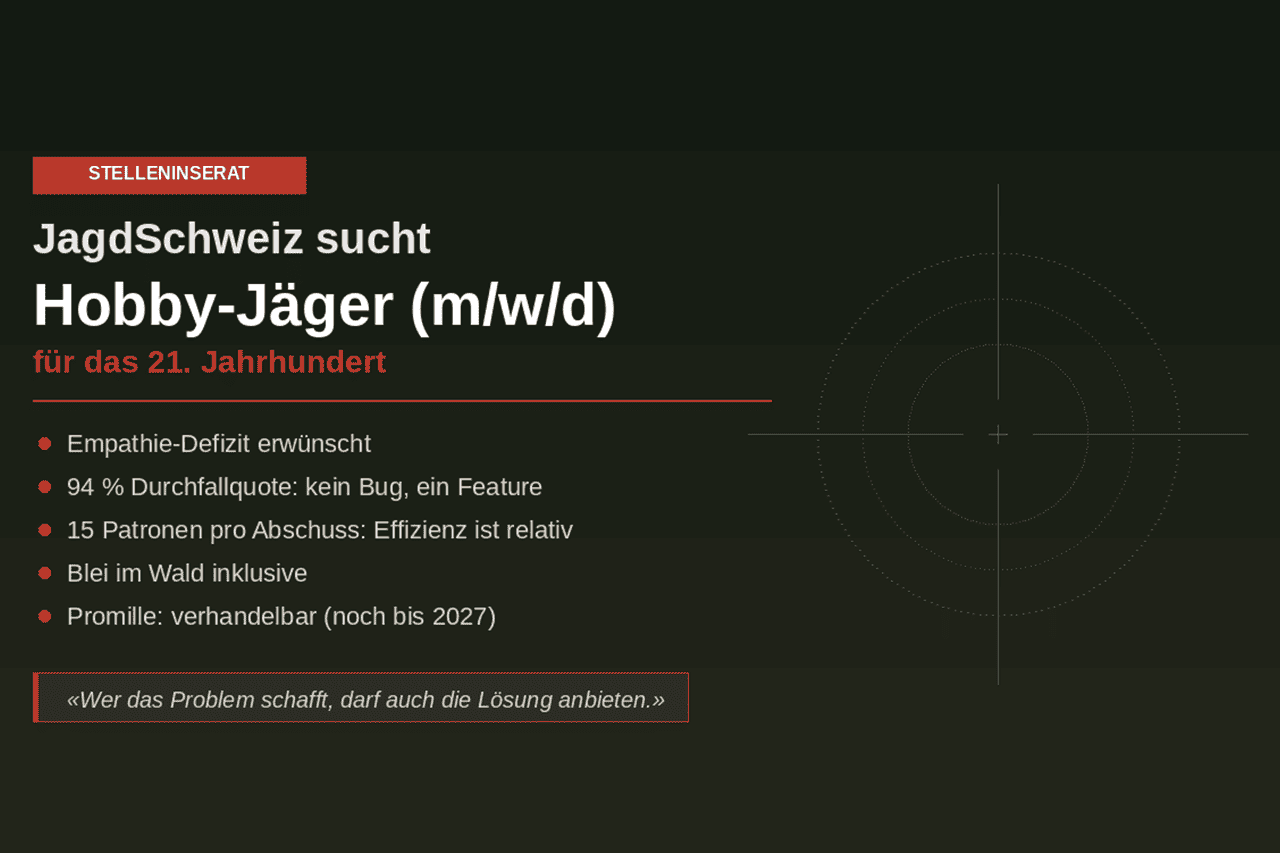
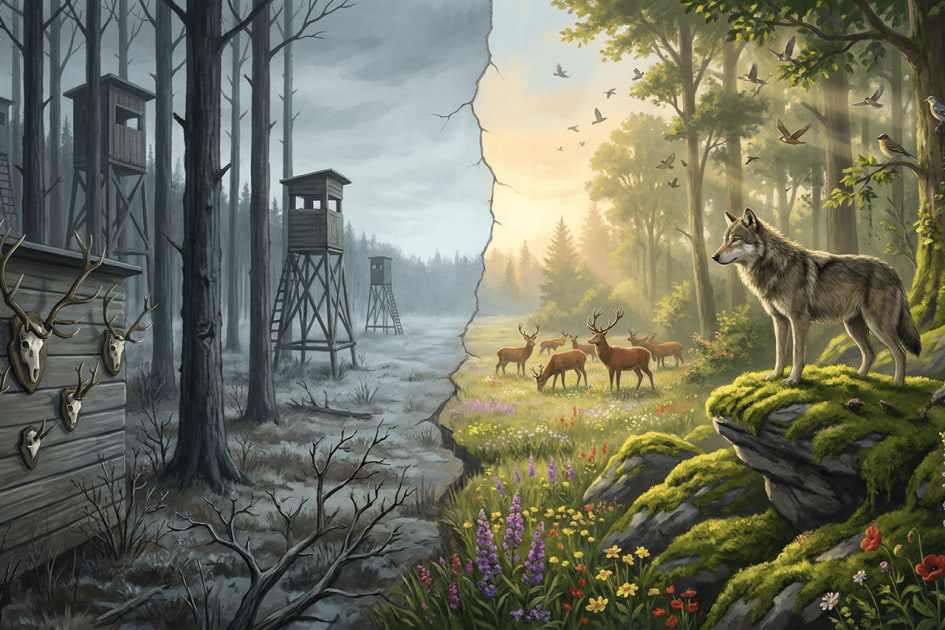
The position of IG Wild beim Wild: IG Wild beim Wild rejects recreational hunting. Our model is the canton of Geneva, which has managed without recreational hunting since 1974: without hunting seasons, without hunting dogs, without driven hunts, without high seats, without the animal cruelty and crime that go hand in hand with hunting season elsewhere. What has worked there for over fifty years disproves every position paper by JagdSchweiz. An association that bases its policy on claims it refutes in its own documents is not a professional organisation, but a factory for misinformation.