What does climate change mean for wildlife?
Climate change is altering the living conditions for wildlife. Milder winters disrupt hibernation, snow cover protection, and foraging.

Milder winters are changing wildlife life
In the past, winter painted frost flowers on the windows and covered at least the mountains with a continuous layer of snow.
Many wildlife, such as hedgehogs and hazel dormice, reliably went into hibernation, while others, like whooper swans or ptarmigan, allowed themselves to be snowed in for protection against the bitter cold. But while as recently as the 2015/16 winter season a total of 1’025 centimetres of snow fell on the Zugspitze, in 2022 it was a mere 87 centimetres.
This also has an impact on the animal world. “There are two possibilities,” says Professor Dr. Klaus Hackländer, wildlife biologist and board member of the Deutsche Wildtier Stiftung. “Either animals learn new behaviour based on experience, or the genetic information of entire populations is altered.” However, if wildlife populations are very small and produce few offspring, this type of adaptation may not be possible quickly enough.
Winners and losers of climate change
Alpine mountain hare: As a true Ice Age relic, it is under threat. Its coat turns white in winter. But if the Alps remain brown in winter, the mountain hare loses its camouflage and becomes easy prey for foxes, goshawks, or other predators. It can only adapt to the changed conditions with the help of a genetic mutation that causes a change in coat colour. “This takes time. And whether it works also depends on the number of offspring that pass on such a mutation,” says Professor Hackländer.
Ptarmigan: A cold-weather specialist for centuries. In summer it wears a brown plumage, in winter a snow-white one. Foxes and other predators can spot it without difficulty on brown open terrain. “Whether this species of grouse will ever be able to adapt to climate change remains to be seen, as population density and the number of offspring are low,” says Hackländer.
Chamois: Once a lover of snow, now a seeker of shade. To escape heat stress in spring and summer, many animals move from higher mountain elevations to lower altitudes, where forests provide shade.
Brown hare: Master Lampe lives above ground year-round and is therefore mercilessly exposed to environmental conditions. The young hares are particularly affected by cold and wet spring months. On the other hand, the hare, originally a steppe animal, benefits from the relatively dry summers.
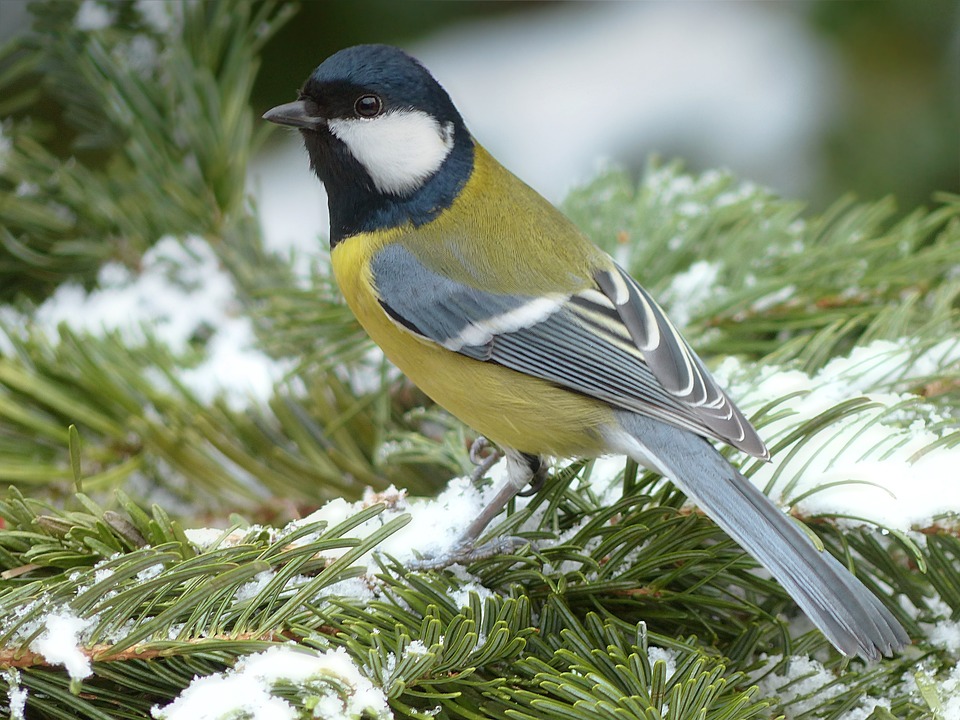
Great tit: Already in the mood for courtship early on. The mild temperatures encourage it to breed earlier than usual, allowing it to improve its reproductive chances. “This is an advantage for great tits, but a problem for migratory birds such as the collared flycatcher. Because by the time it returns from its wintering grounds, many nesting sites are already taken,” says Hackländer.
Wild boar: A master of all situations. The already highly adaptable pigs find sufficient food during mild winters. So-called mast years produce large quantities of fat- and protein-rich seeds. Wild boars are therefore among the winners of climate change.
Northern bald ibis: Threatened with extinction
In a large-scale international project, species conservationists are trying to save the ibis bird. The onset of autumn migration is shifting further and further back each year due to warm temperatures. In 2022, the northern bald ibises did not set off until late October. A sudden cold snap in the Alps meant the animals were unable to fly over the mountains. Conservationists had to transport them by car for this stretch of the journey. Rising temperatures pose a major challenge to efforts to protect this endangered species permanently.
| You can help all animals and our planet with compassion. Choose empathy on your plate and in your glass. Go vegan. |
More on the subject of recreational hunting: What the research says about this is shown by Hunting fact-checked: the state of research.
The position of IG Wild beim Wild: IG Wild beim Wild rejects recreational hunting. Our model is the canton of Geneva, which has managed without recreational hunting since 1974: without hunting seasons, without hunting dogs, without driven hunts, without high seats, without the animal cruelty and crime that go hand in hand with hunting season elsewhere. What has worked there for over fifty years disproves every position paper by JagdSchweiz. An association that bases its policy on claims it refutes in its own documents is not a professional organisation, but a factory for misinformation.