Council of States endorses animal cruelty
The Swiss Council of States has rejected a motion against animal cruelty. The decision has drawn sharp criticism from animal welfare organisations.

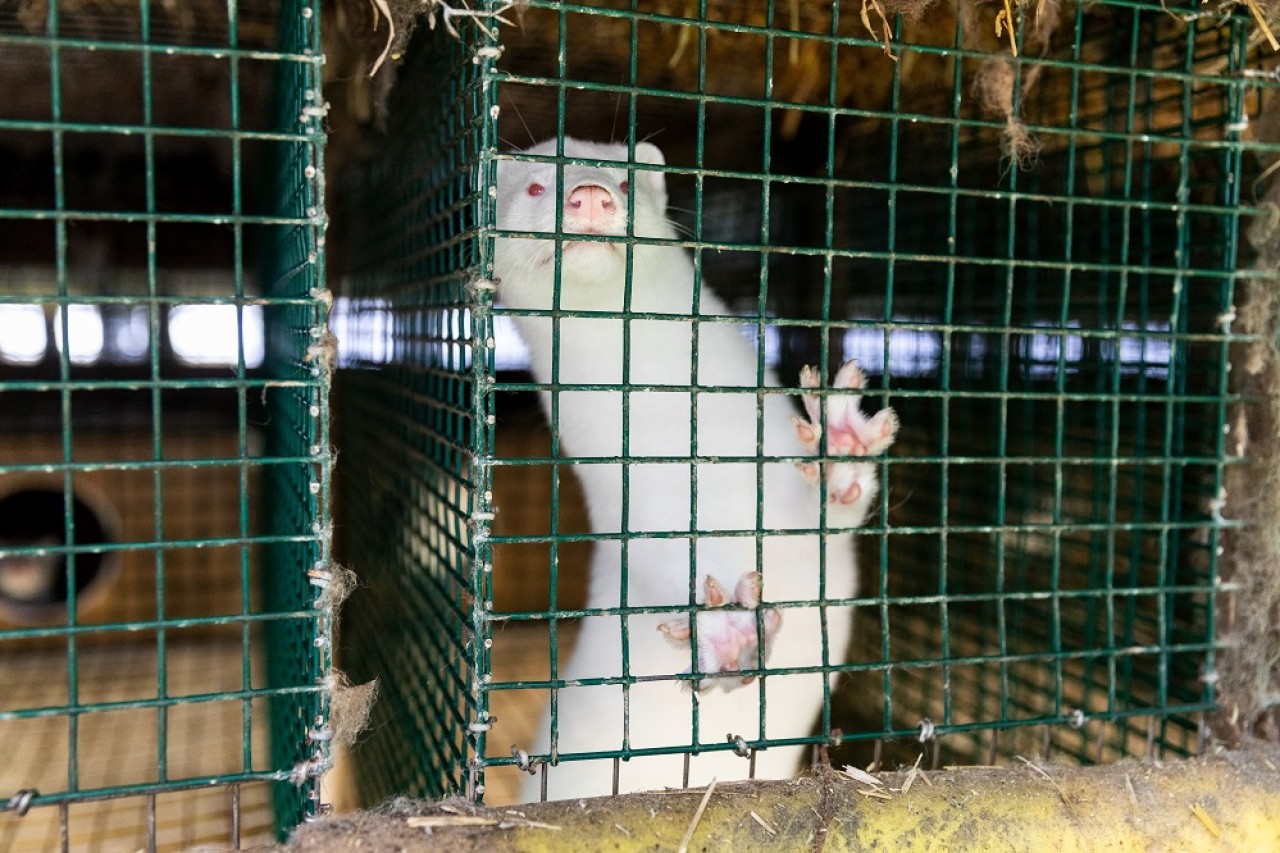
Animal welfare advocates are disappointed by the Council of States' decision against an import ban on fur products produced through animal cruelty.
The Council of States voted today on the motion for an import ban on fur products produced through animal cruelty and unfortunately rejected it. Switzerland has thereby missed the opportunity to take a pioneering role in Europe. The international animal welfare organisation FOUR PAWS is deeply disappointed by the Council of States' decision. Switzerland, which takes such pride in its high animal welfare standards, should have sent an international signal for animal protection.
After the National Council's vote in favour of the fur import ban last December had raised hopes, the Council of States has now blocked this cause — essential for animal welfare — by 25 votes to 19. «Switzerland has unfortunately missed a unique opportunity. Real fur has long been out of place in fashion and is socially unacceptable», says Dominik del Castillo, wildlife campaigner at FOUR PAWS Switzerland. A large majority (83%) of Swiss people reject real fur, as shown by a survey commissioned in autumn 2020.
Fur animals bred on fur farms suffer throughout their entire lives, only to die an agonising death for the sake of fashion. Their biological needs are systematically ignored. «The mink is a mustelid species adapted to life in wetlands and an excellent swimmer. This species even has webbing between its toes, yet minks on fur farms never see water their entire lives,» says the biologist. «Red foxes love to dig burrows; on fur farms they walk on wire mesh floors that cut into their paws.» Such conditions would be prohibited in Switzerland, yet Switzerland continues to import real fur produced under conditions of animal cruelty.
Fur farms are potential breeding grounds for zoonoses and pose risks to human health. A report by the FAO, OIE, and WHO on SARS-CoV-2 concluded that fur farms carry a high risk of virus introduction and spread. The mass culling of millions of minks in Denmark in the winter of 2020 clearly demonstrated this.
The Council of States was not persuaded by any of these arguments. The preparatory committee had already recommended rejecting the motion, citing its alleged incompatibility with international trade obligations and the demonstrably poorly functioning declaration requirement. The Council of States vote once again illustrates that Switzerland applies a double standard. While the production of fur products involving animal cruelty is prohibited in Switzerland, economic interests appear to take precedence over animal welfare when it comes to importing such products from abroad. Switzerland thus remains a country with two faces when it comes to animal protection.
Hunting trophies remain permitted
Hunting trophies from endangered animal species will also continue to be allowed into Switzerland. The Council of States likewise voted against the blanket import ban sought by the National Council.
The upper chamber rejected a motion by former GLP National Councillor Isabelle Chevalley (VD) by 22 votes to 17, with two abstentions. The motion has thus been dropped.
Maya Graf (Greens, BL) emphasized that trophy hunting has nothing to do with population management. The animals are shot so that parts of them, or whole animals, can be preserved and put on display. This benefits not the local communities, but primarily the organizers of the costly hunting trips.
More on the subject of recreational hunting: In our dossiers on recreational hunting gather fact-checks, analyses and background reports. The scientific evidence is presented in the overview Studies on the Effects of Recreational Hunting.
The position of IG Wild beim Wild: IG Wild beim Wild rejects recreational hunting. Our model is the canton of Geneva, which has managed without recreational hunting since 1974: without hunting seasons, without hunting dogs, without driven hunts, without high seats, without the animal cruelty and crime that go hand in hand with hunting season elsewhere. What has worked there for over fifty years disproves every position paper by JagdSchweiz. An association that bases its policy on claims it refutes in its own documents is not a professional organisation, but a factory for misinformation.