Council of States approves shooting of swans
Council of States wants to make it easier to control mute swan populations: animal welfare advocates outraged by the relaxation of protections.

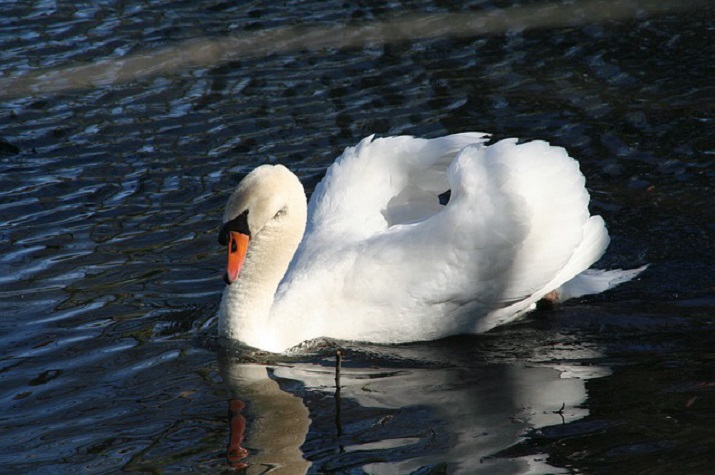
Swan protections are being relaxed in Switzerland.
The Council of States wants to regulate their populations before conflicts arise.
The Council of States is calling for a relaxation of protections for swans. Today, 14 June 2016, it referred a motion amended by the National Council to the Federal Council.
It voted 23 to 14, with one abstention, in favour of the new version. The Federal Council is thereby tasked with adding the mute swan to the list of species in the federal hunting ordinance whose populations can be regulated before conflicts arise.
Originally, the Council of States had wanted to have the mute swan classified as a huntable species, with maximum numbers to be set for certain areas. However, the National Council considered this too far-reaching. It amended the motion and opted for a regulation similar to that applicable to the ibex.
Carrying swan droppings to Bern
Independent Schaffhausen Council of States member Thomas Minder opposed the relaxation of protections. Wild animals are not soft toys, and swans are not merely symbols of eternal love, he noted. But they have a right to exist, “especially the swan with its majestic presence.”
There is no nationwide swan problem, said Minder. If a few swans are leaving droppings on fields in the cantons of Nidwalden and Obwalden, that is no reason to legislate at a national level. “It is wrong to bring every last piece of swan droppings to Bern.”
“Storm of indignation”
Even now, swans can be regulated with cantonal authorisation, Minder added. There are also other methods besides shooting, such as shaking the eggs. A yes vote on the motion would trigger a “storm of indignation.” Werner Luginbühl (BDP/BE) also warned of “uprisings” among the population.

Environment Minister Doris Leuthard expressed agreement with the amended motion. However, she also noted that it is a problem when animals are perceived solely as causing damage. Whether wolf, lynx, bear, beaver or swan – the question must be how coexistence can be organized.
In the National Council, the SP and the Greens had opposed any relaxation of protection. In normal circumstances, swans do not cause problems, they argued. Many pointed out that the main problem is feeding, which has a strong attracting effect.
No natural predators
The motion had been submitted by former Nidwalden CVP Council of States member Paul Niederberger. Mute swans had multiplied undisturbed due to a lack of natural predators and thanks to legal protection, he argued. In Nidwalden, the population had gotten out of hand. The animals had lost public sympathy because they were fouling meadows and footpaths.
The threatening behavior of swans can frighten walkers, cyclists, and children, the lower house further noted. There are also conflicts with farmers, as cows refuse to eat grass soiled by swan droppings or become ill from it.
The mute swan – named after the black knob above its bill – is not originally native to Switzerland. According to the Federal Office for the Environment it was introduced into park ponds in the 17th century.
Incomprehension among animal welfare advocates
Alliance Animale Suisse expressed outrage. The proposal was ethically and factually nonsensical. The Swiss Bird Protection SVS/BirdLife Switzerland also has no sympathy for it. The «facilitated interventions» in the swan population due to a local problem are unnecessary. Moderate interventions against swans in Nidwalden and Obwalden have already been approved and will begin in spring.
The controversy over the mute swan comes for Swiss animal welfare (STS) not surprising: Many protected species have been declared “conflict species” in recent years, the STS wrote in a letter to the ENEC members. The federal government has since developed management plans for wolf, lynx, bear, and beaver that provide for measures against so-called harmful individual animals, up to and including regulatory interventions in the population. The demand for easier regulation of mute swans, the STS criticizes, is therefore merely the next logical step in reducing the protection of as many wildlife species as possible.
Depending on the season, up to 5,000 swans live in Switzerland, of which 600 to 700 pairs nest here; the species is not considered endangered. Nevertheless, animal welfare advocate Fellay would consider it “barbarian” to shoot the animals. It is rather up to humans to change their behavior. “Swans must no longer be fed.” This, she explains, is the reason why the animals congregate at feeding sites and lose their shyness toward humans there.
For Michael Schaad of the Swiss Ornithological Institute in Sempach as well, the first step toward resolving a conflict is to stop feeding on site. This would dissolve local concentrations. He also considers loosening mute swan protections to be unnecessary. Schaad furthermore finds it exaggerated to portray the mute swan as a danger to walkers, cyclists, and children, as Niederberger does in his motion. “People must keep a proper distance from the mute swan.” Like any wild animal, the mute swan will defend itself or its young when approached too closely.
Related dossiers and articles:
- Dossier: Hunting Laws and Control
- Dossier: Hunting and Animal Welfare
- Dossier: Hunting and Biodiversity
- Dossier: Alternatives to Recreational Hunting
- Dossier: Hunting Myths
- Get Involved
More on the subject of recreational hunting: In the dossier The Role and Criticism of Recreational Hunters we shed light on the training, power and self-image of recreational hunters. The scientific evidence is presented in the overview Studies on the Effects of Recreational Hunting.
The position of IG Wild beim Wild: IG Wild beim Wild rejects recreational hunting. Our model is the canton of Geneva, which has managed without recreational hunting since 1974: without hunting seasons, without hunting dogs, without driven hunts, without high seats, without the animal cruelty and crime that go hand in hand with hunting season elsewhere. What has worked there for over fifty years disproves every position paper by JagdSchweiz. An association that bases its policy on claims it refutes in its own documents is not a professional organisation, but a factory for misinformation.