Podcast episode: Hunting, wild animals and politics
This podcast episode sheds light on four thematic threads that capture, in snapshot form, the current state of hunting criticism in Switzerland.

Podcast episode: Hunting, wild animals and politics
The canton of Zug is so far the only canton to have responded concretely to a scientific study on fox hunting.
A SWILD study from May 2026 shows: decades of kills – on average 308 animals per year – had neither a lasting effect on the population size nor on wildlife diseases. The hunting commission is drawing consequences: no more proactive promotion of fox hunting, a more consistent separation of the statistical categories, and an information campaign on the feeding of wild animals.
Basel-Landschaft responded to the same petition with four pages of administrative jargon, without a single scientific source. Glarus has so far remained silent. A panel in Utzenstorf, which called itself a «dialogue», was made up of four hobby hunters and a moderator who is himself a hunter. Across Switzerland, around 19’000 red foxes are shot each year – with no demonstrable effect on damage or disease.
Lynx and wolf: regulation on thin ice
In Ticino, 88 hobby hunters were prepared for nocturnal wolf kills – specifically through two information evenings in Bellinzona. Scientific studies show that lethal killing can destabilise pack structures and be associated with more livestock attacks the following year. In Valais, despite around 1’300 trained hobby hunters, only nine wolves were killed; the lead she-wolf then attacked livestock again.
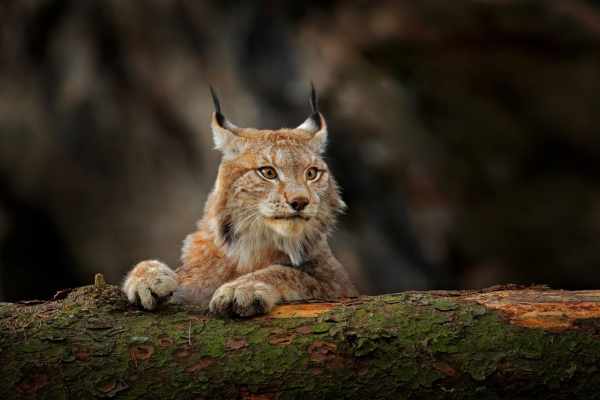
In parallel, the canton of Valais is planning lynx kills for the first time, even though the population has lost 46 per cent of its genetic diversity compared with its ancestors. A study by the University of Bern documents that the low population is man-made, caused by a network of 17 snare traps. That the same canton is now using this artificially suppressed population as an argument for kills is a remarkable piece of logic. Pro Natura also points out that the largest remover of roe deer in Valais is not the predator, but hobby hunting itself.
Hunting examination as a closed system
In the canton of St. Gallen, 65 aspiring hobby hunters passed the hunting examination – trained, tested and supervised by hobby hunters. The pattern repeats itself in Solothurn, Zug, Lucerne, Basel-Landschaft and Aargau. Geneva is regarded as the counter-model: without hobby hunting since 1974, with twelve state-employed professional hunters, a 99.5 per cent instant-death rate and the highest brown hare density in Switzerland.
Buying forest as quiet wildlife protection
The European Court of Human Rights has ruled in three judgments that landowners who reject hobby hunting on ethical grounds may not be forced to tolerate it. Germany responded in 2013, Italy in 2026. Switzerland knows the law – the political will is lacking. IG Wild beim Wild provides a template text for cantonal motions.
Zug is examining the matter, Basel-Landschaft is dodging it, Glarus is silent – and in Valais they are planning the kill of a genetically depleted species. The next canton to listen to science would make a good story.
LET'S STAY IN TOUCH!
We would like to send you the latest news and offers in our newsletter.
Support our work
With your donation you help protect animals and give their voice a hearing.
Donate now →