Oak dieback Switzerland: New root disease discovered
In Switzerland, a new root disease is threatening oak trees. For the first time, Phytophthora cinnamomi has been detected together with acute oak decline.
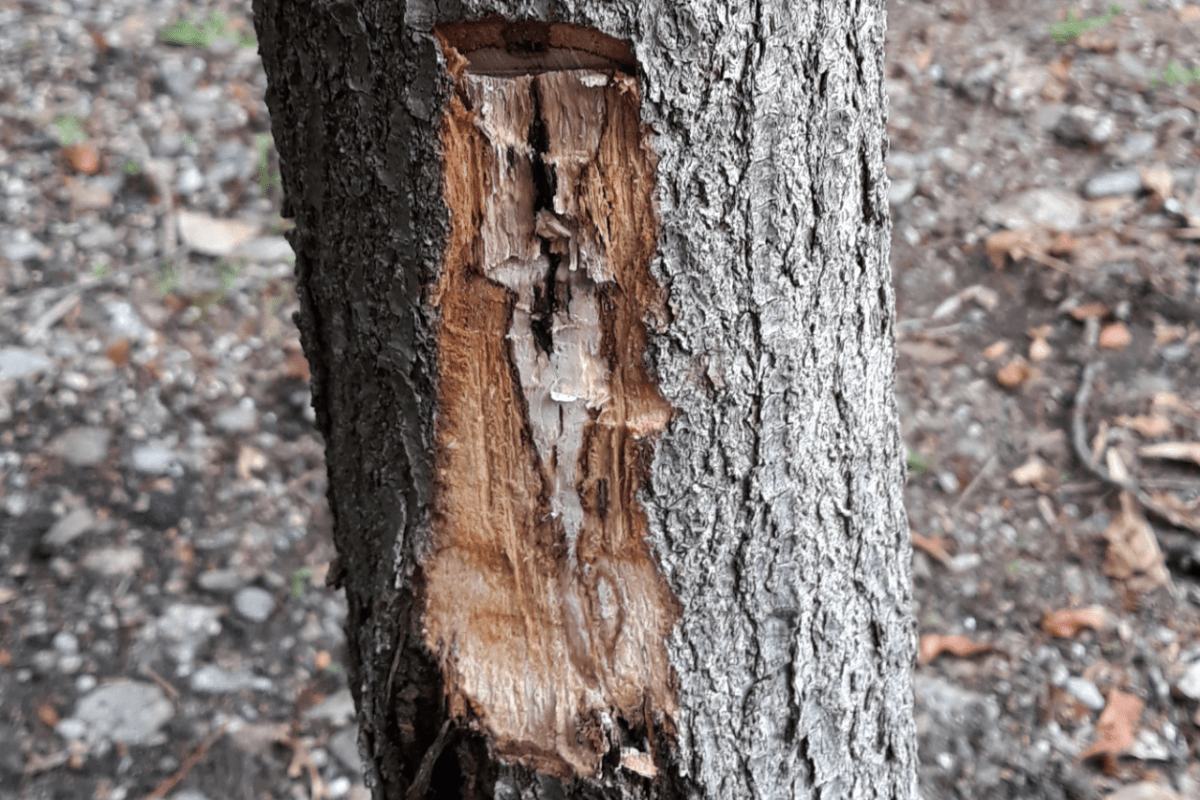
Five years ago, the complex bacterial disease known as acute oak decline was also detected in Switzerland.
In 2023, a new root disease was additionally discovered on oaks, as Swiss Forest Protection reports in the latest Waldschutz Aktuell. It is particularly worrying when both diseases attack oaks at the same time.
The oak, a tree of the future, under threat
Oaks are regarded as tree species of the future, because compared with other common broadleaf species they suffer relatively little from the consequences of climate change such as heat or drought. For some years now, however, the oak has been affected by a disease known as acute oak decline, which is triggered by various species of bacteria. Extreme events such as long periods of drought may favour the disease. The bacterial species involved are native.
Since acute oak decline was first recorded in Switzerland in 2017, Swiss Forest Protection has received numerous reports of the disease from all parts of the country. It is currently the main reason for reports of oaks with slime flux on the trunk and thinning crowns. Swiss Forest Protection also examines all reported oaks for root and stem diseases of the genus Phytophthora, since the symptoms of these diseases resemble those of acute oak decline. Until now, all oaks affected by acute oak decline had been free of Phytophthora. In spring and summer 2023, however, Swiss Forest Protection detected Phytophthora in two cases on oaks suffering from acute oak decline. Both cases came from urban areas and in both cases the species present was Phytophthora cinnamomi, which had previously occurred only as the agent of ink disease on sweet chestnut in Ticino.
What are the effects of the double infestation?
It is not only new for Switzerland that oaks are simultaneously affected by acute oak decline and by Phytophthora cinnamomi are affected. To date there have been no reports anywhere in the world of the two diseases being detected together on the same tree. Many questions therefore remain open. The most important one is what this means for the oaks. Are the symptoms more severe, and do oaks die more quickly when they are infected with both diseases rather than just one? To find out, Forest Protection Switzerland is launching a new research project at the beginning of 2024 together with the WSL's Phytopathology group.
Phytophthora cinnamomi: a heat-loving pathogen
What is worrying is that one of the cases comes from the northern side of the Alps. Until now it was assumed that this pathogen could not establish itself north of the Alps, as winter temperatures there are generally too low. This also explains why the pathogen, although long present in Ticino as the agent of ink disease, has been unable to spread on the northern side of the Alps. Phytophthora cinnamomi originally comes from southern and eastern Asia and is spread above all through the plant trade. Climate change, and mild winters in particular, could mean that the pathogen becomes more common north of the Alps in future. Since only isolated diseased trees have been found here so far, Forest Protection Switzerland recommends always reporting oaks with slime flux and other symptoms. Both diseases, Phytophthora cinnamomi and acute oak decline, can only be reliably identified by laboratory analysis.
Do you have a tip, a source or a correction for this article? Write to us.
More on the subject of recreational hunting: The scientific evidence is presented in the overview Studies on the Effects of Recreational Hunting.
The position of IG Wild beim Wild: IG Wild beim Wild rejects recreational hunting. Our model is the canton of Geneva, which has managed without recreational hunting since 1974: without hunting seasons, without hunting dogs, without driven hunts, without high seats, without the animal cruelty and crime that go hand in hand with hunting season elsewhere. What has worked there for over fifty years disproves every position paper by JagdSchweiz. An association that bases its policy on claims it refutes in its own documents is not a professional organisation, but a factory for misinformation.
Wild animals need a voice
Investigations, petitions and background on recreational hunting. As a thank-you, you will immediately receive our free guide «Recreational hunting on your doorstep: what you can do».
Support our work
With your donation you help protect animals and give their voice a hearing.
Donate now →