
Template text: No recreational hunting at dusk and at night
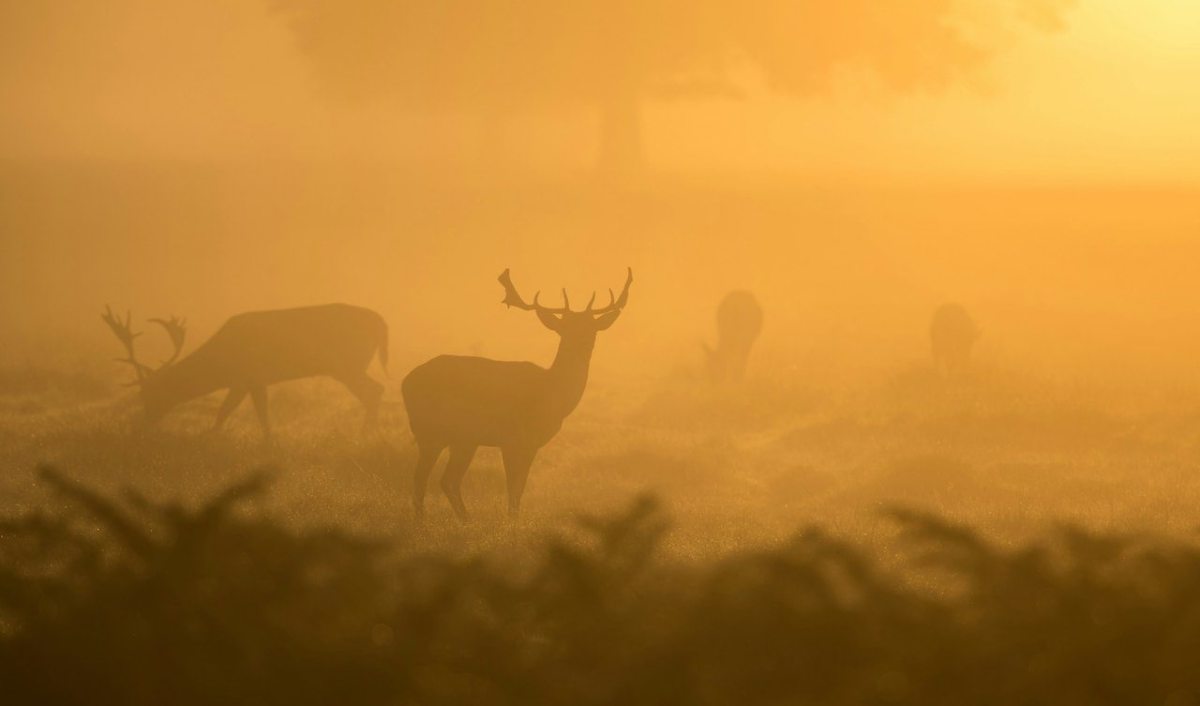
The canton of (………) is to ban recreational hunting at dusk and at night, both in woodland and in open terrain. From the switch back to standard time in autumn, hunting is also to end each day by 4.30 pm at the latest, as the canton of Ticino already prescribes for small-game hunting.
1. Motion
The cantonal government is instructed to submit to the cantonal parliament a bill amending the Act on Hunting and Wildlife Protection (………) and the Hunting Ordinance (………) that ensures that:
- throughout the year, hunting begins no earlier than one hour after sunrise and ends no later than one hour before sunset, in woodland and in open terrain alike;
- from the switch back to standard time in autumn until the end of the hunting season, hunting additionally ends by 4.30 pm at the latest, whichever time is earlier being decisive;
- no permits are issued for hunting at dusk and at night, including for wait hunting of foxes and other predators or for hunting wild boars;
- authorisations 'without time restrictions' for individual species or hunting districts are ruled out;
- urgent follow-up searches, the euthanasia of seriously injured wild animals, and measures to combat animal disease or to avert an immediate danger to people remain reserved and are carried out by the wildlife wardens or under their responsibility;
- the canton records wildlife road accidents by time of accident, location and animal species, compares them with hunting activity and publishes the results annually.
In the bill, the cantonal government sets out the financial and staffing implications and takes the necessary transitional provisions into account.
2. Brief rationale
Since February 2025, the federal hunting ordinance has prohibited hunting in forests at night (Art. 3ter JSV). However, the ban has major loopholes. Night only counts as the period starting one hour after sunset, open terrain is not covered, wait hunting of foxes and other predators remains permitted, and the cantons can provide for exceptions. Twilight, when many wild animals are especially active, thus remains unprotected.
In autumn, wildlife accidents become more frequent. In the claims registered by Mobiliar between 2021 and 2025, figures in the last quarter were around 12 per cent above average. The news agency Keystone-SDA cites the stress caused by hunting as one of the causes, without quantifying its share (Autumn wildlife collisions: hunting stress also named as a contributing cause).
After the clocks change, the evening rush hour suddenly falls into twilight. A University of Washington study of over a million collisions with deer in the US found 16 per cent more collisions in the week after the switch to standard time. The figures cannot be transferred directly to Switzerland. But they show how strongly darkness, animal activity and traffic interact (Clock change: why the week after 25 October is dangerous for wild animals).
Nevertheless, in most cantons recreational hunting remains permitted until twilight, precisely during these weeks. In the Grisons, foxes, badgers and martens may even be hunted «without time restrictions» in several hunting districts at the end of October. The canton of Ticino takes a different approach: from 25 October, small game hunting there ends daily at 4.30 pm (Art. 41 Regolamento venatorio).
Twilight and night are important times for many wild animals to forage and to rest. The proposal gives them back these low-disturbance hours. Whether the ban also reduces wildlife accidents is to be shown by the accompanying evaluation. The cantons can restrict hunting times and enact stricter protective provisions than federal law requires.
Those who hunt wild animals at twilight drive them into the most dangerous hour of the day: onto the road, into the middle of the evening rush hour.
Further background: Dossier: Night Hunting and High-Tech Hunting, Template text: Restricting wait hunting and Template text: Ban on high-tech hunting methods.