Less Protection for Wildlife: Hunting Law Revision Criticized
The Council of States insists on wolf culls in hunting reserve areas. Conservationists have already signaled their intention to call a referendum.


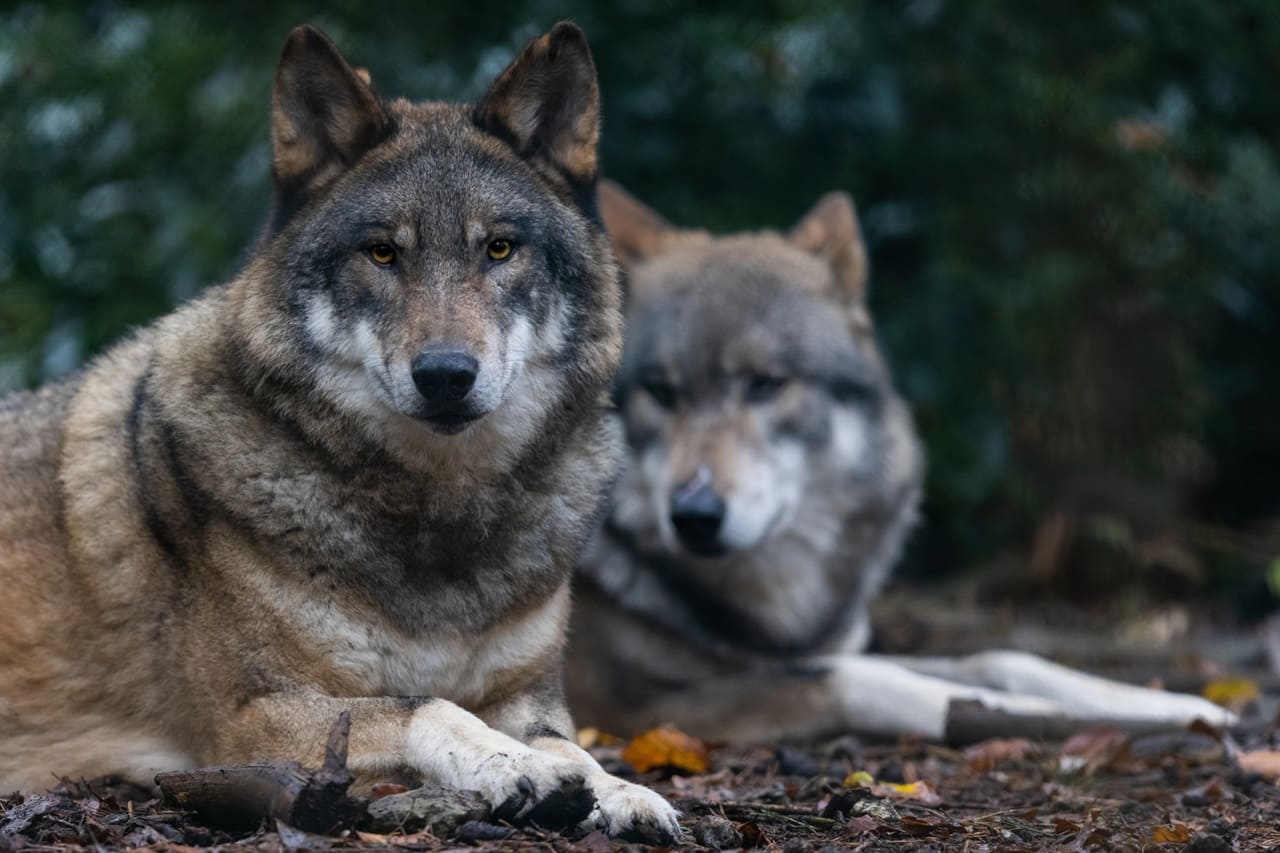
The Council of States is insisting, in the final reconciliation of the revised Hunting Act on wolf culls in hunting reserve areas. Wolves must be able to be shot in these zones, where people live and work, when necessary. Hunting reserve areas or wildlife sanctuaries help protect rare and endangered mammals and birds, as well as their habitats. Hunting is prohibited there unless it is necessary for the preservation of biodiversity or to prevent excessive wildlife damage. In such cases, huntable game may be culled.
The Council of States wants to add that ibex and wolves may also be shot within hunting reserve areas. The National Council, however, wants to exempt wolves.
Number of Wolf Packs Is Growing
A minority in the Council of States would have preferred to follow the National Council, but failed with 24 votes to 16. Speaker Didier Berberat (SP/NE) reminded the chamber during Tuesday's deliberations that the wolf is a protected animal. Allowing hunting in these zones would increase the chances of a referendum that is already being considered.
Beat Rieder (CVP/VS) recalled that eight wolf packs currently live in the country and that their numbers are rising. In hunting reserve areas, the predators would spread unchecked without any means of regulation. “People and livestock live in hunting reserve areas,” Werner Hösli (SVP/GL) also cautioned.
Environment Minister Simonetta Sommaruga made clear that hunting reserve areas are meant to provide refuge for protected species. The Federal Council does not consider it necessary to shoot wolves in these zones. Furthermore, their roaming territories are larger than the protected areas. There therefore remains the possibility of shooting wolves outside the protected zones.
Disagreement Over Hunting Examinations
The chambers also disagree on whether cantons must mutually recognize hunting licenses issued by other cantons. The Council of States insists on maintaining current law and not allowing this. The National Council wants to issue permits to recreational hunters who have passed a cantonal hunting examination. According to Sommaruga, recreational hunters and the majority of cantons also support this harmonization. Parliament had commissioned it.
Another open question concerns the conditions for culling. The National Council wants culling to meet the criterion that regionally appropriate wildlife populations are maintained as a result — for example, that wolves cannot reduce other wildlife populations by too great a number. The Council of States does not want this addition.
Less Protection
A further difference remains on the question of who gets a say in the criteria for compensation for damage caused by protected animal species. The National Council wants not only cantons but also other “affected groups” to be consulted. The Council of States rejects this addition as well.
It is already clear that wolves and other protected species will have less protection from culling than before. The final say is expected to rest with the electorate: nature conservation organizations have already indicated a referendum. In their view, this constitutes an unacceptable weakening of species protection.
The bill is being sent back to the National Council for a further round of deliberations to resolve the remaining differences.
Dossier: The Wolf in Switzerland: Facts, Politics, and the Limits of Hunting
More on the subject of recreational hunting: In our dossiers on the criticism of recreational hunting gather fact-checks, analyses and background reports. What the research says about this is shown by Hunting fact-checked: the state of research.
The position of IG Wild beim Wild: IG Wild beim Wild rejects recreational hunting. Our model is the canton of Geneva, which has managed without recreational hunting since 1974: without hunting seasons, without hunting dogs, without driven hunts, without high seats, without the animal cruelty and crime that go hand in hand with hunting season elsewhere. What has worked there for over fifty years disproves every position paper by JagdSchweiz. An association that bases its policy on claims it refutes in its own documents is not a professional organisation, but a factory for misinformation.