Landquart under current: canton counts 216 trout and gains spawn for stocking
Near Saas in the Prättigau, 216 brown trout were electrically stunned, measured and in some cases stripped of their eggs. The canton also assesses stocking by the catch of recreational anglers.
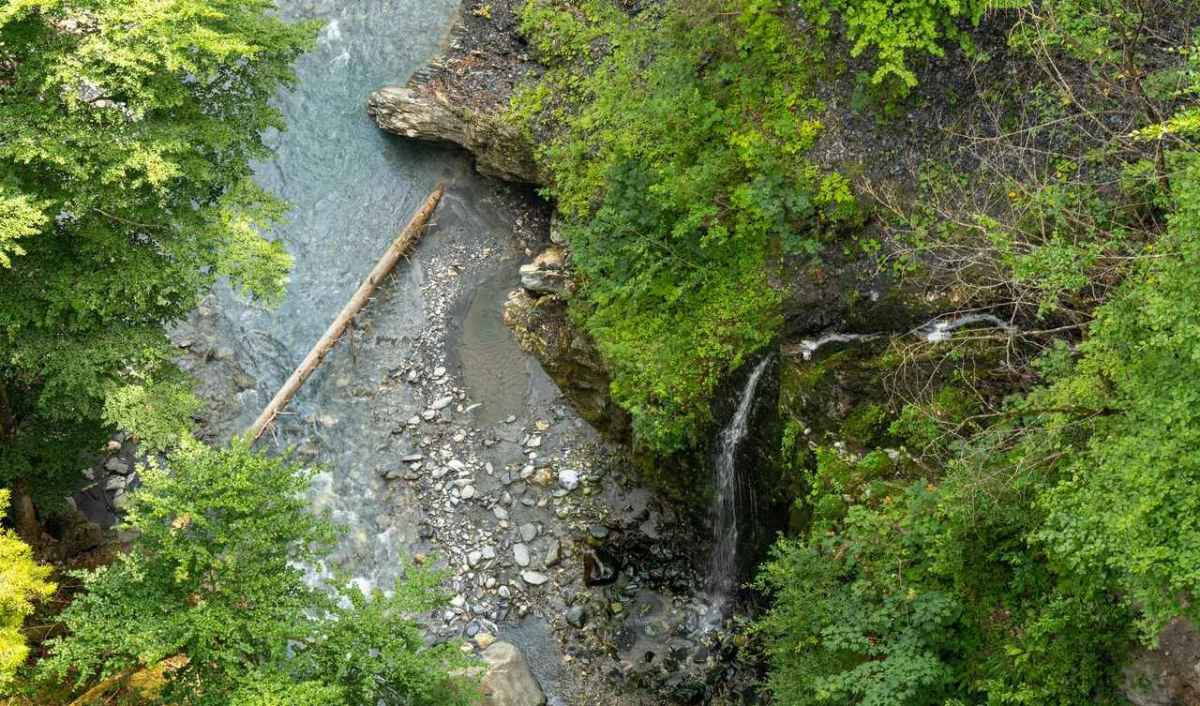
Stock image. Photo: Fabian Kleiser / Unsplash
On Friday 30 October, the Grisons Office for Hunting and Fishing electrified a 200-metre stretch of the Landquart near Saas in the Prättigau. A fisheries warden, four game wardens and volunteers caught 216 brown trout and two bullheads in two passes, stunned them a second time for measuring and stripped the eggs from spawning-ready females. The «Südostschweiz» accompanied the operation for a report and describes it as a health check for the fish. For context, the link to stocking practice matters: the spawn obtained is used to produce stocking fish, and the canton also judges their use by the catch success of recreational anglers.
What happened on the Landquart
According to the report, the stretch near Saas is now one of several test sections that the canton electrofishes regularly in each fishing district. In the water, an electric field is created that stuns the fish and draws them towards the positive pole, where they are lifted out with a landing net. In the first pass, 177 fish ended up in the tank; after the second, according to the fisheries warden's estimate, around 90 per cent of the fish stock in this stretch had been taken out of the river. «The animals should notice nothing and be taken by surprise by the current», the newspaper quotes him as saying.
On the bank, every fish was weighed, measured and examined for injuries, and its sex was determined. For five trout this was not possible. According to the report, the fisheries warden linked this to possible residues of hormones and other medicines in the water, though the report cites no evidence for this explanation. The females, which were close to spawning, were set aside. Their eggs go to the cantonal fish hatchery in Klosters.
How gentle is electrofishing?
The report calls the method one of the gentlest there is. The scientific literature is more cautious. A field study by the French research institute INRAE on salmon and brown trout concluded in 2020 that the proportion of fish with spinal damage rises with current frequency and with body length (Pottier et al. 2020). In an experiment with 866 wild rainbow trout in Montana, depending on the type of current, 12 to 54 per cent of the fish showed spinal injuries, and those with moderate and severe injuries grew markedly more poorly afterwards (Dalbey et al. 1996). A study in Colorado after eight years of annual electrofishing also showed that such injuries accumulate over the years and are often invisible from the outside: 44 per cent of the X-rayed fish that looked unremarkable externally carried old damage (Kocovsky et al. 1997).
However, not all studies show such damage. With smooth direct current, as is common in central Europe, Austrian researchers found no spinal damage in rainbow trout (Kainz and Gollmann 2001), and the trout populations in Colorado remained stable despite the injuries. The studies therefore demonstrate an injury risk that depends heavily on the type of current, frequency, fish species and body size. How great it was in the Saas operation cannot be inferred from this: the report does not say which type of current was used or whether the authority records injuries caused by the electrofishing itself. The authority is aware of the risk. In its stocking strategy for fisheries district III it rejects independent electrofishing by angling clubs, because the gentlest possible fishing requires a great deal of experience. Added to this is the repeated stress, as test stretches are electrofished regularly.
The ban on natural bait is an admission
The data from Saas are interesting, according to the newspaper, because on parts of the Landquart only artificial lures have been permitted since this season. In December 2025 the government approved the partially revised fishing operation regulations and thereby extended the ban on natural bait; the rules have applied since 1 January 2026. The purpose of the ban is set out in a departmental order on the Upper Engadine: it is meant to reduce the mortality of fish below the minimum size.
In doing so, the canton concedes something that is rarely stated in the debate about angling. Undersized fish must be put back, and some of them subsequently die from the injuries caused by the hook. A meta-analysis of 18 studies showed as early as 1992 that trout caught with natural bait die more often after release than those that took an artificial fly or lure (Taylor and White 1992). The federal Animal Welfare Ordinance prohibits, in Article 23, fishing with the intention of releasing the fish again. Returning undersized fish nevertheless remains compulsory. As a result, fish that may not be kept also end up on the hook. The ban on natural bait is intended to reduce the associated mortality, but it cannot prevent such catches.
How widespread the pastime is can be seen from the office's 2025 annual report: 11,559 fishing licences were issued, up from 9,526 the previous year, including 3,928 seasonal licences.
Eggs for the fish farm, fish for the catch
The report ends with the fisheries warden stripping the eggs from a female over a draining sieve and fertilising them by hand. What looks like a detail is a fixed part of management. The district's stocking strategy calls for 80 to 100 females and 30,000 to 40,000 eggs per year on the Landquart near Klosters. Some of the juvenile fish from the Klosters fish farm grow up in rearing streams. According to the paper, the Vorderprättigau fishing club, for example, releases around 10,000 fry into three streams every year. The following year, roughly 20 per cent of the released fish are recaptured as yearlings and mostly released into the Landquart. In running waters alone, the canton released 358,878 young brown trout in 2025, according to the annual report, 84,426 of them in fishing district 3, to which the Landquart belongs.
How the canton assesses stocking is also set out in the strategy. Alongside natural reproduction and genetics, catch success is a central yardstick, that is, the number of fish caught per trip to the water. Stocking has had a positive effect, the document states, for example on the Landquart, where catch numbers have risen steadily. According to the paper, the stocking commission only wants to forgo stocking where natural reproduction continues to sustain fishing, and the authority does not dispute this. Alongside the authority's fisheries wardens, the commission includes representatives of the angling associations.
Yet the benefit of stocking is disputed. The Federal Office for the Environment notes in its publication “Sustainable fish stocking in flowing waters” that stocking has been stopped altogether in some waters, and the research project Fischnetz by Eawag and the federal government concluded that in many cases stocking does not have the desired effect. The Grisons authority itself writes in its cantonal strategy that fish stocking is no panacea. The article Fish have feelings: Canton of Grisons builds fish farm.
Breeding more fish does not repair power station damage
shows that the canton operates seven hatcheries and why the capacity of fish to feel plays hardly any role in this. The report begins with a window of time: two hours later, the electrofishing rescue would no longer have been possible, because the Landquart would then have swollen abruptly due to an open power station sluice near Klosters. This hydropeaking operation harms brown trout spawn, and it is no marginal issue. In the stocking strategy, the angling representatives state that climate warming with floods, debris flows and dry periods, as well as hydropeaking and reservoir flushing by power stations, are the primary causes of the decline of fish populations. The authority expressly shares this assessment.
How hard power station operations can hit fish was shown this summer. At the end of July, the Albula near Sils im Domleschg almost ran dry after a technical fault at a power station, and in June fish died in the Sufnersee after changes in the lake level during normal power station operations. In both cases the cantonal police spoke of several thousand dead fish. Across Switzerland, around 73 per cent of the water stretches examined are in a poor ecological condition, as the article Fisheries Association Urgently Calls for More Protection for Swiss Fish shows.
Commentary: What gets counted is what is meant to be caught
Nobody disputes that a canton needs to know how the fish in its rivers are faring. But the report from Saas tells a story of care where a story of exploitation should also be told. The same authority that stuns, weighs and measures the trout sells the licences with which they are caught, breeds the replacement stock and judges the outcome partly by the number of fish per fishing trip. How differently priorities are set is shown by the stocking strategy itself: fishing representatives there demand that small fish such as the bullhead be given the same standing as catchable fish. The office welcomes the idea but, given its staffing and logistical resources, does not see itself in a position to launch such promotion programmes.
The two bullheads that delight the fisheries warden are protected throughout Grisons. The brown trout beside them are released for exploitation within the catch regulations, even though they live in the same water, are exposed to the same interventions in their habitat and can feel pain. As long as fish are regarded primarily as yield, every population survey remains an inventory as well. Anyone who wants to help the brown trout of the Landquart should remedy hydropeaking, give the river back its sediment and its side channels, and then ask honestly whether stocking and hooks are still needed.
More on the subject of recreational hunting: The scientific evidence is presented in the overview Studies on the Effects of Recreational Hunting.
The position of IG Wild beim Wild: IG Wild beim Wild rejects recreational hunting. Our model is the canton of Geneva, which has managed without recreational hunting since 1974: without hunting seasons, without hunting dogs, without driven hunts, without high seats, without the animal cruelty and crime that go hand in hand with hunting season elsewhere. What has worked there for over fifty years disproves every position paper by JagdSchweiz. An association that bases its policy on claims it refutes in its own documents is not a professional organisation, but a factory for misinformation.
Wild animals need a voice
Once a week: research, petitions and background information on recreational hunting. Free of charge and can be unsubscribed from at any time.

All articles are written by IG Wild beim Wild as well as by external co-authors. Research, structuring and editorial processes may be supported by AI-assisted tools.
Support our work
With your donation you help protect animals and give their voice a hearing.
Donate now →