PETA examines charitable status of the German Hunting Association
PETA has filed an application to review the charitable status of the Deutscher Jagdverband. The organisation sees no charitable purpose in recreational hunting.
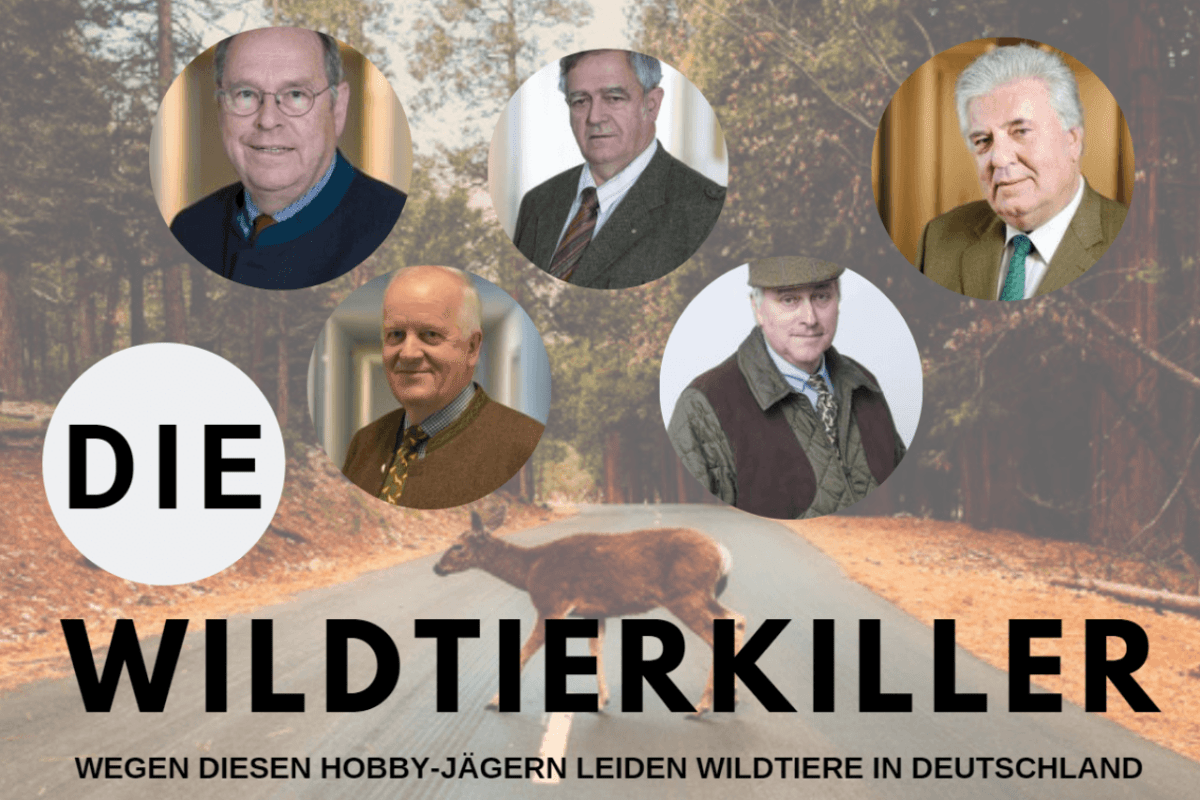
Board Deutscher Jagdverband
The Deutsche Jagdverband (DJV) markets fur from wild animals killed in Germany and has founded its own company for this purpose. PETA regards the use of tax-privileged association funds to support a privately operating, and thus profit-making, limited company as an activity that is detrimental to a charitable association under the German Fiscal Code. The animal rights organisation has therefore filed an application with the tax office responsible for the DJV, Finanzamt Berlin Mitte/Tiergarten, requesting a review of the association's eligibility for charitable status.
„Tax law contains a clear statement regarding the provision of funds by a tax-privileged body, such as a charitable association, to a taxable private-law entity such as Fellwechsel GmbH: this constitutes an activity that is detrimental for tax purposes, since Fellwechsel GmbH is not itself a charitable limited company", says Dr Christian Arleth, lawyer at PETA. "Such support must lead to the revocation of the Deutscher Jagdverband's charitable status."
In 2016, the DJV founded Fellwechsel GmbH together with the Landesjagdverband Baden-Württemberg. It processes and markets the pelts of killed wild animals and seeks to present itself as a supposedly reputable alternative to Eastern European fur farms with their cruel breeding practices. To promote its products, Fellwechsel GmbH suggests to consumers that they are contributing to nature conservation.
In order to collect pelts from across Germany, the DJV, using tax-privileged association funds, helped build a nationwide infrastructure for Fellwechsel GmbH. This consists mainly of freezers at collection points, where hunters are meant to deposit killed wild animals. In Rastatt, Baden-Württemberg, the DJV has leased a plot of land – complete with containers for animal remains, offices and cold storage rooms for the pelts brought there from collection points all over Germany, as well as a pelting station, i.e. a facility for skinning the pelts. According to Erhard Jauch, managing director of the Baden-Württemberg regional hunting association, the DJV's investment costs for this amounted to 250,000 euros. On top of that come ongoing costs for operations and staff.
Hunters have made it their mission to make wearing real fur socially acceptable again. In fact, this project creates entirely the wrong incentives, as it fuels, among other things, demand for the particularly sought-after fur of foxes.
However, fox hunting is demonstrably ecologically unnecessary, since populations regulate themselves based on food availability, weather conditions and social factors.
Hunting, on the other hand, destroys the age and social structures of animal populations, which leads to increased reproduction among survivors. Furthermore, hunting is generally counterproductive, since foxes, for example, play an important role in the ecosystem by eating field mice, which are considered pests by farmers.
PETA fundamentally opposes hunting. Under the guise of closeness to nature, hunters cause unimaginable suffering: every year, they kill between four and five million wild animals nationwide, as well as countless cats and dogs – primarily as a leisure activity. In doing so, they frequently inflict considerable pain on sentient creatures. Many animals are wounded by missed shots or literally crushed in traps. Not only is massive suffering inflicted on hundreds of thousands of animals, but several dozen people are also killed or injured by recreational hunters every year. Germany's more than 380,000 recreational hunters are matched by only around 1,200 professional hunters, mostly forestry officials.
PETA's motto is: animals are not here for us to experiment on, eat, wear, be entertained by, or exploit in any other way.
More on the subject of recreational hunting: In the dossier Poaching and hunting crime in Switzerland we document cases, legal questions and recurring patterns. What the research says about this is shown by Hunting fact-checked: the state of research.
The position of IG Wild beim Wild: IG Wild beim Wild rejects recreational hunting. Our model is the canton of Geneva, which has managed without recreational hunting since 1974: without hunting seasons, without hunting dogs, without driven hunts, without high seats, without the animal cruelty and crime that go hand in hand with hunting season elsewhere. What has worked there for over fifty years disproves every position paper by JagdSchweiz. An association that bases its policy on claims it refutes in its own documents is not a professional organisation, but a factory for misinformation.

All articles are written by IG Wild beim Wild as well as by external co-authors. Research, structuring and editorial processes may be supported by AI-assisted tools.
Support our work
With your donation you help protect animals and give their voice a hearing.
Donate now →