Four dead in Gy: once again a hunting rifle kills an entire family
A 42-year-old man in eastern France shot dead his two sons and his mother-in-law, filmed the act and then turned the hunting rifle on himself.
On Wednesday evening, 2 September 2026, at around 8 p.m., some fifty gendarmes and thirty firefighters were deployed to the heights above Gy, a municipality of around a thousand inhabitants roughly 30 kilometres north of Besançon.
On a private plot on the Chemin de Bellevue, where the family lived in a mobile home next to a house under construction, the emergency services found four bodies. The forensic examination lasted all night, and the operation was only stood down at six in the morning.
The dead all belonged to the same family: a man of 42, his two sons aged six and ten, and his wife's 74-year-old mother. According to the public prosecutor of Vesoul, Arnaud Grécourt, the bodies of the two adults were found in a bungalow on the property, those of the children in a van parked nearby. Investigators had been alerted after the father himself reported that he had killed his children.
A hunting rifle, calibre 12
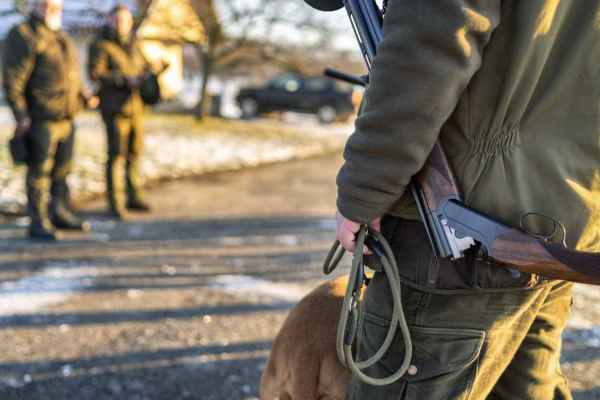
According to the initial findings of the investigation, the two children and the 42-year-old man were killed with a hunting weapon, a double-barrelled 12-gauge shotgun. The preferred hypothesis of the public prosecutor of Vesoul, Arnaud Grécourt, is that the father, who was in the midst of separation proceedings, killed the three other people before turning the weapon on himself. The autopsies were still pending on Thursday. Formally, the public prosecutor initially opened the investigation on suspicion of negligent homicide, the usual French starting classification as long as forensic medicine has not confirmed the precise circumstances. The focus of the investigation on a deliberate family killing followed by suicide arises from the hypothesis mentioned.
One detail reported consistently by several French media outlets is particularly disturbing: the man is said to have filmed the act and sent the recording to his wife. A relative, who introduced himself to AFP as the perpetrator's cousin, stated that the mother-in-law had come to collect the children when the killings took place. According to his account, the partner had wanted to separate for months. The children's mother was not present at the time of the crime.
We report on such cases with restraint and without placing an additional burden on the relatives. What interests us here is not the personal tragedy, but a structural pattern concealed behind the weapon used.
Not an isolated case, but a pattern
The Gy case fits into a series that we have been documenting for years in our section Crime and Hunting: people with legal access to hunting weapons turn these weapons, and their familiarity with lethal violence, against their own families, often in a separation situation and frequently followed by suicide.
The examples from the recent past are numerous. In Switzerland, in July 2026 a 59-year-old recreational hunter from Ticino in the Blenio Valley shot his ex-wife and then blew up a house. Back in 2019, in Courfaivre in the Jura, a 47-year-old recreational hunter, established as a hunting instructor in the cantonal hunting association, killed his wife just a few days after she had filed a criminal complaint. In Germany, in February 2026 in Strullendorf near Bamberg, a 52-year-old recreational hunter allegedly shot his wife and his two children and then took his own life. In Sweden, in February 2025 a man licensed for four hunting weapons carried out the deadliest mass shooting in the country's history in Örebro, with ten dead. Such cases appear in no hunting-accident statistics, because they are recorded as criminal offences, not as hunting accidents.
What the research shows
There is a sober reason why the hunting rifle is so often the weapon in these acts: availability. The forensic pathologist Alexia Delbreil and the criminologist Jean-Louis Senon analysed 42 intimate-partner killings before the Cour d’Appel de Poitiers. Among the femicides committed with firearms, around 71 per cent were carried out with hunting rifles. Hunting weapons, the researchers say, are «weapons of opportunity» that are kept within reach in the home. The psychiatrist Jean-Louis Terra noted that the risk of a woman being killed is five times higher in a household with a firearm, a finding he described in 2021 as still valid.
Then there is personality research. The doctoral thesis by Ursula Grohs, to date the only systematic study in the German-speaking world, found that recreational hunters rate themselves as significantly more aggressive than non-hunters and more frequently resolve conflicts through dominance and control. International studies on the «Dark Triad» traits point in the same direction: the willingness to kill animals without necessity correlates with personality patterns that are regarded as risk factors in other contexts.
The blind spot remains
The Gy case falls in a week in which Switzerland, following the Aarau shooting spree, is debating risk groups and proof of suitability for private gun ownership. As we set out in our article on Aarau, of all things the continuing private access to hunting weapons goes unmentioned. On the very same day, Gy shows how little this blind spot stops at national borders. A gun-law debate that scrutinises assault rifles but leaves out regular private access to hunting weapons remains incomplete.
RECREATIONAL HUNTER RADAR
On the trail of hidden animal welfare offences, poaching and/or crime? Report suspected cases to us! Help with the big Recreational Hunter Radar.

More on the subject of recreational hunting: In the dossier Poaching and hunting crime in Switzerland we document cases, legal questions and recurring patterns. What the research says about this is shown by Hunting fact-checked: the state of research.
The position of IG Wild beim Wild: IG Wild beim Wild rejects recreational hunting. Our model is the canton of Geneva, which has managed without recreational hunting since 1974: without hunting seasons, without hunting dogs, without driven hunts, without high seats, without the animal cruelty and crime that go hand in hand with hunting season elsewhere. What has worked there for over fifty years disproves every position paper by JagdSchweiz. An association that bases its policy on claims it refutes in its own documents is not a professional organisation, but a factory for misinformation.

All articles are written by IG Wild beim Wild as well as by external co-authors. Research, structuring and editorial processes may be supported by AI-assisted tools.
Support our work
With your donation you help to protect animals and give their voice a hearing.
Donate now →