Fewer and fewer insect-eating birds in Europe
The decline of insects is a topic on everyone's lips. But what does this mean for birds that feed on them? A study reveals declines across Europe — though insect loss alone is not to blame.

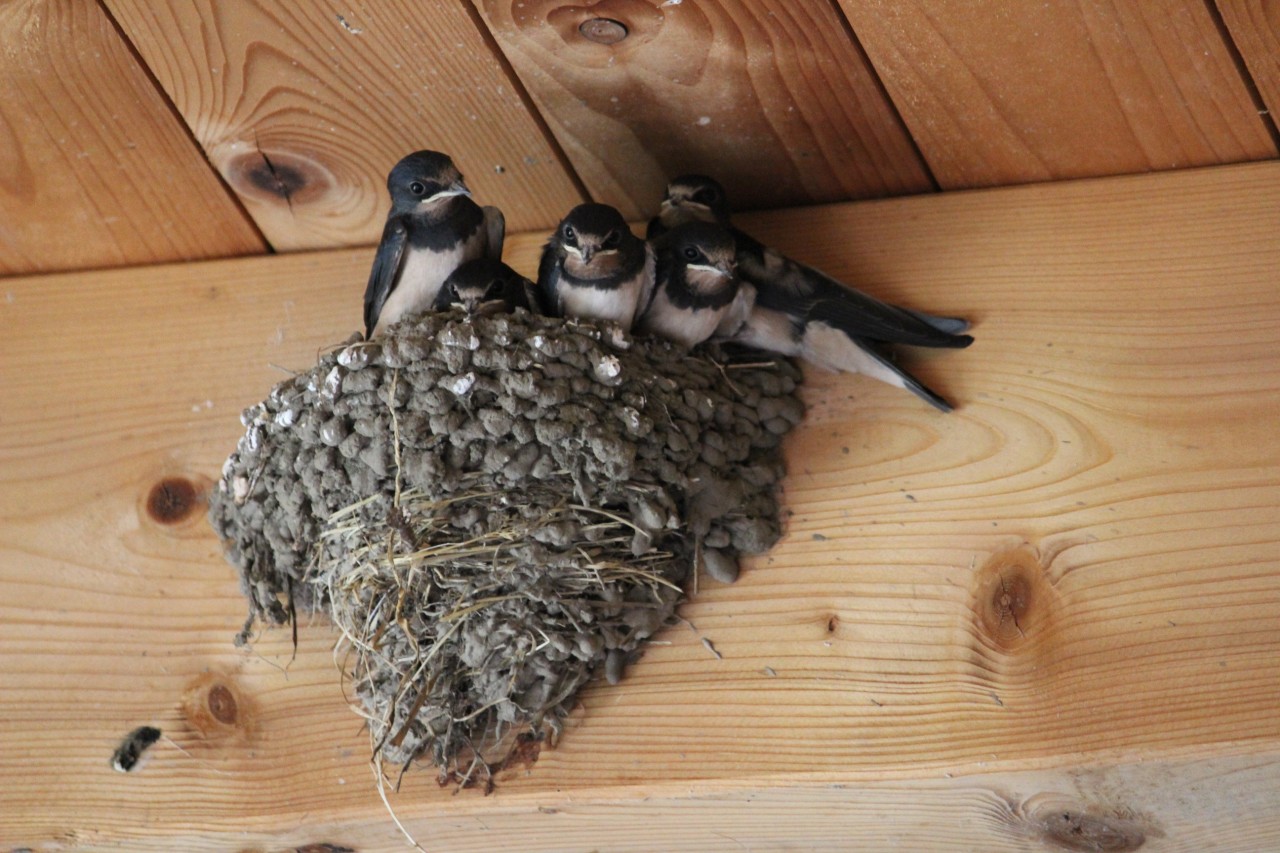
Whether wagtail, meadow pipit, or barn swallow — the number of insectivorous birds has declined significantly across Europe over the past 25 years. According to a study published in the journal «Conservation Biology», the population of these birds fell by an average of 13 percent.
The scientists at the Senckenberg Biodiversity and Climate Research Centre and the German Centre for Integrative Biodiversity Research attribute this trend not solely to the decline of insects, but also — and particularly — to changes in agricultural landscapes. Bird populations in arable fields, meadows, and pastures have declined especially sharply.
Even more alarming figures were cited two months ago by the German nature conservation organisation NABU, referring to a count by the European Bird Census Council. According to that data, farmland bird populations across Europe fell by 56 percent between 1980 and 2017. However, the time periods covered by the two surveys differ. Furthermore, the older study recorded not only insect-eaters but also seed-eating birds.
Loss of food and nesting sites
It is probably a combination of many factors: the loss of insects and the resulting food shortage, the loss of hedgerows and the resulting loss of nesting sites, and the sealing of land surfaces,
says Katrin Böhning-Gaese
regarding the possible causes of the decline and the role of modern agriculture. Among insectivorous farmland birds, the decline has been far more pronounced than among insectivorous woodland birds.
In addition to the heavy use of pesticides, the trend toward large-scale monoculture farming has led to the loss of more and more hedgerows, field margins, and fallow land; many meadows and pastures have been converted to arable land. This makes it increasingly difficult for insectivorous species to find food and nesting sites. Cold-adapted species face additional pressure from climate change.
Birds are indicators here of an “industrial” agriculture and its negative effects on biodiversity, said Böhning-Gaese, who also serves as director of the Biodiversity and Climate Research Centre. Countermeasures can be taken on many levels:
It starts with agricultural policy in Brussels, extends through planning decisions made by local authorities to the promotion of organic farming, the local marketing of food produced in biodiversity-friendly ways, and the willingness of consumers to pay more for such products.
Katrin Böhning-Gaese
Around half of all bird species in Europe feed on insects. However, according to the study, insectivorous birds are not faring equally badly everywhere: in most habitats, only isolated species were found to be declining.
Bird Protection Directive turns 40
Meanwhile, NABU called for effective management plans for bird protection areas and the consistent prosecution of songbird hunting in the Mediterranean region. Although the European Birds Directive, which turns 40 on 2 April, is one of the world's most successful and progressive nature conservation laws, it has still not been fully implemented even after 40 years, said NABU's federal executive director Leif Miller.
A major weakness was its lack of effectiveness across the landscape, it was noted with regard to the Europe-wide bird count: while many rare species have been developing well thanks to conservation measures, a sharp decline has been recorded in the populations of widespread “common” bird species.
More on the subject of recreational hunting: In our dossiers on recreational hunting gather fact-checks, analyses and background reports. The scientific evidence is presented in the overview Studies on the Effects of Recreational Hunting.
The position of IG Wild beim Wild: IG Wild beim Wild rejects recreational hunting. Our model is the canton of Geneva, which has managed without recreational hunting since 1974: without hunting seasons, without hunting dogs, without driven hunts, without high seats, without the animal cruelty and crime that go hand in hand with hunting season elsewhere. What has worked there for over fifty years disproves every position paper by JagdSchweiz. An association that bases its policy on claims it refutes in its own documents is not a professional organisation, but a factory for misinformation.