Federal Hunting Act: Cruel Practices Permitted
PETA calls for significant changes in the treatment of wildlife in its statement to the federal government.


The federal government is planning to revise the hunting law, possibly still this year. PETA had therefore repeatedly asked the Federal Ministry of Food and Agriculture (BMEL) to be involved in the revision of this law and the Federal Nature Conservation Act, as Germany's largest animal rights organisation.
After receiving no response, the organisation submitted its statement to the BMEL at the end of September. The draft presented by Minister Julia Klöckner in July would continue to permit many cruel hunting practices that should be banned immediately on animal welfare grounds, such as the training of hunting dogs on live animals.Furthermore, the new law would, for example, release roe deer for unrestricted culling, for which there is no scientific basis even from a wildlife biology perspective. PETA is now urging policymakers to take wildlife biology studies and animal welfare into account and to revise the draft legislation.
The changes sought in the amended legislation fall short of the requirements for a modern, animal-friendly Federal Hunting Act. Wildlife does not pose a threat to Germany's forest stock — they are merely reduced to a nuisance in a forestry industry geared towards profit maximisation. Killing wildlife for economic reasons is unacceptable from an animal welfare perspective.
Nadja Michler, PETA's wildlife policy officer.
In the course of the legislative amendment, PETA is calling for five key changes
According to the Federal Ministry, the law is intended, among other things, to establish an appropriate balance between forest and wildlife, to standardize hunting examination regulations, and to reduce lead emissions from rifle ammunition into the environment. PETA advocates for a nationwide ban on hunting, but demands five essential improvements to the draft as the most urgent steps: In the organization's view, the cruel earth hunting — in which foxes and badgers are driven from their burrows by dogs and shot by the waiting hunter — as well as hunting with traps, must be prohibited. "Likewise, the training of hunting dogs on live animals, hunting of foxes, martens, and all bird species, as well as the shooting of dogs and cats must be banned", explains Michler.
Hunting endangers humans and animals — and is unnecessary from a wildlife biology perspective
PETA points out that every year hundreds of thousands of animals suffer considerably due to stray shots, and that several dozen people are killed and injured by recreational hunters annually.
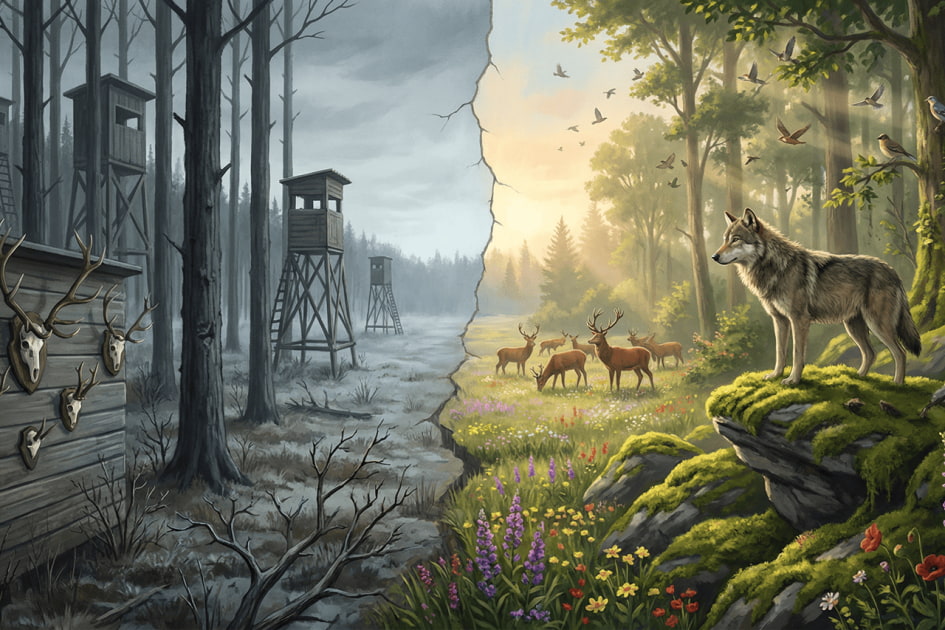
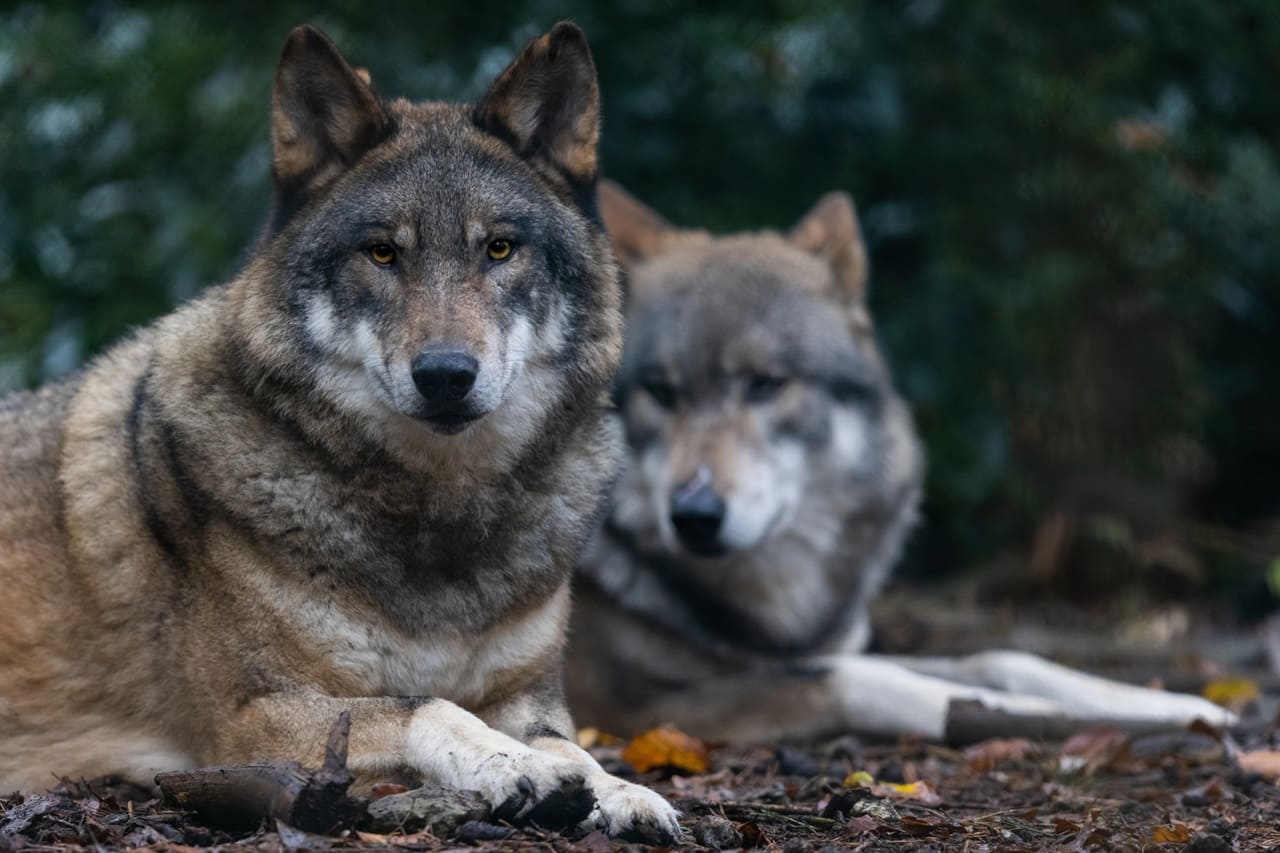
Recognized wildlife biologists have long agreed that there is no ecological necessity for hunting. The renowned biologist Prof. Dr. Josef Reichholf, among others, emphasizes that the nearly eradicated wolves do not need to be replaced by human hunters. Rather, natural regulation of animal populations living in forests occurs through environmental factors such as weather, food availability, and disease. Scientists have concluded that fox populations, for example, regulate themselves based on food availability and social factors. Hunting, on the other hand, destroys the age and social structures of animal populations, leading to increased reproduction among survivors. Losses in the population are thus quickly offset or even overcompensated by offspring and immigration.
What you can do:
- Inform friends and acquaintances about the cruelty of hunting.
- Order our free demonstration package on hunting and organize peaceful vigils.
- Sign our petitions on the topics of hunting and animal welfare.
More on the subject of recreational hunting: In the dossier Poaching and hunting crime in Switzerland we document cases, legal questions and recurring patterns. The scientific evidence is presented in the overview Studies on the Effects of Recreational Hunting.
The position of IG Wild beim Wild: IG Wild beim Wild rejects recreational hunting. Our model is the canton of Geneva, which has managed without recreational hunting since 1974: without hunting seasons, without hunting dogs, without driven hunts, without high seats, without the animal cruelty and crime that go hand in hand with hunting season elsewhere. What has worked there for over fifty years disproves every position paper by JagdSchweiz. An association that bases its policy on claims it refutes in its own documents is not a professional organisation, but a factory for misinformation.