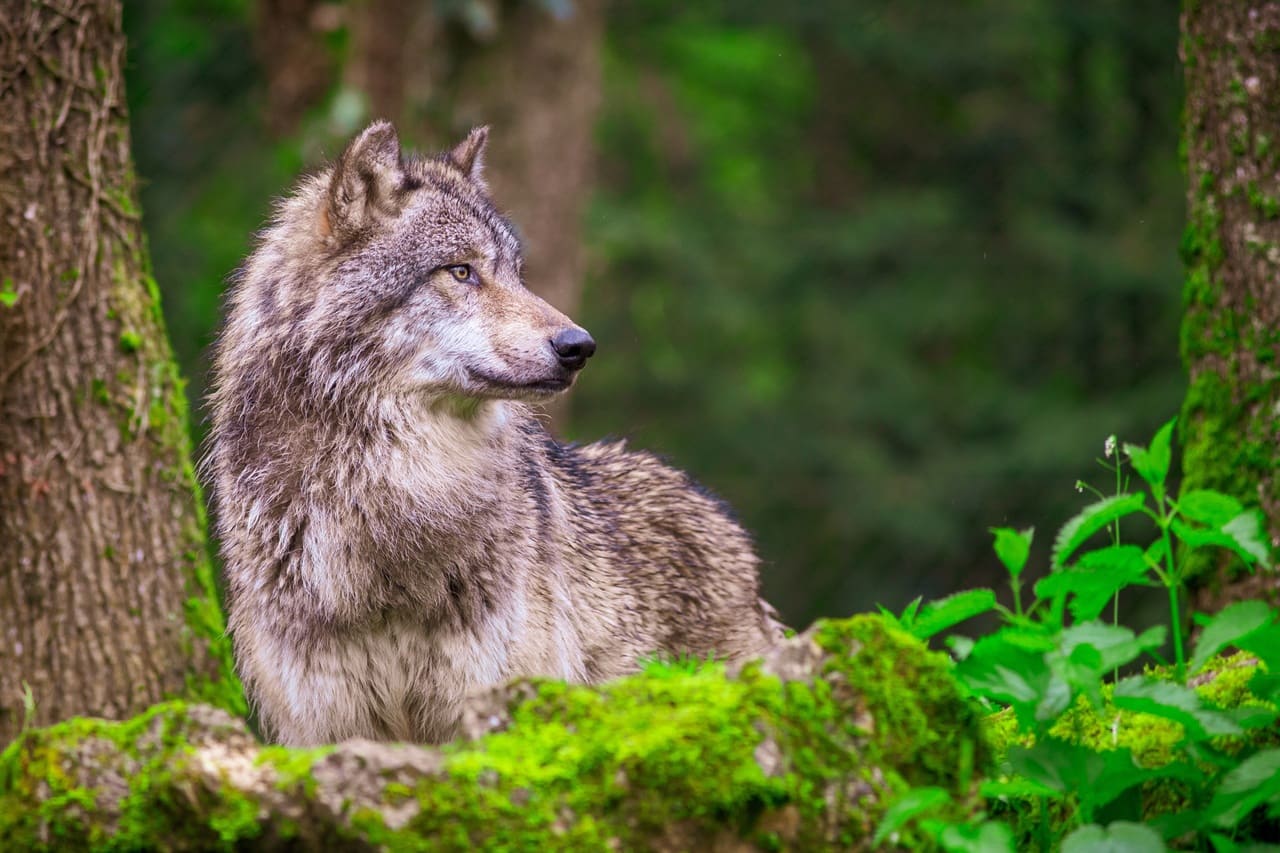
Roe Deer Fawn Rescue and Hobby Hunting: Who Pays?
The images are emotionally powerful: volunteers walk across meadows at dawn with drones and thermal imaging cameras, searching for roe deer fawns and carrying the frightened young animals out of the field before the mower arrives. In media reports, hunting organisations are praised as selfless conservationists.

Yet those same animals are released for hobby hunting just a few months later.
At the same time, costs for protective forest management, regeneration fencing and wildlife damage prevention are exploding in many mountain regions, with the burden borne predominantly by the public.
What appears to be voluntary service reveals itself on closer inspection to be an expensive hobby with high downstream costs for taxpayers and forests.
Fawn Rescue as the Perfect PR Backdrop
Roe deer fawn rescue using drones has developed into a professionally organised movement in Switzerland. The association Rehkitzrettung Schweiz reports that over 25’000 roe deer fawns have already been saved from death by mowing using multicopters and thermal imaging cameras in recent years. In the 2025 season, media reports put the figure at around 6’500 young animals — more than ever before.
At the same time, official statistics still record around 1’500 roe deer fawns killed by mowing per year, with experts assuming the actual number to be significantly higher.
The images from these rescue operations are ideally suited as an image campaign for hobby hunting. They create the impression of people selflessly and voluntarily devoting themselves to the welfare of wildlife. What disappears from public perception is the fact that those same hobby hunters pursue exactly this species just a few months later, killing them in their thousands in accordance with officially prescribed culling plans.
Tens of Thousands of Roe Deer Shot Every Year
A look at the federal hunting statistics reveals the scale: in the 2024 hunting year, 42’404 roe deer were shot in Switzerland, excluding accidental kills and special culls. This figure also includes around 10,000 roe deer fawns. At the same time, according to the Federal Office for the Environment, approximately 135,000 roe deer live in Switzerland.
Hobby hunting is therefore not a marginal phenomenon, but rather a massive, annually recurring intervention in the roe deer population. Hunting associations argue that these interventions are necessary to limit wildlife damage in forests and agriculture. Critics counter that the system itself contributes to the very problems it claims to solve — including the escalating forest-wildlife conflict in protective forests.
Protective Forests: Billion-Franc Value, Million-Franc Costs
Approximately half of Switzerland's forests are classified as protective forests. They shield settlements, transport routes, and infrastructure from avalanches, rockfalls, landslides, and debris flows. Specialist agencies estimate the value of this protective function at around 4 billion francs per year.
For protective forests to fulfill this function, they must be maintained and regenerated. The public contributions paid by the federal government and cantons for this purpose amounted to slightly more than 160 million francs in 2020 — significantly less than the value of the services rendered, but still a considerable sum of taxpayers' money.
Concrete examples illustrate the scale:
- In the canton of Graubünden, approximately 16 million francs per year are budgeted for protective forest maintenance.
- In 2023 alone, forest owners in Graubünden's protective forests received federal and cantonal contributions totaling 14.54 million francs for the maintenance of approximately 1,750 hectares.
Protective forest maintenance is in principle funded by the federal government, cantons, municipalities, and beneficiaries. In practice, a large share of these funds comes from general tax revenues.
Wildlife Browsing in Protective Forests: When Deer Devour Tomorrow's Forest
Alongside the climate crisis, protective forests are coming under increasing pressure from wildlife browsing. An analysis of browsing data shows that the tree species most important for the future of forests are suffering the most.
- For ash and maple, the nationwide browsing intensity stands at 14 and 19 percent respectively; in certain Alpine regions, these species are browsed at rates of 35 to 47 percent.
- The Swiss Federal Research Institute WSL notes that oak, rowan, yew, and Scots pine have little chance of growing up in many places without protective measures.
- A current overview of wildlife impact and tree regeneration based on cantonal data shows that in some Swiss forests, browsing significantly jeopardizes the target regeneration.
The situation is particularly critical in mountain forests. Forestry professionals report that in protective forests, young growth is sparse in many places or consists of the wrong tree species. The consequence: protective forests become unstable, their protective function diminishes, and expensive technical protective structures must be erected or reinforced. A study on the effects of wildlife browsing at Putzer Berg in the Prättigau shows how wildlife damage in protective forests can lead to long-term additional costs for supplementary protective structures.
A recent article on the protective forests of Graubünden gets to the point: protective forests are in some cases barely regenerating, sensitive tree species are disappearing, and there is a threat of long-term costs running into the billions for protective structures if the impact of wildlife is not reduced.
Further articles
- Wolves under constant fire: How Swiss hunting policy ignores science and ethics
- Protective forests: Hobby hunters create problems they claim to solve
- The wolf is not the problem — it is the solution
- Forest conversion: Paths to resilient mixed forests in the face of hunting
- Forest conversion near the Lukmanier Pass
- Hunting is not the solution for forest conversion
- Hobby hunters do not assist forest conversion
- The conflict between forestry, hunting, and wildlife
Hunting, wildlife density, and the human factor
The hunting lobby and authorities regularly cite hunting as the solution to excessive wildlife browsing. Where red deer populations have grown significantly and protective forests are under threat, culling quotas are increased and intervention hunting is promoted.
At the same time, practice shows:
- In many regions, roe deer and red deer populations remain high despite hunting. Several cantons report persistently critical browsing situations.
- Authorities emphasize that high ungulate populations in protective forests prevent the natural growth of important tree species, thereby threatening not only biodiversity but explicitly also the protective function of the forest.
Hunting critics argue that the hunting system itself is part of the problem. Particularly in areas with high hunting pressure, roe deer and red deer shift their activity more strongly into the night and retreat during the day to hard-to-reach, densely covered terrain. This is precisely where protective forests are frequently located. Studies and guidelines on the forest-wildlife issue emphasize how strongly wildlife behavior is influenced by disturbances, hunting regimes, and forest structure.
This leads to a paradoxical picture:
- Hunting pressure drives wildlife into inaccessible protective forest slopes, where they feed in concentrated numbers.
- The resulting browsing damage is combated with regeneration fences, protective measures, and costly protective forest management.
- These measures are largely financed from public funds.
Wild beim Wild has long criticized the fact that recreational hunting itself contributes to the very forest problems for which it later presents itself as an allegedly indispensable partner in their resolution.
What taxpayers are really financing
Anyone who follows the funding trails quickly recognizes how heavily the general public pays for the consequences of the hunting system:
- Protective forest management and forest services
Hundreds of millions in federal and cantonal contributions flow each year into the maintenance, regeneration, development, and stabilization of protective forests. - Wildlife damage prevention and fencing
Cantons such as Zurich and Schwyz subsidize elaborate wildlife damage prevention measures in forests, including regeneration fences whose construction, maintenance, and removal are partly borne by the public. - Technical protective structures as a consequence of browsing damage
Where protective forests can no longer fulfill their function due to absent regeneration, additional avalanche barriers, embankments, and other structures must be constructed or reinforced. Studies on the consequences of browsing damage in protective forests show that this can result in considerable additional costs. - Indirect subsidies of the hunting system
Hunting organizations benefit from infrastructure, wildlife damage regimes, protective forest programs, police and administrative hunting management, and image-building projects such as roe deer fawn rescue operations, whose social acceptance helps legitimize recreational hunting.
The bill is paid by citizens who often have little use for recreational hunting, but who contribute to the consequential costs through taxes, levies, and fees.
The claim that hobby hunters promote biodiversity is almost brazen. At best, it may simply not be damaged. For example, brown hares are still being hunted. The brown hare is listed on the Red List of threatened species. What this service to the general public is supposed to be is equally beyond common sense. The highest density of brown hares was recorded in 2016 with 17.7/100 ha in the hunting-free Canton of Geneva — where professional wildlife wardens manage wildlife. This was the first density exceeding 17 brown hares/100 ha since 2006 anywhere in Switzerland.
Regardless of animal protection legislation, hobby hunters commit, behind closed doors, appalling acts of animal cruelty and even criminal offences.
Roe deer fawn rescue by hobby hunters is no public service
Against this backdrop, the debate surrounding the alleged public service rendered by hobby hunters takes on a different hue.
- Those who rescue roe deer fawns in early summer using drones present themselves as lifesavers.
- Those who shoot the same species in five-digit numbers in autumn and winter are pursuing a hobby that is sustained and administered by a state system.
- Those who claim to be serving the public free of charge conceal the fact that the costs of wildlife browsing damage, protective forest management, technical protective structures and wildlife damage prevention fall predominantly on the public purse.
Recreational hunters can invoice for call-outs to wildlife accidents, sell venison, pelts and trophies, and secure hunting grounds at favourable rates. Speaking of selfless, altruistic public service is, against this backdrop, misleading.
The hunting system put to the test
The question is not whether roe deer fawn rescue is worthwhile. It is of course better to save fawns from the mowing machine. The real question is rather:
How credible is a system that first rescues animals at considerable effort, then manages them as shooting quotas, simultaneously places forests under pressure through high wildlife densities, and leaves the resulting costs to the taxpayers?
When protective forests represent billion-franc values, browsing damage is increasing, and cantons are already warning of potential billion-franc costs for protective structures, it is legitimate to speak not only of more hobby hunting, but also of less hobby hunting.
Instead of glorifying hunting as a form of feudal obligation, what is needed is an honest debate about what modern wildlife management should look like — one that places the protection of forests, the interests of society, and the welfare of wildlife at its center. Systematically ignored in this debate is the fact that natural predators such as the fox could play an important role in regulating the roe deer population.
For decades, hobby hunters have been nothing other than a permanently costly construction site, patchwork, and source of contention for politicians, forestry, agriculture, authorities, the judiciary, health insurers, insurance companies, animal welfare organizations, environmental and nature conservation organizations, the police, federal agencies, the media, and so on. This effort and these costs would largely disappear with just a few wildlife wardens.
The fox as a natural regulator of roe deer populations
Studies conducted in various countries and at different points in time demonstrate that the red fox has a relevant influence on roe deer populations. For the Bernese Midlands, it is estimated that a single fox can prey on an average of up to eleven roe deer fawns during the months of May through July. Foxes thus fulfill a natural regulatory function within the ecosystem — one that is ecologically sound from a wildlife biology perspective and has existed for thousands of years.
Nevertheless, tens of thousands of healthy foxes are killed each year in Switzerland by hobby hunters as a form of recreational pastime. This systematic persecution ignores both the current state of scientific knowledge and the principles of animal welfare and ecology. It serves neither the protection of roe deer nor biodiversity, but primarily an outdated perception of the enemy and a hobby that markets itself as wildlife stewardship.
By portraying the fox as a scapegoat for alleged wildlife damage and “too many roe deer,” the hunting lobby obscures natural ecological relationships. In reality, the hobby hunter’s shotgun does not replace the ecological role of the predator — it further shifts the balance to the detriment of prey animals: where foxes are hunted intensively, humans intervene even more aggressively in roe deer populations with rifles and culling plans.
Such excessive hunting of the red fox is not a form of compulsory service, but an ecologically questionable and ethically problematic pastime. It contradicts modern findings in wildlife biology, the expectations of an enlightened society, and the goals of environmental and animal protection. To speak of selfless service to the public when predators are being eliminated en masse for the enjoyment of recreational hunting is misleading.
A precise analysis reveals that the activities of hobby hunters cannot by any means be regarded as a gratuitous service to the public or even to wildlife. Wild animals harbour no affection for recreational hunters. One is compelled to use entirely different terms than compulsory service when entire stretches of land can be leased at a laughable price for a hobby, in order to kill wildlife there without any demonstrable ecological benefit, or to torment them through earth hunting, driven hunts, and beating hunts, etc. If hobby hunters were not permitted to kill, they would render no “compulsory service.” This has nothing whatsoever to do with the spirit of selfless obligatory service.
Hobby hunting is also not a scientific, wildlife-biologically meaningful, or professional form of wildlife management.