Wolf Hunting in Switzerland: Arbitrary Policy Instead of Herd Protection
Wolf hunting in Switzerland consumes millions while herd protection is neglected. Why the culling of entire packs serves neither animals nor people.


Wolves save more sheep than they kill
In Switzerland, wolf hunting has long been a hotly debated topic.
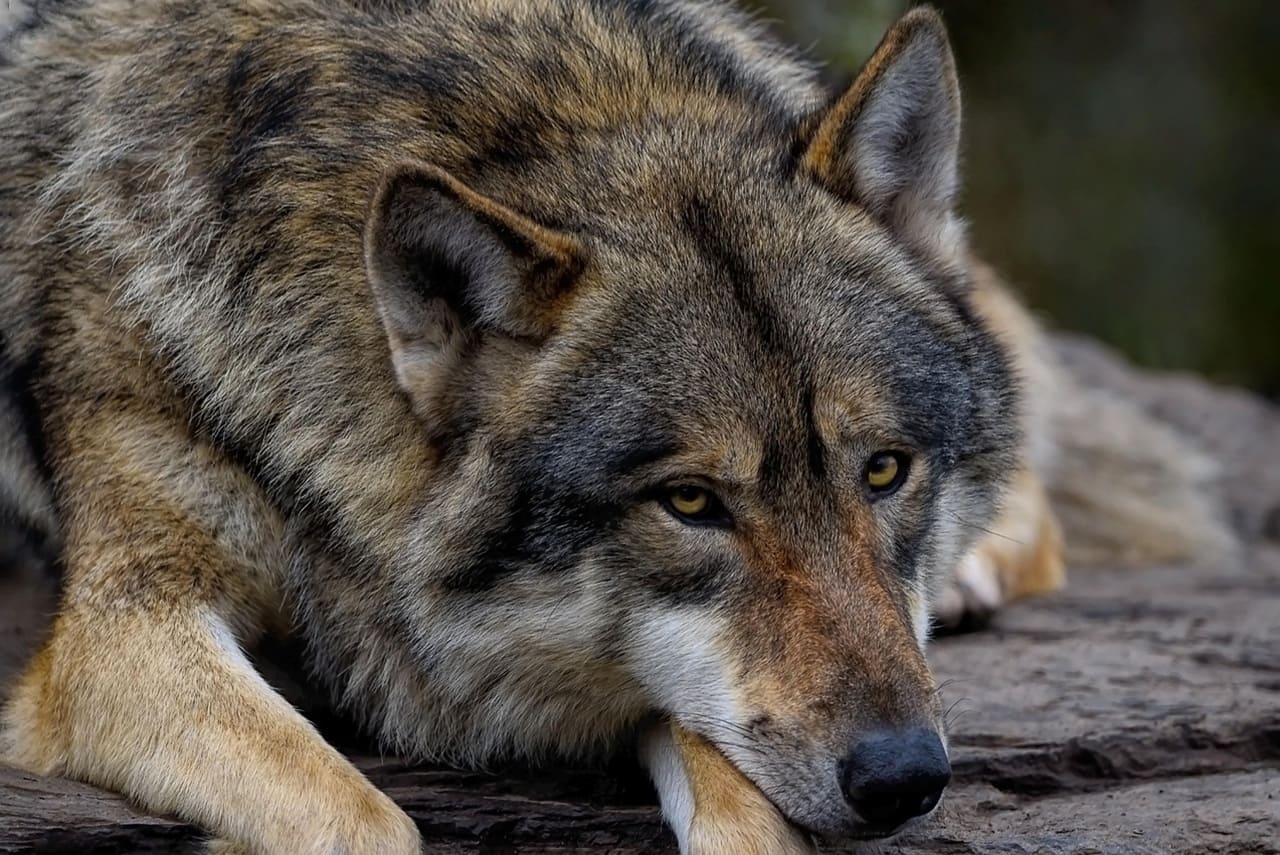
The wolf is a predator that preferentially hunts wild-living ungulates. Its main prey in Switzerland are red deer, chamois, and roe deer. Wild boar, some rodents, and small mammals also feature in its prey spectrum.
In 2020, there were a total of 11 wolf packs and just over 100 wolves in Switzerland. Currently, 32 packs and around 300 wolves have been documented in Switzerland. In 2019, wolves killed 446 livestock animals in Switzerland. In 2022, there were 1’480 kills.

Animal welfare organisations and conservationists oppose hobby hunting of wolves. The number of kills does not depend on the wolf population, but on herd protection measures. The majority of livestock killed are taken from unprotected alpine pastures.
In numerical terms, the wolf plays a minor role in the mortality of sheep kept on Swiss alpine pastures. Only 6% of all deaths during the alpine summer are caused by the predator. Before the wolf appeared, 10’000 sheep perished annually on alpine pastures due to falls, getting lost, freezing in harsh weather, or starvation — all consequences of unattended herding. Since the wolf's reappearance and the traditionally necessary use of shepherds, only 3’000 sheep now die during the alpine season. On balance, wolves therefore save more sheep than they kill in insufficiently protected herds.
Wolf hunting in Switzerland is arbitrary
The Standing Committee of the Berne Convention met on 29 November 2022 in Strasbourg, at Switzerland's request, to deliberate whether the wolf's status should be downgraded from its current classification of “strictly protected” to “protected”. This request was rejected. The wolf therefore retains its international protection status of “strictly protected”.
Neither the FOEN nor Federal Councillor Albert Rösti can respect this. The will of the people, which clearly opposed this approach via popular referendum, is also being trampled underfoot.
What does hobby hunting for wolves cost?
The Uri Department of Security has already issued shooting orders for a “damage-causing wolf” twice this year, without success. The hobby hunt has so far cost 50’000 francs, compared to the 45’000 francs consumed by the last culling in 2016. Now, two thirds of the population in Switzerland are to be arbitrarily massacred. This could incur costs of well over 10 million francs.
Resources are thus being channelled into the time-consuming and costly wolf hunt rather than into meaningful herd protection.
Role model Italy and the Geneva Model
Anyone looking for role models should look to Italy. Nearly 2’000 wolves live there. The Italian government adopted a 22-point management plan centred on herd protection measures. “It is not necessary to kill wolves,” emphasised the then Environment Minister Sergio Costa when presenting the plan, “coexistence with the wolf is possible.”
The Geneva Model has demonstrated since 1974 that coexistence between humans and wildlife without hobby hunting is possible.
Dossier: Wolf in Switzerland: Facts, Politics and the Limits of Hunting
Further articles
- Swiss meadows are losing biodiversity at a massive rate
- When sheep, cattle and others occupy wildlife habitat
- Swiss animal protection organisations criticise planned wolf culls as a threat to pack structures and herd protection
- In Graubünden, wolf mismanagement runs rampant
- Val Fex: When the herd protection concept has more holes than the fence
- Culling instead of protection – Switzerland on the path to silent wolf extermination
- Communication failure at the Graubünden Office for Hunting and Fishing
- Illegal wolf hunting in Switzerland
- Wolf cubs in Switzerland under fire
- Switzerland sells massacre of wolves as a success
- Sloppiness in the office of Katrin Schneeberger
- Livestock grazing alters soil, plant and insect populations
- The absurd hunt for wolves in Switzerland
- The truth about sheep mortality in Switzerland: causes and statistics
- Wolf culls in Switzerland: concerns about party politician Albert Rösti
- Let us stop the destructive fury of the SVP
- Participatory campaign: An appeal for change in Switzerland
- 200 environmental organizations from 6 continents call on the Swiss government: Stop the wolf culling
- Federal Council faces fierce criticism from wolf experts
- The consequences of controversial wolf management in Switzerland
- Wolf: Federal Councillor Rösti (SVP) circumvents law and order
- Es Burebüebli mahn i nit
- Are FOEN and the hunting authorities still operating responsibly?
- Federal Councillor Albert Rösti tramples the will of the people
- The consequences of controversial wolf management in Switzerland
- Too many sheep harm biodiversity
- Agricultural use destroys alpine meadows
- Livestock kills despite herd protection — how is that possible?
- The rotten apple in St. Gallen's hunting administration
- Pro Natura calls for a comprehensive strategy for summer sheep grazing
- According to an Agridea study, herd protection with dogs works well
- Thanks to herd protection, wolves kill fewer livestock in Switzerland
- Farmers treat fields as waste disposal sites
- Biomass of wildlife
- On sheep farmers and vague authorities
- The double standards of wolf opponents