The Special Hunt – When Animal Cruelty Becomes Routine
In the canton of Graubünden, the main hunting season has barely ended before rifles are being oiled for the next hunting phase.


Not only in the canton of Graubünden does the special hunt mark the annual encore to the main hunting season.
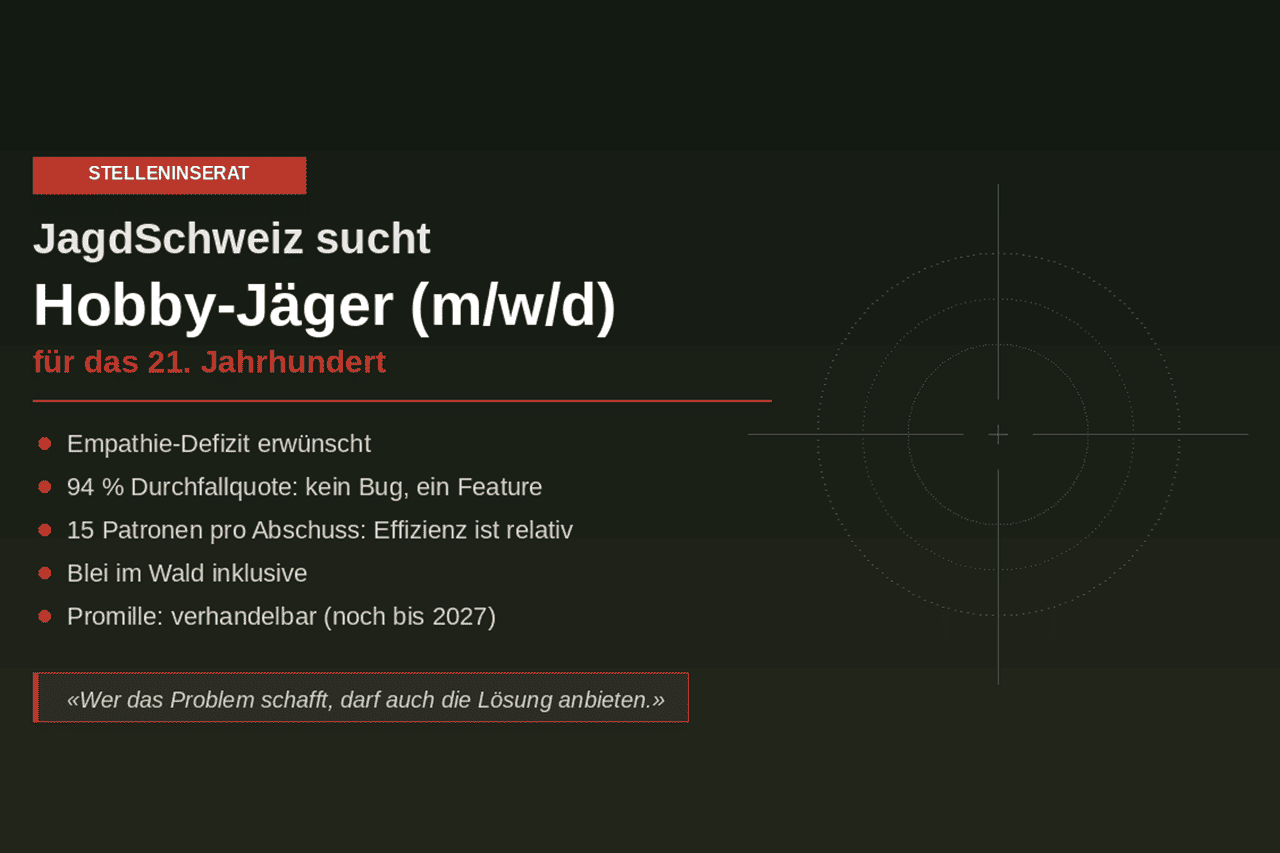
While red deer, roe deer and chamois have long since exhausted themselves and are preparing for winter, hobby hunters take to the field once again. What is officially considered “regulation” is in reality an assault on the last vestiges of peace for wildlife. This is precisely the time when wild animals need to conserve energy, build up fat reserves and find rest in order to survive the long winter. Instead, they are once again flushed out, driven and killed – under the guise of a supposedly “sustainable” forest-wildlife policy.
Over 3,400 red deer, 2,500 roe deer and nearly 3,000 chamois have already been slaughtered, yet according to the Office for Hunting and Nonsense Graubünden, that is not enough. Now comes the so-called special hunt, aimed once again at deliberately “decimating” red deer, roe deer and chamois.
The justification is always the same: forest and wildlife must remain in balance. Yet on closer inspection, it becomes clear that this “decimation” has long since become an end in itself – and the balance the authorities speak of is, above all, one thing: cruel to animals and entirely man-made. The special hunt serves to simulate high wildlife populations in order to “decimate” them again the following year. A perverse system that perpetuates itself at the expense of the animals.
The Narrative of the Endangered Forest
Officially, the special hunt serves to protect the forest. Too many red deer and roe deer would eat young trees, so the argument goes. Yet this reasoning falls short, or deliberately obscures the fact that the problem lies not with the animals but with land management. The protective forests in Graubünden are fragmented by forestry, tourism, ski slopes, hobby hunting and road construction. The natural habitat of wildlife has been reduced, retreat areas are lacking, and the animals are constantly disturbed by hobby hunters. Instead of addressing the root causes, the symptoms are being combated: the animals themselves.
Special Hunt: Regulation Without End
This year, a further 1,711 female red deer and calves, 281 roe deer and ten chamois are to be shot in Graubünden. The targeted hunting of mother animals and their offspring in particular is highly problematic from an animal welfare and ethical standpoint. It leads to stress, suffering and frequently to botched shots. What often remain are injured or orphaned young animals that perish miserably — a situation barely compatible with modern wildlife ethics.
The authorities call this “population management.” In reality, it is a self-sustaining hunting machinery: high wildlife populations are provoked by earlier interventions, which then justify new interventions — an endless cycle of killing and re-regulation.
The targeted hobby hunting of female animals and calves is contrary to animal welfare law and ethically untenable.
Mother animals are torn from their herds, calves wander helplessly or perish. This is referred to as “population management”; in reality, it is a systematised form of animal cruelty.
Moreover, animals subjected to repeated hunts within a short period suffer from chronic stress. Their flight instincts remain active for weeks, leading to increased energy expenditure and higher winter mortality. This practice contradicts every principle of wildlife biology and ethics.
The Wolf as Natural Regulator – Unwanted
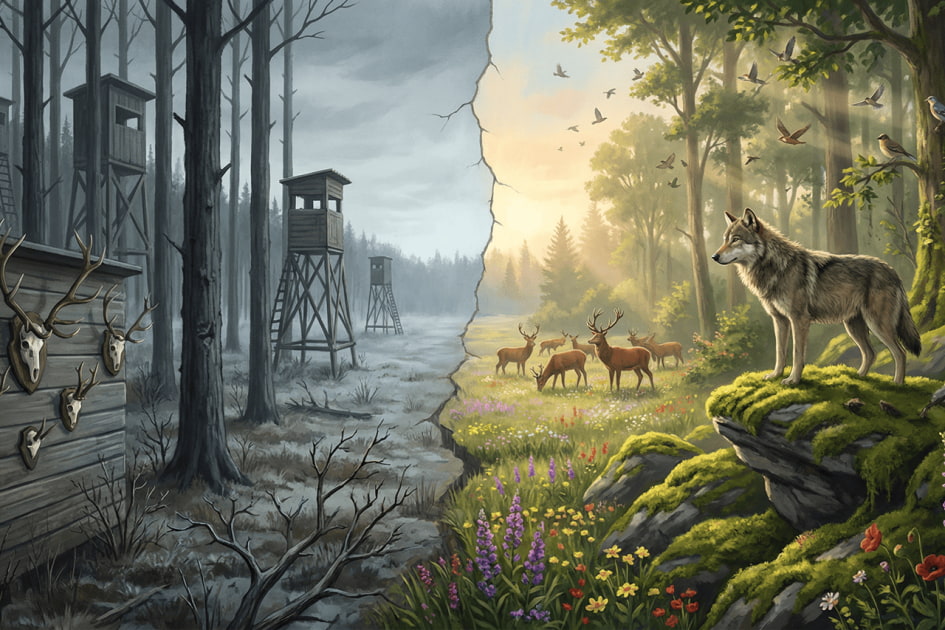
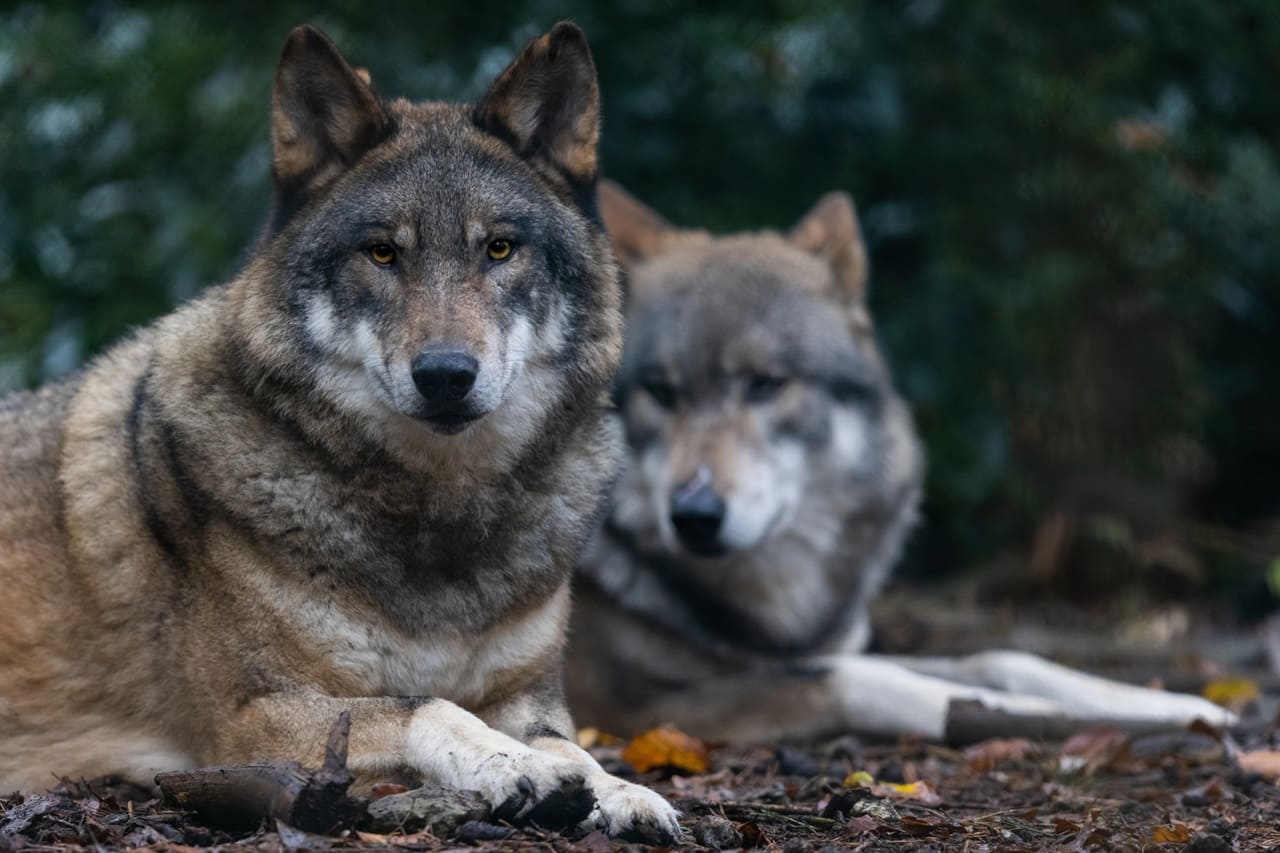
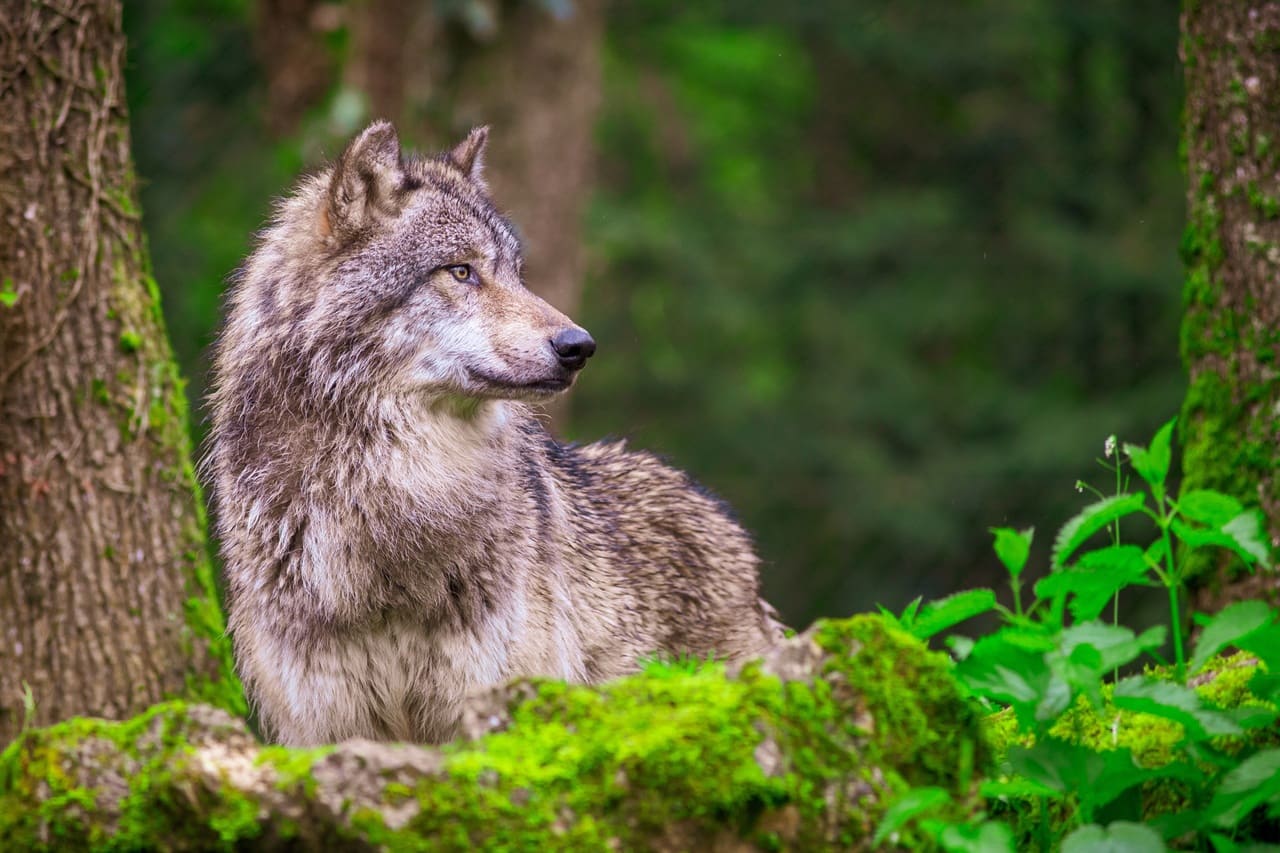
Particularly absurd: the wolf, which as a natural regulator could take over the role of the special hunt, is politically persecuted and shot. In a functioning ecosystem, the wolf would achieve precisely what the recreational hunting community now claims for itself: it would select weak animals, regulate populations and restore natural dynamics.
Yet in Graubünden, the wolf continues to be regarded as a disruptive factor. There is talk of “problem animals” and “conflict zones” — terms that serve primarily to keep control over wildlife populations in human hands.
“Sustainability” as a Fig Leaf
Official communications state that hobby hunting is an “active contribution to the protection of nature.” This rhetoric is convenient and misleading. A hunting practice that kills thousands of wild animals each year — including mother animals and calves — while simultaneously eliminating natural regulators such as the wolf can hardly be considered sustainable.
Sustainability means the self-regulation of nature, not constant human intervention. As long as culling plans are based on outdated forestry dogmas, hobby hunting remains an instrument of power, not of natural ecological balance.
Time for a Genuine Forest-Wildlife Policy
Nature does not need special hunting seasons — it needs peace, space, and respect. Instead of killing thousands of animals “according to plan” every year, it would be time to
- acknowledge natural regulators such as the wolf,
- consistently protect habitats,
- and stop aligning hunting policy with traditional or economic interests.
As long as the Office for Hunting and Nonsense proudly presents its figures as a success, the most important question remains unanswered: When will the killing finally stop, and when will the understanding of nature begin?
More on this in the dossier: Hunting and Animal Welfare
Further Articles
- Wolves Under Constant Fire: How Swiss Hunting Policy Ignores Science and Ethics
- Protective Forest: Hobby Hunting Creates the Problems It Claims to Solve
- The Wolf Is Not the Problem — It Is the Solution
- Forest Conversion: Paths to Resilient Mixed Forests in the Face of Hunting
- Forest Conversion near the Lukmanier Pass
- Hunting Is Not the Solution for Forest Conversion
- Hobby Hunters Do Not Help Forest Conversion
- The Conflict Between Forestry, Hunting, and Wildlife