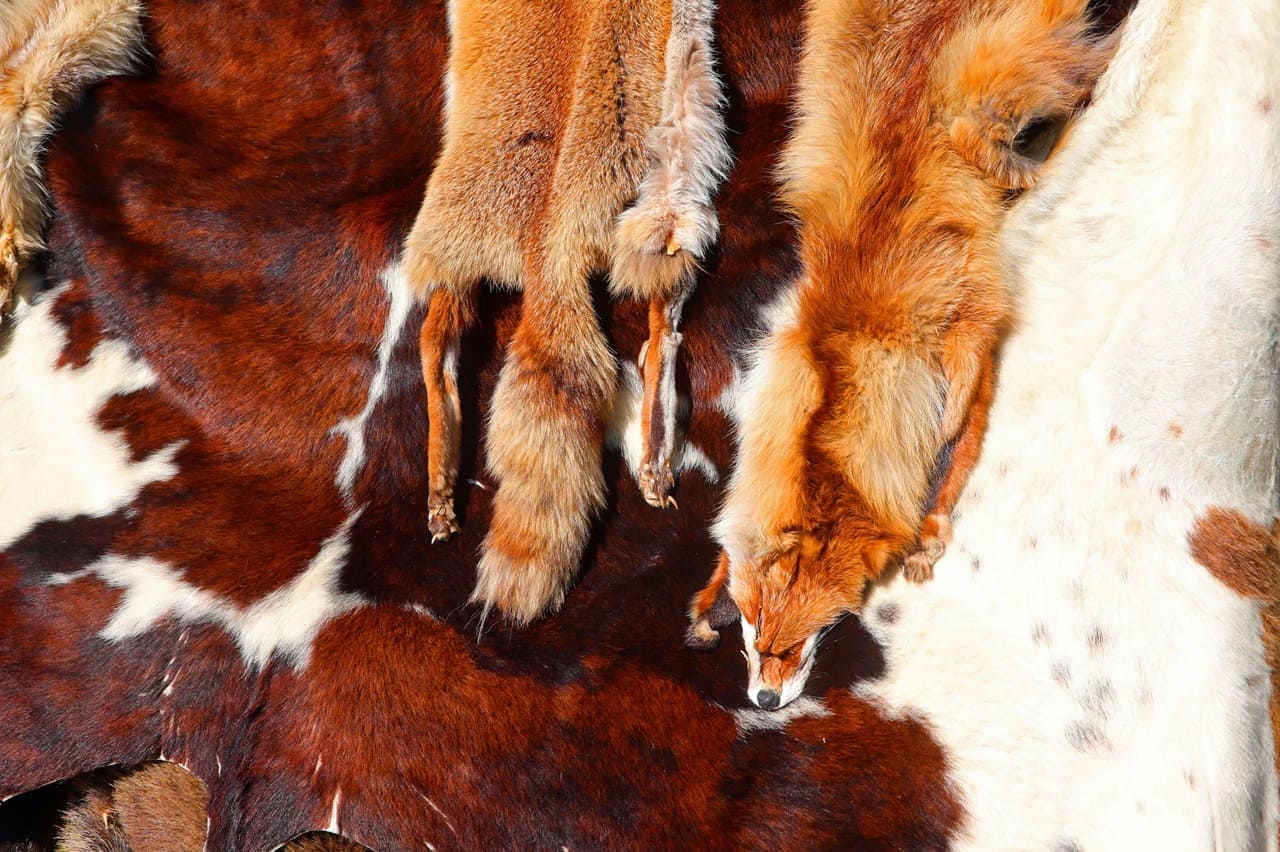
Chicken heads defeated rabies
It wasn't only the Second World War that began in Europe. Another alarming event that persisted well into modern times was the rabies epidemic. The disease was transmitted by red foxes and spread to domestic animals. Rabies is almost always fatal, even for humans (unless a vaccine is provided). When the disease reached Switzerland in 1967, several


Chicken heads defeated rabies
«An old promise resonates in the forest»
It wasn't only the Second World War that began in Europe.
Another alarming event that persisted well into modern times was the rabies epidemic. The disease was transmitted by red foxes and spread to domestic animals. Rabies is almost always fatal, even for humans (unless a vaccine is provided).
When the disease reached Switzerland in 1967, several solutions were tried and most of them failed. Recreational hunters attempted to shoot, trap, or poison the foxes, but this proved ineffective. Recreational hunting had failed completely and was even counterproductive. The same is suspected in the case of fox tapeworm, mange, and so on. Hunting promotes migratory movements within fox populations, thereby increasing the rate at which disease spreads. Attempts were made to trap wildlife and vaccinate them before releasing them back into the wild. However, the cost and scale of the undertaking proved uneconomical.
Rabies is a viral disease of mammals characterised by behavioural changes, muscle spasms, and paralysis. The disease is fatal. It can be transmitted to humans and is therefore a zoonosis. All mammals can contract rabies, though carnivores are more frequently affected. Bats can be carriers of bat rabies. Birds very rarely contract rabies.
The Federal Office of Public Health in Switzerland last reported in August 2017 that the rabies virus had been detected in a sick bat. A passerby had picked up the animal in the canton of Neuchâtel and was bitten in the process.
A new idea emerged in the USA: the Vac-Trap. It was a spring-loaded mechanism with a hidden syringe designed to jab wildlife when they stepped on a foot-pad trigger. Something like a landmine, but filled with vaccine-loaded syringes. It worked, but posed a threat to humans. Wilderness enthusiasts were sometimes treated with the Vac-Trap as well.
Chicken heads dropped from the air to combat rabies
Many attempts using vaccine-laden edible baits failed: eggs, dog biscuits, fried cornmeal with milk, sausages. Foxes liked the eggs so much that they saved them for later, by which time the vaccine had lost its potency. One bait turned out to be perfect: chicken heads. No one knows how scientists came up with this idea, but soon it was raining chicken heads over Swiss forests. The project leader was Franz Steck of the Vetsuisse Faculty at the University of Bern. His programme was a success. From 1979 to 1984, the team distributed around 52’000 baits, and wherever the chicken heads landed, rabies disappeared. Sadly, so did Steck — he was killed in 1982 when his helicopter crashed in a remote area while dropping baits. In accessible areas, firewalls of thousands of chicken heads were created by teams on foot.

Switzerland is today free of rabies

Other countries soon developed better baits, such as specially manufactured fish tablets in Germany. After distributing more than 150’000 chicken heads, Switzerland finally switched to other successful baits in 1991.Switzerland has been officially free of terrestrial rabies since 1999 — meaning concretely that there has not been a single case of fox rabies in this country since then. Fox rabies has been eradicated.By that point, Switzerland had distributed around 2.8 million baits. The situation in neighbouring countries is also broadly stable. Italy and France were likewise rabies-free in 2004. Germany has been considered rabies-free since 2008. This success refutes the hunting myths that claim recreational hunting is necessary for disease control.
As mentioned, fox rabies does not exist in this country, but domestic or farm animals are occasionally affected by the disease. However, since these animals are under virtually continuous veterinary supervision, an uncontrolled spread of the disease is almost impossible — especially given that rabies is a very conspicuous illness.
Rabies occurs in almost every part of the world. Only a few countries in Northern Europe, Australia, New Zealand, and Japan are rabies-free.
99% of rabies cases in humans worldwide are transmitted by dogs. In the United States, however, most cases in recent years have been attributed to bat bites, and bats also pose a certain health risk in Australia, Latin America, and Western Europe.
More on the subject of recreational hunting: In the dossier The Role and Criticism of Recreational Hunters we shed light on the training, power and self-image of recreational hunters. The scientific evidence is presented in the overview Studies on the Effects of Recreational Hunting.
The position of IG Wild beim Wild: IG Wild beim Wild rejects recreational hunting. Our model is the canton of Geneva, which has managed without recreational hunting since 1974: without hunting seasons, without hunting dogs, without driven hunts, without high seats, without the animal cruelty and crime that go hand in hand with hunting season elsewhere. What has worked there for over fifty years disproves every position paper by JagdSchweiz. An association that bases its policy on claims it refutes in its own documents is not a professional organisation, but a factory for misinformation.