Are cats or dogs smarter?
Are cats or dogs smarter? Scientific studies reveal surprising results about the intelligence of our most popular pets.

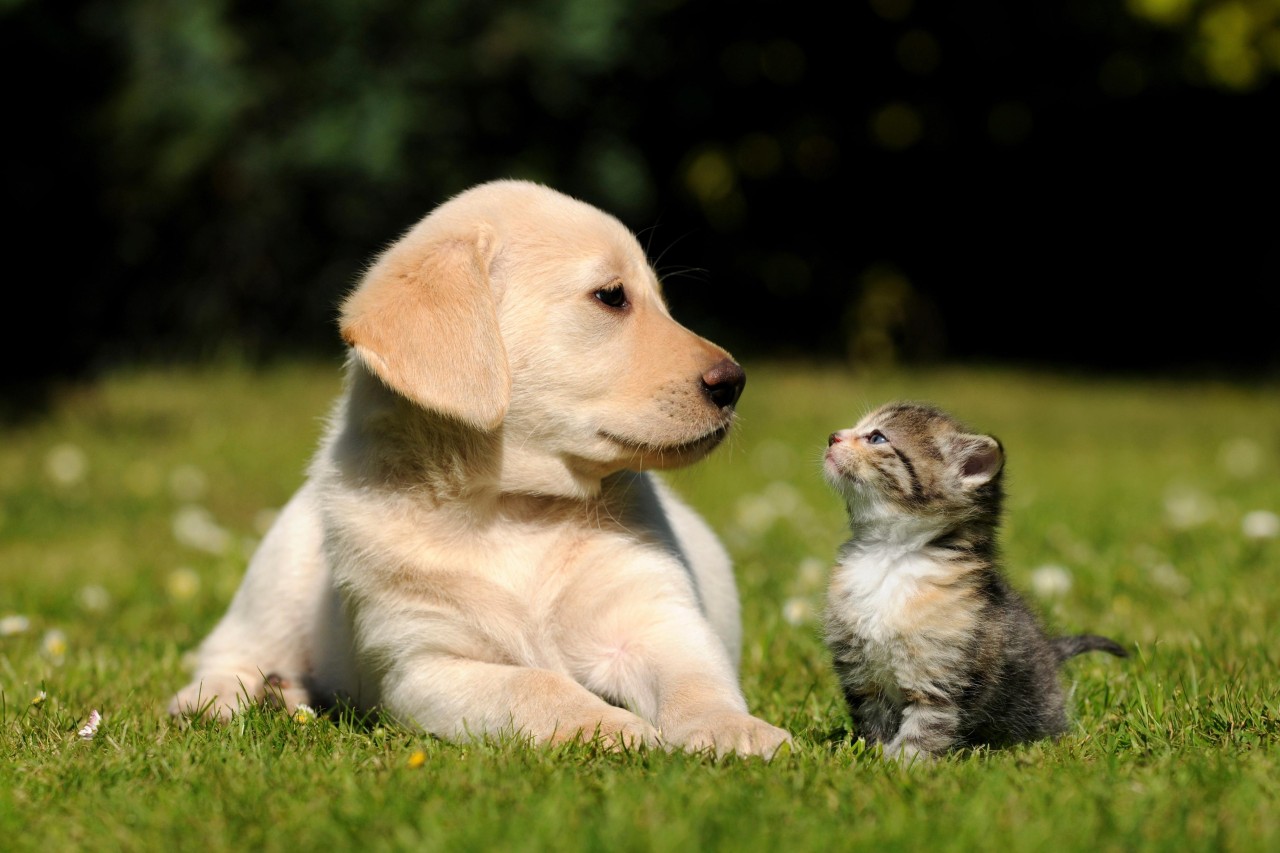
Dog and cat owners make many assumptions about the intelligence of their four-legged companions.
Of course, we all like to imagine that our Fido or Felix is the smartest animal ever to fetch a ball – or pounce on one. So can we settle the age-old debate? Which species is smarter: dogs or cats?
It turns out that the answer is not as straightforward as animal lovers would like.
«Researchers who study dog cognition are not examining intelligence as such, but rather various aspects of cognition«, explains Alexandra Horowitz, who specialises in dog cognition at Barnard College in New York and is the author of «Inside of a Dog: What Dogs See, Smell, and Know».
Horowitz even questions the human habit of comparing the intelligence of different species.
«In their simplest form, cats are smart at the things cats need to do, and dogs at the things dogs need to do«, she said. «I don't think it makes any sense to talk about the relative ‘intelligence’ of species«.
Brian Hare, Professor of Evolutionary Anthropology at Duke University, agreed with this assessment.
«Asking whether a dog is smarter than a cat is like asking whether a hammer is a better tool than a screwdriver – it depends on what it was designed for«, he explained in Live Science.
That is not to say that animal behaviourists have not tried to measure the intelligence of dogs and cats – or, more precisely, the cognitive abilities that go beyond what is necessary for survival.
Kristyn Vitale, Assistant Professor of Animal Health and Behaviour at Unity College in Maine, said that animal intelligence is generally divided into three broad categories:
- problem-solving ability
- Concept formation (the ability to form general concepts from specific concrete experiences)
- Social Intelligence
Vitale works primarily with cats, and her current focus on the inner lives of cats revolves around social intelligence. Cats, often regarded as aloof and disinterested in humans, actually display a high degree of social intelligence, «often on a par with dogs«.
Studies show for example, that cats can distinguish between their own names and similar-sounding words, and they have been found to prefer human interaction over food, toys, and scents. Human attention makes a difference to cats: a 2019 study published in the journal Behavioural Processes found that a cat spends more time with a person when that person pays attention to it.
In one of the rare studies directly comparing cats and dogs, researchers found no significant difference between the two species in their ability to locate hidden food based on cues from a human. However, the researchers noted that «cats show some deficits in components of attentional behaviour compared to dogs«. (Pet owners who have watched a dog beg at its food bowl while a cat simply walked away know exactly what the researchers observed.)
And then there is the matter of brain size. A widespread notion holds that brain size dictates relative intelligence, and if that were always true, dogs would apparently come out on top.
Hare said that he and anthropologist Evan MacLean of the University of Arizona recruited more than 50 researchers around the world to apply a test they developed to 550 species of animals, including «birds, primates, dogs, lemurs, and elephants«.
The idea was to test a cognitive trait — self-control, or what the researchers call «inhibitory control« — across different animal species. Their test, published in 2014 in the journal Proceedings of the National Academy of Sciences, was the animal version of Stanford University’s famous 1972 study, in which children aged 3 to 5 were tested on their ability to delay eating a marshmallow.
The cross-species study showed that «the larger an animal's brain, the more self-control they demonstrated in our marshmallow test«, said Hare. The ability for self-control is one of the indicators of higher cognitive function.
But there is a catch: cats were not included in the test, so while we can speculate about how they might have performed based on their brain size, we don't really know.
With this type of intelligence assessment, it is also worth considering that we may treat dogs and cats differently, according to Vitale.
«For example, dogs are often well socialised and attend puppy classes, ride in cars and go to the dog park«, she said. «Cat owners give their cats fewer of these types of socialisation and training opportunities».
So who wins in the end? Perhaps we should simply appreciate the unique intelligence of our pets, particularly the social intelligence that makes them such wonderful companions.
More on the subject of recreational hunting: The scientific evidence is presented in the overview Studies on the Effects of Recreational Hunting.
The position of IG Wild beim Wild: IG Wild beim Wild rejects recreational hunting. Our model is the canton of Geneva, which has managed without recreational hunting since 1974: without hunting seasons, without hunting dogs, without driven hunts, without high seats, without the animal cruelty and crime that go hand in hand with hunting season elsewhere. What has worked there for over fifty years disproves every position paper by JagdSchweiz. An association that bases its policy on claims it refutes in its own documents is not a professional organisation, but a factory for misinformation.