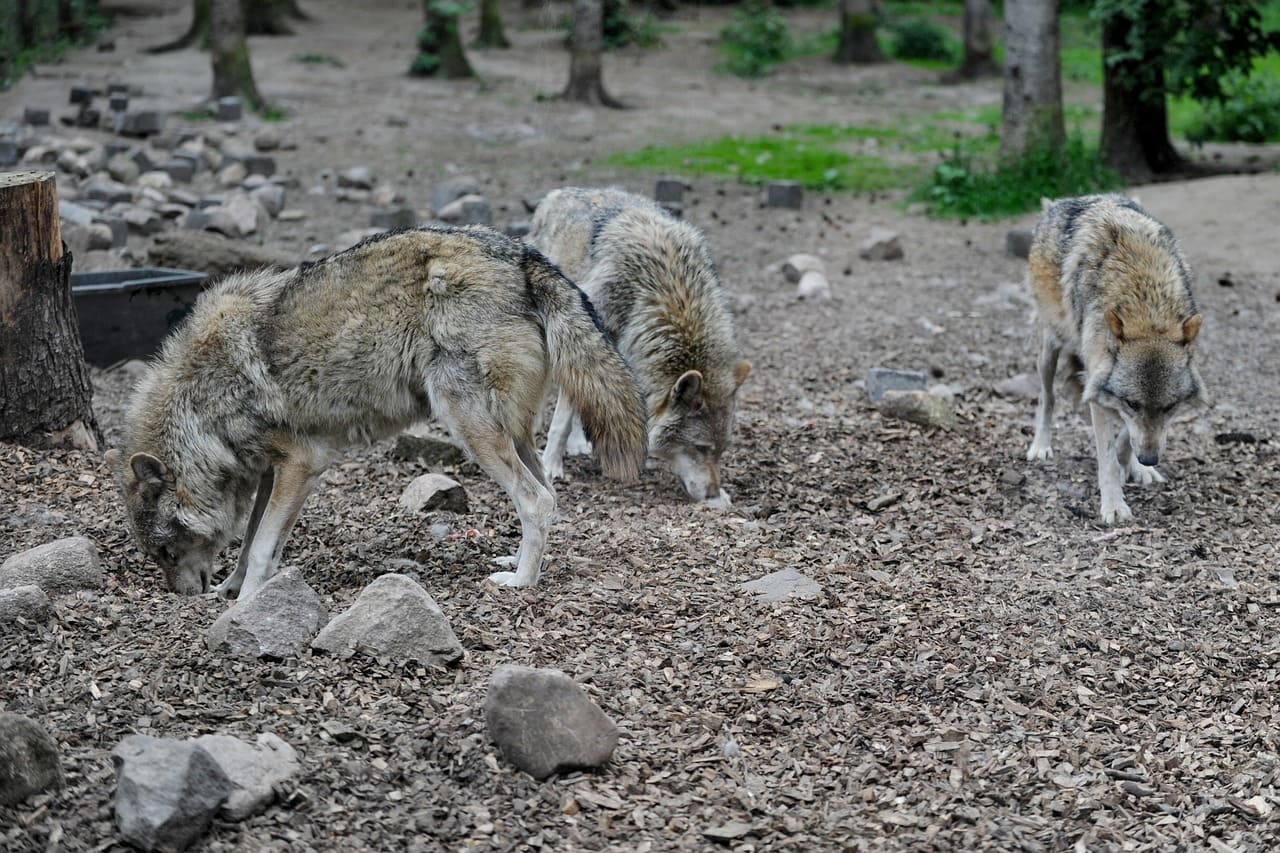
Wolves are important for regulating wildlife populations
The study is one of few to examine the influence of human action on the natural predator-prey relationships of wild animals and the regulation of wildlife populations.

Even in landscapes dominated by humans, large carnivores such as brown bears or wolves – so-called apex predators – play a decisive role in regulating wildlife populations.
This is the result of a joint study by scientists, recently published in the journal Proceedings of the Royal Society.
It is widely known that apex predators are of crucial importance for shaping the ecosystem in natural landscapes. With their study, the scientists have now been able to demonstrate that even in human-shaped cultural landscapes the carnivores retain their important function as regulators of the wildlife population, in particular by reducing the number of herbivores. However, humans also play an important role here through their direct and indirect interventions in the ecosystem. Not only by reshaping nature through agricultural use, but above all through recreational hunting, humans actively influence the wildlife population at all levels of the food pyramid – mostly in a negative way.
For their investigation, the scientists used camera traps to observe the presence of wild animals in a human-dominated region in Transylvania/Romania. Besides apex predators such as brown bears and wolves, mid-sized predators such as red foxes as well as large herbivores such as roe deer and red deer are also native here. Humans and free-roaming dogs act as additional “predators” in this system.
“The strong effects of human activity on wildlife populations at all levels of the food pyramid that we have demonstrated show how necessary it is to systematically consider humans as part of the food pyramid in future,” says Ine Dorresteijn, lead author of the study. “Particularly against the backdrop that apex predators such as wolves are increasingly returning to human-dominated landscapes, it is important to understand what influence the simultaneous presence of these carnivores and humans has on the various levels of the food pyramid. Our investigation makes an important contribution to this.”
Related dossiers and articles:
- Dossier: The wolf in Europe
- Dossier: Hunting and biodiversity
- Dossier: Cultural landscape as a myth
- Dossier: Hunting myths
- Dossier: Alternatives to recreational hunting
- Introduction to hunting criticism
- Get involved
Support our work
With your donation you help to protect animals and give their voice a hearing.
Donate now →More on the subject of recreational hunting: What the research says about this is shown by Hunting fact-checked: the state of research.
The position of IG Wild beim Wild: IG Wild beim Wild rejects recreational hunting. Our model is the canton of Geneva, which has managed without recreational hunting since 1974: without hunting seasons, without hunting dogs, without driven hunts, without high seats, without the animal cruelty and crime that go hand in hand with hunting season elsewhere. What has worked there for over fifty years disproves every position paper by JagdSchweiz. An association that bases its policy on claims it refutes in its own documents is not a professional organisation, but a factory for misinformation.