Impact of Hobby Hunting on Wildlife in Germany
Many wildlife issues inevitably lead back to hobby hunting. But why “hobby” hunting? A hobby — for some it is sport, for others photography or stamp collecting. A hobby is pursued with devotion, with great passion.


The “Passion for Killing”
On the relevant social media pages of the hunting scene, this “passion for killing” is frequently described in explicit detail by hobby hunters.
The “sense of power” is described in highly excessive terms, just as the moment of the kill is experienced “as a rush” — carried out through a telescopic sight from a great distance — animals killed with passion, so to speak.
According to Prof. Dr. Reichholf (“Hunting does not regulate”), a very, very large proportion of hobby hunting is not only superfluous but severely damages nature, wildlife, forests,biodiversity, and our very basis for survival. Hobby hunting management plans culls through the shooting quota and enforces compliance with financial penalties for non-fulfilment.
Control is exercised through the annual hunting bag. The underlying system is designed to keep reproduction at the curve of the maximum possible population — for ever more wildlife, for ever more hobby hunters.
403,000 hobby hunters, only 1,000 professional hunters
Hobby hunting, then — with over 403,000 hobby hunters now in Germany and only around 1,000 professional hunters — serves solely to satisfy the needs of a few, and not the needs of nature. Germany now has one of the highest wildlife densities in the world, and at this point it should be clear to everyone that the “population regulation” sold to us — the so-called “stewardship and conservation” — has failed completely.
A great many topics in nature touch on hobby hunting directly or indirectly. Given the current state of forests — among other things, completely devastated — we should not leave the extraordinarily important subject of nature solely to the small but vocal faction of recreational hunters.
The topic of hobby hunting is connected to a great many issues, something one only becomes aware of upon closer examination. Currently, the topic of population regulation for the wolf, demanded by hobby hunters. Anyone who has studied wolves even briefly knows that this does not work at all — much as it has completely failed in the case of wild boar as well.
Hunting pressure drives red deer into the forests
Another much-discussed topic is browsing damage caused by red deer. These noble, large wild animals, which formerly lived across open expanses and meadows, were considerably less shy, and much preferred to graze on grasses and herbs — yet they are being “pushed” into the forests by the extremely high hunting pressure. There, driven by severe hunger, they strip the bark from trees, thereby causing harm to the forest.
Or take the wild boar population: it was hunting itself that fuelled their numbers to an extreme degree. While around 120’000 animals were killed in the 1980s, today the annual hunting bag stands at nearly 800’000 (see hunting statistics DJV).
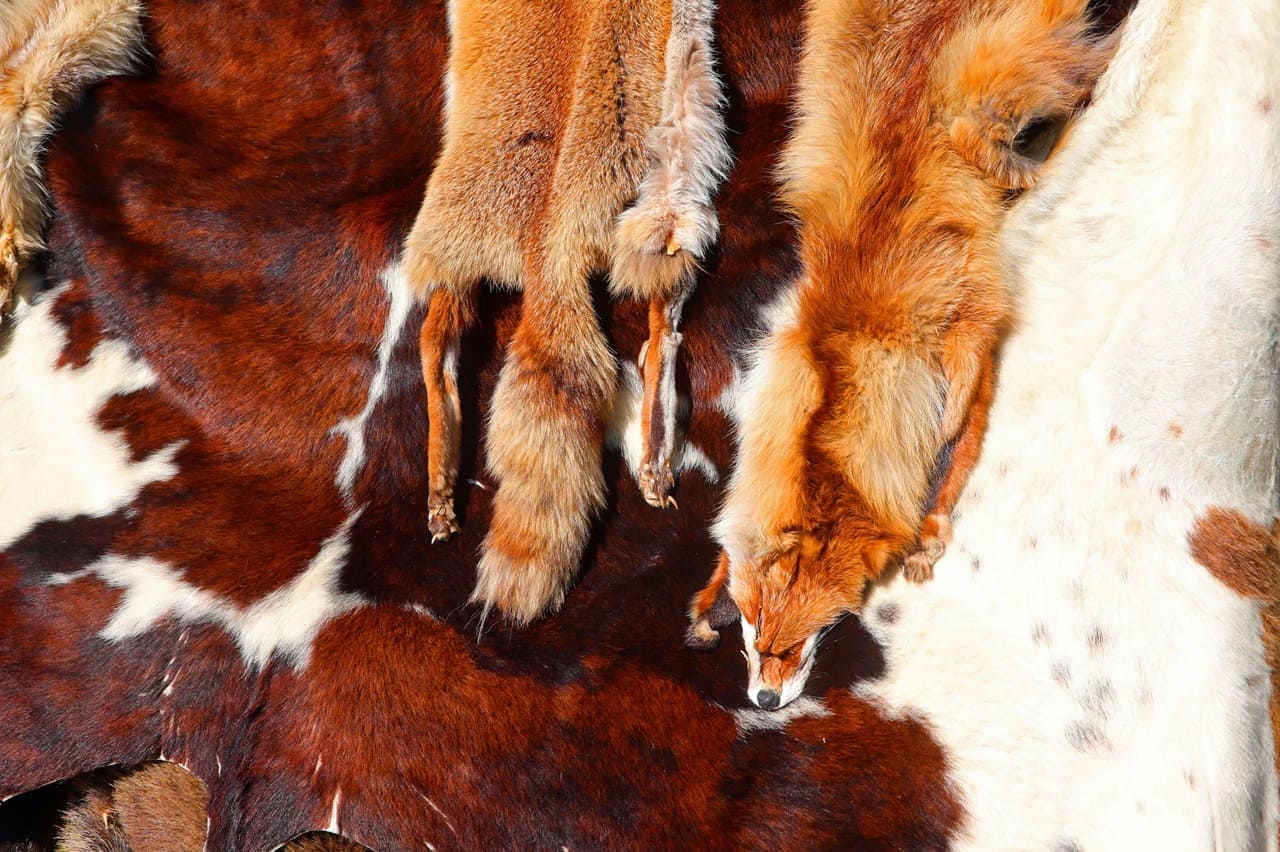
The fox hunt, including the related issues of traps and artificial earths, sees these beautiful animals dying entirely in vain — hunted purely for sport, without purpose or benefit. By now, almost everyone knows of hunt-free Luxembourg, where rodent populations are also healthier, with mice carrying 80% fewer Borrelia pathogens. Beyond the fact that the population there has levelled off, is not continuing to grow, and “does not become a plague” — as is so often argued, foolishly — nature simply does it better.
The subject of nature reserves, which are in essence not nature reserves at all, given that hunting continues unabated in all of them.
Rewilding — the concept for biodiversity, whether on small plots or in large-scale projects — does not even make it to the table in Germany, because the idea that nature could regulate itself is inconceivable to hobby hunters.
Unscientific arguments of the hunting lobby
Mouflons, having immigrated to certain areas, were “introduced” for recreational hunting purposes just as fallow deer once were, despite having virtually no chance of survival in many of these habitats due to the presence of wolves — as they lack the natural terrain needed for escape. This situation, created by hobby hunters, is then exploited in arguments against the wolf, even though mouflons are supposed to be “removed” in many areas.
Hobby hunters frequently make entirely unscientific claims that species “A” must be culled so that species “B” can survive — for example, in debates about ground-nesting birds. In these areas, foxes are consequently exterminated, with the passion for shooting dressed up in green rhetoric to generate public acceptance of hunting.
A similar dynamic applies to fawn rescue operations — the next topic that has become almost a hunting-industry affair, as considerable media effort is made to position hobby hunters alongside genuine animal welfare advocates. Fawns are rescued, only to be shot three to four months later according to the hunting calendar.
The wolf would also receive far less negative media coverage if it were not a competitor for hobby hunters. Every opportunity is loudly seized to portray the wolf — a predator of vital importance to us, one that selects prey in an entirely natural manner — as a murderous monster, with the hunting lobby mobilising our primal fears rather than providing reasonable, nature-oriented information. Collaboration with select livestock farmers for maximum media impact is another favored tactic.
I could expand on this with numerous other topics, such as martens, pheasants, and hares.
United against hobby hunting
It is most regrettable that nearly all of the individual topics mentioned above are often addressed in outstanding awareness-raising work by individual “animal advocates” fighting for the fox, the wolf, the forest, and so on. Yet the root cause of much of this suffering lies, among other things, in hobby hunting. Wildlife advocates should stand shoulder to shoulder and support one another more effectively, in order to reach the far larger segment of the general public — people who hold political influence.
The hobby hunting community has no interest whatsoever in evolving, refuses to engage with science, and rejects it outright. Even areas where it has been demonstrably proven for decades that ecosystems function without hobby hunting — where biodiversity has increased and forests are healthier — are kept quiet, as they do not fit the lobby’s narrative and run counter to its insidious interests.
If we all were to equally combat the unnecessary part of hunting — recreational hunting — the very part responsible for the problems, and if it were gone by tomorrow, many problems would be resolved, while many opportunities would open up and could be seized.
Let us come together and jointly inform the vocal majority.
Source: Guido Meyer
Dossiers: Fox in Switzerland: Most hunted predator without a lobby | Fox hunting without facts: How JagdSchweiz invents problems