Shock in nature reserve: recreational hunter allegedly caught birds of prey
A hunting leaseholder from Winzer is suspected of having set illegal traps for birds of prey in the middle of the «Donaualtwasser Winzerer Letten» nature reserve. Officers from the Deggendorf police station initiated criminal proceedings after conservationists documented evidence of violations of hunting and nature conservation law as well as the Animal Welfare Act.

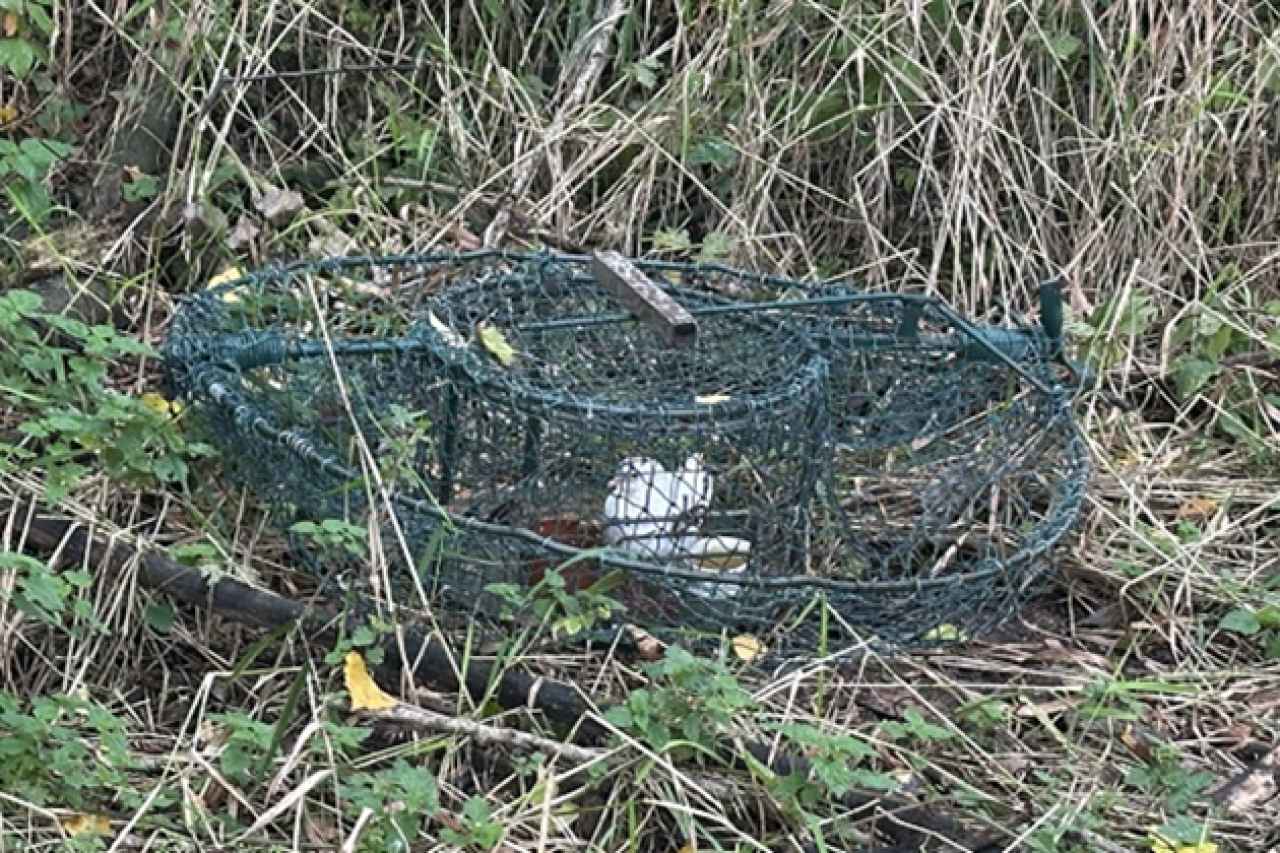
Staff members of the association Komitee gegen den Vogelmord came across several prohibited traps in a small woodland near Winzer in Germany, including a goshawk trap cage baited with a live pigeon.
They also found a raised hide, an aviary containing numerous pheasants, slaughterhouse waste and the carcass of a deer. The area lies entirely within the designated nature reserve.
The incident began when a woman out for a walk discovered the goshawk trap cage and alerted the bird protection association. According to their own account, the animal welfare activists subsequently installed a wildlife camera, with which they filmed the hobby hunter checking the traps during the hunt. The memory card was handed over to the police as evidence.
On Friday evening, police secured all traps and evidence on site. The recreational hunter admitted to the officers and witnesses that he had set the traps. The Komitee gegen den Vogelmord filed a criminal complaint for animal cruelty and violation of the Federal Nature Conservation Act.
The setting of goshawk trap cages is a criminal offence under the Federal Nature Conservation Act and can be punished with heavy fines or imprisonment of up to 5 years. In the event of a conviction, the suspect also faces the revocation of his hunting licence and his hunting ground.
In the view of IG Wild beim Wild, hobby hunters annual medical-psychological fitness assessments modeled on the Dutch system, as well as a binding maximum age limit. The largest age group among recreational hunters today is 65+. In this group, age-related impairments such as declining vision, slowed reaction times, difficulty concentrating, and cognitive deficits increase significantly from a statistical standpoint. At the same time, accident analyses show that the number of serious hunting accidents involving injuries and fatalities rises significantly from middle age onward.
The regular reports of hunting accidents, fatal errors of judgment, and the misuse of hunting weapons highlight a structural problem. The private ownership and use of lethal firearms for recreational purposes largely evades continuous oversight. From the perspective of IG Wild beim Wild, this is no longer justifiable. A practice based on voluntary killing that simultaneously generates considerable risks for humans and animals forfeits its social legitimacy.
Hobby-hunting is furthermore rooted in speciesism. Speciesism describes the systematic devaluation of non-human animals solely on the basis of their species membership. It is comparable to racism or sexism and cannot be justified on either cultural or ethical grounds. Tradition does not substitute for moral scrutiny.
Critical scrutiny is particularly indispensable in the field of recreational hunting. Few other areas are so thoroughly shaped by euphemistic narratives, half-truths, and deliberate disinformation. Where violence is normalized, narratives frequently serve to justify it. Transparency, verifiable facts, and an open public debate are therefore essential.
More on the subject of recreational hunting: In the dossier Poaching and hunting crime in Switzerland we document cases, legal questions and recurring patterns. What the research says about this is shown by Hunting fact-checked: the state of research.
The position of IG Wild beim Wild: IG Wild beim Wild rejects recreational hunting. Our model is the canton of Geneva, which has managed without recreational hunting since 1974: without hunting seasons, without hunting dogs, without driven hunts, without high seats, without the animal cruelty and crime that go hand in hand with hunting season elsewhere. What has worked there for over fifty years disproves every position paper by JagdSchweiz. An association that bases its policy on claims it refutes in its own documents is not a professional organisation, but a factory for misinformation.