AI revolutionizes wildlife observation in the Alps
Have you ever wondered how wild animals behave when no one is watching? Understanding their behavior is crucial for conservation, especially in the context of climate change. Traditional methods, such as direct observations or sensors attached to animals, are either disruptive or limited in their reach.


To meet these challenges, researchers at EPFL, in collaboration with the Swiss National Park, developed the first extensively annotated video dataset, MammAlps.
This dataset contains more than 43 hours of raw footage from nine camera traps as well as information from various perspectives and recording methods. It is intended to train AI models to better recognize and understand animal species and behaviors.
The behavioral annotations are made on two levels: higher-level activities such as foraging and lower-level actions such as walking. In addition, video and audio recordings were supplemented with environmental factors to provide AI models with a more comprehensive context.
MammAlps enables a more detailed analysis of animal behavior and sets a new standard in wildlife monitoring.
The researchers plan to expand the dataset in 2025 through further fieldwork in order to capture rarer species and improve the temporal analysis of behavior across multiple seasons.
In the long term, this approach could revolutionize conservation through automated detection of relevant behaviors of wildlife in extensive video recordings.
Swiss National Park
Not far from the Ofenpass lies Switzerland's oldest national park — a landscape that has existed for 100 years without human intervention such as hunting by hobby hunters. There, among other things, the chamois population has remained constant at around 1’350 animals since 1920. Its area of 170 square kilometres corresponds to the size of the Principality of Liechtenstein.
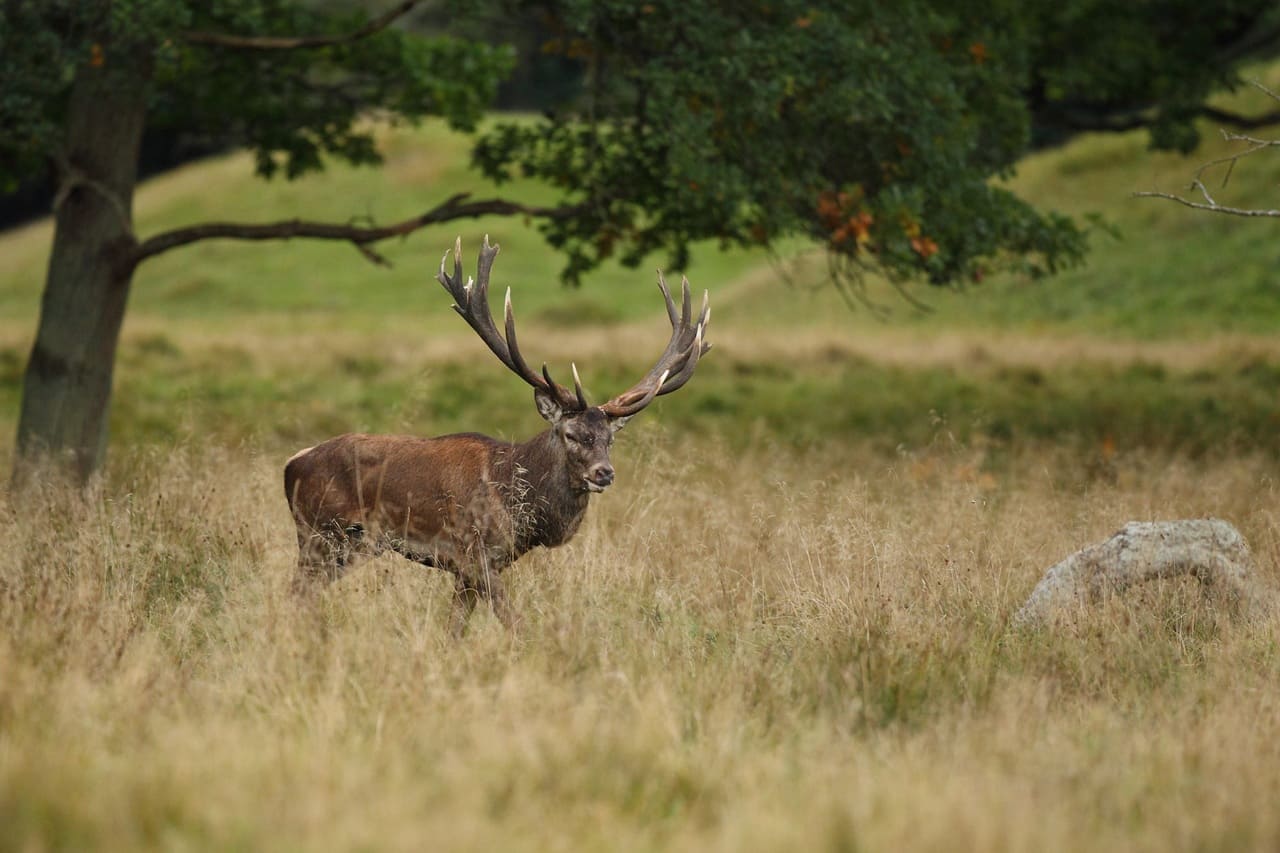
Deer move freely there in broad daylight and are the largest wild herbivores in Switzerland.
35 different mammal species, 73 bird species, 5 reptile and 3 amphibian species, 227 butterflies (of which 108 are diurnal), 34 dragonfly and 205 beetle species, as well as 99 land snails and large mussels live in the national park.
Foxes are not hunted either. Contrary to predictions from hunting circles, none of their prey has gone extinct. The transition from grazing land for cows and sheep to deer grazing land led to a completely new species composition of the vegetation and a doubling of biodiversity!
Further articles
- Swiss meadows are losing biodiversity at a massive rate
- When sheep, cattle and others occupy wildlife habitat
- Swiss animal protection criticises planned wolf culls as a threat to pack structures and herd protection
- Wolf mismanagement runs rampant in Graubünden
- Val Fex: When the herd protection concept has more holes than the fence
- Culling instead of protection – Switzerland on the path to silent wolf extermination
- Communication failure at the Office for Hunting and Fishing Graubünden
- Illegal wolf hunting in Switzerland
- Wolf pups in Switzerland under crossfire
- Switzerland sells wolf massacre as success
- Sloppiness in the office of Katrin Schneeberger
- Grazing by livestock alters the soil, plants and insect populations
- The senseless hunt for wolves in Switzerland
- The truth about sheep mortality in Switzerland: causes and statistics
- Wolf culls in Switzerland: concerns about party politician Albert Rösti
- Let us stop the SVP's destructive rage
- Participatory campaign: An appeal for change in Switzerland
- 200 environmental organisations from 6 continents call on the Swiss government: Stop the wolf cull
- Federal Council strongly criticised by wolf experts
- The consequences of controversial wolf management in Switzerland
- Wolf: Federal Councillor Rösti (SVP) circumvents law and order
- Es Burebüebli mahn i nit
- Are BAFU and the hunting authorities still operating responsibly?
- Federal Councillor Albert Rösti tramples the will of the people underfoot
- The consequences of controversial wolf management in Switzerland
- Too many sheep are harmful to biodiversity
- Agricultural use destroys alpine meadows
- Livestock losses despite herd protection – how is that possible?
- The rotten apple in the St. Gallen hunting administration
- Pro Natura calls for a comprehensive strategy for summer sheep grazing
- According to an Agridea study, herd protection with dogs works well
- Thanks to herd protection, wolves in Switzerland are killing fewer livestock
- Farmers treat fields as disposal sites
- Biomass of wild animals
- Of sheep farmers and vague authorities
- The double standards of wolf opponents