Psychology of recreational hunting in the canton of Obwalden
Obwalden is a canton where recreational hunting is not negotiated as a leisure activity, but as a matter of course. In the Catholic-conservative inner Switzerland, hunting belongs to the cultural inventory like alpine farming and customs. It is precisely this embedding that makes critical examination so difficult: Anyone who questions recreational hunting questions an entire way of life.

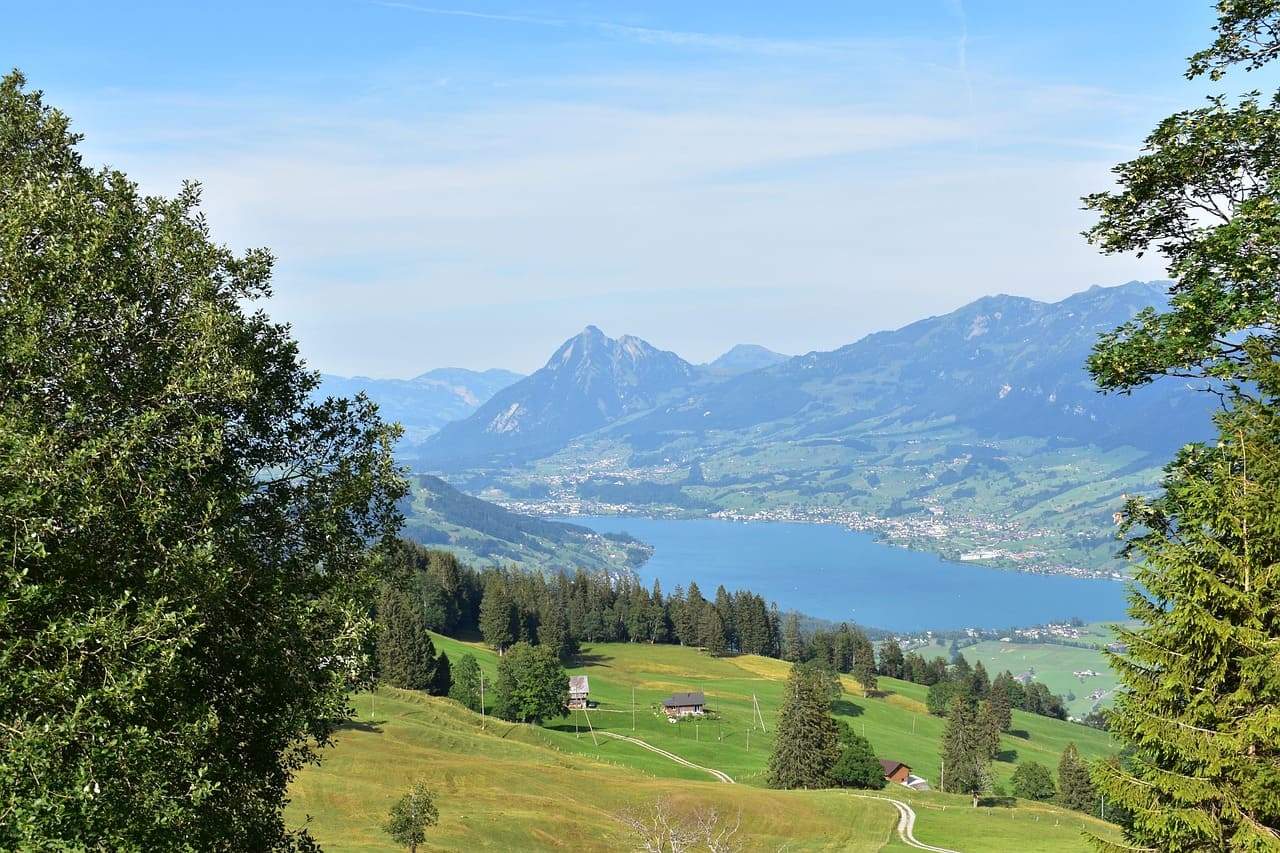
Patent hunting applies in the canton of Obwalden.
The 'Wildlife and Hunting' department at the cantonal Office for Forest and Landscape is responsible for planning, organizing and controlling recreational hunting. It is supported by the cantonal hunting commission, the hunting examination commission, the wildlife management community and the voluntary hunting supervision. What sounds like objective administration is, psychologically speaking, a closely interwoven system in which those who control and those who are controlled are largely identical.
Lynx pioneer act and its repression
Obwalden has a historically remarkable role in Swiss species conservation: On April 23, 1971, the first lynx pair in Switzerland was released in the federal hunting reserve Hutstock in the Melchtal. The animals were wild captures from the Slovak Carpathians, facilitated through Ostrava Zoo and Basel Zoo. The reintroduction was based on a Federal Council decision from 1967 and the initiative of the then cantonal chief forester Leo Lienert, who later became known nationwide as the 'lynx father'.
Psychologically, the history of this reintroduction is highly revealing, as it was based on a deal with recreational hunters: lynx for deer. Leo Lienert knew that recreational hunters viewed the lynx as competition. To gain their consent, red deer were simultaneously introduced to Obwalden—a new trophy species as compensation for the unwanted predator. This trade-off reveals the basic structure of hunting psychology: species conservation is negotiable as long as the hunting experience is not threatened.
Over 50 years later, this ambivalence has not been resolved. In the anniversary chronicle of the Obwalden licensed hunters' association from 2018, the lynx is mentioned as a 'concern,' its increase framed as a problem. At the same time, the same chronicle celebrates the deer as a success story. Recreational hunters thus welcome the animal they are allowed to shoot and lament the animal that takes away their prey. Psychologically, this is consistent: the lynx does not threaten wildlife populations, but rather the self-image of recreational hunters as the sole regulatory authority.
50 Years of Lynx in Switzerland
Exploding Deer Populations: When Recreational Hunting Exacerbates the Problem
In spring 2008, 374 deer were counted in Obwalden. Ten years later there were 866—a doubling that was framed as a crisis by the Obwalden cantonal council. In 2018, 260 deer were consequently released for shooting, significantly more than the 185 from the previous year. Building Director Josef Hess already wished all recreational hunters 'good hunting.' Additionally, a request was submitted to the federal government to temporarily shorten the closed season for red deer.
Psychologically, the same pattern emerges here as in Uri: the system responds to its own failures with escalation. Deer populations grow because hunting triggers population dynamics that stabilize or even increase populations. Heavy hunting pressure selects young, reproductive animals, alters age structures, and increases fertility. Instead of reflecting on these relationships, the answer is always formulated the same way: more culling, shorter closed seasons, higher quotas.
The winter immigration effect is particularly revealing: In Obwalden, more deer are present in winter than in summer because animals from neighboring cantons Bern and Lucerne migrate into the southeast-facing winter habitats of the municipality of Giswil. This means: culling planning is based on winter counts that reflect seasonal migration movements, not stationary populations. Whether the culling numbers derived from this are ecologically sensible is not publicly discussed. Instead, the cantonal council becomes an emotional outlet: unanimous votes are cast for more recreational hunting. This is not wildlife management, but political symbolism.
The Geneva Model has shown since 1974 that wildlife populations can be regulated without recreational hunting by professional wildlife wardens. In Obwalden, this model is not a topic of discussion. Psychologically, this is consistent: the mere existence of a functioning alternative threatens the narrative of indispensability.
Chamois: Decline Despite Hunting
While deer populations are rising, the chamois population in Obwalden, like throughout the Alpine region, is declining. In 2016, 143 chamois were shot. Recreational hunters cite the declining populations as one of their 'concerns'. At the same time, the lynx is blamed for the decline, even though researchers point out that climate change, tourism, disturbance by recreational hunting itself, and diseases are the main factors.
Psychologically, blaming the lynx is a classic mechanism of responsibility externalization. As long as another 'perpetrator' can be named, one's own actions need not be questioned. The fact that recreational hunting itself contributes to chamois decline through disturbance, stress, and selective removal is systematically ignored in hunting discourse. Researcher Jasmin Schnyder demonstrated in a study that after lynx reintroduction, roe deer and chamois populations did decline, but at the same time browsing damage to silver fir decreased from 32 to 18 percent. The lynx thus achieves exactly what recreational hunting claims to achieve but fails to deliver: ecologically effective regulation that benefits the forest.
Shooting bounties: Tradition without legal basis
A particularly revealing detail from neighboring canton Nidwalden, which is also relevant for Obwalden: Both cantons practiced shooting bounties, meaning financial rewards for killing certain animals. In Nidwalden, the cantonal government decided in 2021 to abandon shooting bounties, reasoning that 'no legal basis exists that would justify this practice introduced in earlier times'.
Psychologically, this is instructive. For years, animals were killed with financial incentives without any legal basis existing for this practice. That this was never questioned shows how strongly recreational hunting operates as a taken-for-granted regulatory authority. What recreational hunters do apparently needs no legitimation as long as it is framed as 'tradition'. Only a formal legal review led to correction, not an ethical debate, not a democratic decision, not the question of whether killing wild animals through bounties is compatible with animal protection laws.
Mute swan: When protection becomes an obstacle
Obwalden and Nidwalden played a remarkable role in the national debate about the mute swan. Former Nidwalden councillor Paul Niederberger (CVP) demanded that hurdles for 'regulating' swan populations be reduced. The Federal Office for the Environment approved applications from both cantons for interventions in swan broods. Hunting administrator Cyrill Kesseli (Obwalden) assured that the intervention would occur 'at an early stage, when the development of the brood is still in its initial phase'.
Psychologically, this example shows how the concept of 'regulation' is being extended ever further. What was once reserved for authorities is being normalized. Administrative language ('intervention', 'initial phase', 'regulation') conceals that this involves the destruction of swan broods. This semantic neutralization makes it possible to present an ethically questionable practice as a technical-bureaucratic procedure. Over 16,000 people signed a petition against the plan. Alliance Animale Suisse called the proposal 'ethically and factually nonsensical'. BirdLife Switzerland stated that moderate interventions had already been approved and the more extensive approach was unnecessary.
Mute swan should not be added to the shooting list
Orphaned young lynx: Evidence of poaching
In autumn 2023, a young lynx was found orphaned in the canton of Obwalden and brought to the rescue and care station of Goldau Zoo. Similar cases multiplied: orphaned young lynx were also found in Nidwalden and Schwyz. Cases already occurred in 2018 in Willisau and Malters (Lucerne), adjacent to Obwalden.
That young lynx become orphaned is unusual in stable populations. IG Wild beim Wild and nature conservation organizations suspect poaching as the cause. That orphaned young animals appear precisely in the region where the lynx was first reintroduced in 1971, and lynx suddenly disappear again, 'hardly has genetic causes,' commented IG Wild beim Wild. The 'joy over the lynx in the recreational hunters' is 'generally not very great,' even the Head of Hunting Division of Canton Lucerne admitted.
Psychologically, a dangerous dynamic emerges here: the institutional ambivalence toward the lynx ('officially welcome, unofficially unwanted') creates a climate in which illegal killings are tolerated or at least not consistently prosecuted. When recreational hunters view the lynx as a threat to their game and the administration does not actively correct this attitude, a grey zone emerges in which poaching becomes possible without the system feeling responsible.
What runs differently in Canton Lucerne?
100 years Patent Hunter Association: identity without reflection
In 2018, the Obwalden Patent Hunter Association celebrated its 100th anniversary with an extensive jubilee chronicle. Regional Governor Paul Federer emphasized how 'necessary' it is 'that hunting on one hand preserves traditions, but on the other hand also shows itself lively and open to innovations.' The chronicle tells 'exciting and often also surprising reports on hunting history' and celebrates the 'hunting craft of the Obwalden recreational hunters at all times.'
Psychologically, this anniversary publication is a prime example of identity-forming historiography. It tells a linear success story in which recreational hunters always appear as responsible guardians of nature. Conflicts such as lynx resistance, chamois weakness, deer explosion, or the question of animal suffering either appear as overcome challenges or not at all. This historical smoothing serves a clear psychological function: it stabilizes identity and immunizes against criticism. Those who celebrate 100 years of success need not concern themselves with whether the model is still contemporary.
Inner Swiss protective shield
Obwalden fits seamlessly into the pattern of Inner Swiss hunting cantons. As in Uri, recreational hunting is not understood as an optional practice, but as part of cantonal identity. The interweaving of hunting administration, patent hunter association, game management community and politics creates a system that confirms itself. External criticism is perceived as interference in internal affairs, not as factual contribution.
The irony lies in the historical detail: Obwalden was the starting point for lynx reintroduction in 1971, one of the greatest species conservation successes in Switzerland. Today the same lynx is viewed as competition in the canton, and orphaned young animals indicate illegal killings. The canton that once enabled species conservation now stands suspected of undermining it. Psychologically, this shows how little hunting culture has learned from its own history.
Those who want to understand Obwalden must understand that recreational hunting is not questioned here because it is considered so self-evident that the question of alternatives is simply not posed. The Geneva model does not exist for Obwalden's self-understanding. And precisely that is the strongest form of defense: not counterarguments, but invisibility.
More on this in the dossier: Psychology of hunting
Cantonal psychology analyses:
- Psychology of recreational hunting in Canton Glarus
- Psychology of recreational hunting in Canton Zug
- Psychology of recreational hunting in Canton Basel-Stadt
- Psychology of recreational hunting in Canton Schaffhausen
- Psychology of recreational hunting in Canton Appenzell Ausserrhoden
- Psychology of recreational hunting in Canton Appenzell Innerrhoden
- Psychology of recreational hunting in Canton Neuchâtel
- Psychology of recreational hunting in Canton Thurgau
- Psychology of recreational hunting in Canton Nidwalden
- Psychology of recreational hunting in Canton Uri
- Psychology of recreational hunting in Canton Obwalden
- Psychology of recreational hunting in Canton Schwyz
- Psychology of recreational hunting in Canton Jura
- Psychology of recreational hunting in Canton Basel-Landschaft
- Psychology of recreational hunting in Canton Zurich
- Psychology of recreational hunting in Canton Geneva
- Psychology of recreational hunting in Canton Bern
- Psychology of recreational hunting in Canton Solothurn
- Psychology of recreational hunting in Canton Aargau
- Psychology of recreational hunting in Canton Ticino
- Psychology of recreational hunting in Canton Valais
- Psychology of recreational hunting in Canton Graubünden
- Psychology of recreational hunting in Canton St. Gallen
- Psychology of recreational hunting in Canton Fribourg
- Psychology of recreational hunting in Canton Vaud
- Psychology of recreational hunting in Canton Lucerne