Mute Swan Should Not Be Put on the Culling List
On this, the National Council and the Council of States agree. However, the National Council has little use for maximum population limits for swans, as demanded by the upper chamber. Instead, it favors a solution modeled on the approach used for wolves.
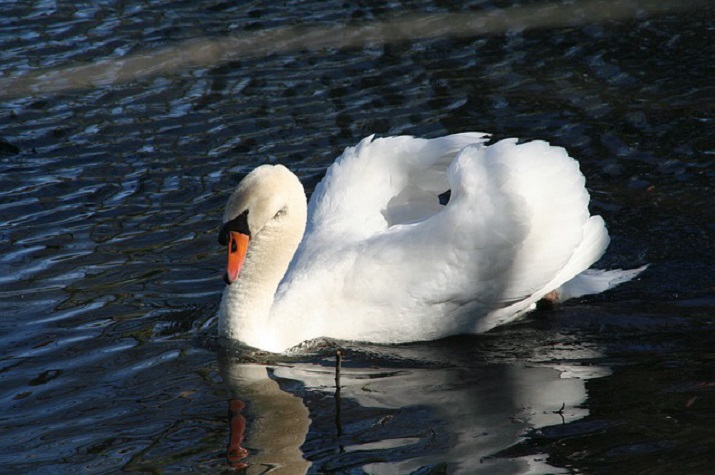
If the Council of States had its way, the mute swan would in future be classified as a huntable species and maximum population limits would be set for certain areas.
The National Council, however, considers this a step too far. On Wednesday, it amended a motion from the Council of States. The National Council is calling for a solution along the lines of what parliament decided for regulating the wolf population. The mute swan should therefore remain a protected species in principle. In the event of specific problems, cantons should be able to apply to the Federal Office for the Environment (FOEN) for a culling permit.
Feeding Attracts Animals
The SP and the Greens opposed any weakening of the protection. The current practice is proven and successful, said Silva Semadeni (SP/GR) on behalf of the minority. Under normal circumstances, swans do not cause any problems. The main issue is well-intentioned feeding, which has a strong attracting effect. An amendment to the legislation at the national level is not necessary.
Cantons can already apply to the federal government today if they wish to regulate swan populations. However, they must first demonstrate that damage has occurred and that measures have been taken to address it. This process is relatively cumbersome, said committee spokesman Hans Grunder (BDP/BE).
The majority of the National Council would now like to allow cantons to act proactively. The National Council approved the amended motion by 91 votes to 74, with 16 abstentions. The ball is now back in the Council of States' court.
No Natural Predators
The motion had been submitted by former Nidwalden CVP Council of States member Paul Niederberger. He argued that mute swans had been able to multiply undisturbed due to a lack of natural predators and thanks to legal protection. In Nidwalden, the population had gotten out of hand. The animals had lost public sympathy because they fouled meadows and walking paths.
The threatening behavior of the swans can frighten walkers, cyclists, and children, said Grunder. There are also conflicts with farmers, as cows refuse to eat grass soiled by swan droppings or become ill from it. The mute swan — named after the black knob above its bill — is not originally native to Switzerland. According to the FOEN, it was introduced into park ponds in the 17th century. In Switzerland, there are approximately 5,000 mute swans depending on the season, according to Grunder.
Animal Welfare Advocates Baffled
Alliance Animale Suisse expressed outrage in a press release. The initiative of the large chamber was ethically and factually misguided. The Swiss Bird Protection SVS/BirdLife Switzerland also has no understanding for the proposal. The "eased interventions" in the swan population due to a local problem were unnecessary. Moderate interventions against the swans in Nidwalden and Obwalden had already been approved and would begin in spring.
8.2.2016
The Federal Council and large sections of parliament want to ease the protection of the mute swan. Around 16’000 people are now opposing the plan with a petition.
In its white elegance, the mute swan appears majestic. Yet the royal treatment of this protected species in Switzerland can no longer be taken for granted. Former Nidwalden Council of States member Paul Niederberger (CVP) wants to lower the hurdles for regulating the population. Because it has no natural enemies and is protected by law, the mute swan — not actually native to this country — has been able to reproduce "undisturbed," according to Niederberger. "As a result, an excessive population has developed in some areas." Hotspots include Lake Alpnach, Lake Sarnen, Lake Hallwil, and Lake Greifen. In such areas, the swan causes considerable damage to agricultural crops through its droppings, says Niederberger. Soiled grass is no longer eaten by livestock and represents a potential source of disease.
The CVP politician did not stand for election last fall. His political legacy, however, lives on. After the Council of States referred Niederberger's motion in September, the National Council's Environment Committee (Urek) is expected to take up the matter the week after next — and, given the dominance of the SVP, FDP, and CVP, will likely approve it. Outside of parliament, however, resistance is now forming. Valais animal welfare advocate Mélanie Fellay, without informing the media, submitted a petition with around 16’000 signatures to animal welfare organizations in Bern at the end of January, as the Tages-Anzeiger reports.
Criticism from the Swiss Ornithological Institute Sempach
The controversy surrounding the mute swan comes as no surprise to the Swiss Animal Protection organization (STS): many protected species have been declared "conflict species" in recent years, the STS writes in a letter to Urek members. The federal government has since developed concepts for the wolf, lynx, bear, and beaver that provide for measures against allegedly harmful individual animals, up to and including regulatory interventions in the population. The STS criticizes the demand for easier regulation of mute swans as merely the next logical step toward reducing the protection of as many wildlife species as possible.
Depending on the season, up to 5,000 swans live in Switzerland, of which 600 to 700 pairs nest in the country; the species is not considered endangered. Nevertheless, animal welfare advocate Fellay considers it "barbaric" to shoot the animals. It is rather up to humans to change their behavior. "Swans must no longer be fed. This is the reason why the animals congregate at feeding spots and lose their wariness of humans there," says animal welfare advocate Fellay.
Michael Schaad of the Swiss Ornithological Institute Sempach also sees stopping feeding on site as the first step toward resolving a conflict. This would cause local concentrations to disperse. He too considers it unnecessary to loosen mute swan protections. Schaad also finds it an exaggeration to portray the mute swan as a danger to pedestrians, cyclists, and children, as Niederberger does in his motion. People must keep a respectful distance from the mute swan. Like any wild animal, the mute swan will defend itself or its young when approached too closely.
Cantons Also Apply Pressure
The cantons have also recognized the feeding problem. Here and there, local bans exist. Nevertheless, pressure is mounting from within their ranks to ease protections for the mute swan. Today, cantons are permitted to cull individual animals if this can prevent significant wildlife damage. However, a contestable order must be issued for each intervention. If more than 10 percent of a local population is to be killed, the cantons must also submit a regulation request to the Federal Office for the Environment (FOEN). Cantonal experts complain of considerable administrative burden. “We have an interest in retaining sufficiently broad authority to manage wildlife species,” says Peter Ulmann, hunting and fisheries administrator for the canton of Lucerne. The local population expects cantonal agencies to act promptly and with reasonable use of resources when problems arise.
Eliminating the Right to Appeal
The Federal Council also wants to ease mute swan protections. It is prepared to revise the Hunting Act in line with the Niederberger motion. How exactly this will be done, however, remains unclear. The lead agency, the FOEN, is not yet willing to comment. Niederberger proposes proceeding in a manner similar to the regulation of the ibex — defining a sensible population size for certain areas. “If the defined number is exceeded, cantons should be free to regulate the population.” The proposal is notable. Today, FOEN culling orders for mute swans are subject to appeal. If Niederberger's proposal prevails, it is conceivable that mute swan management would be governed by its own ordinance — as is already the case for ibex. According to the FOEN, culls could then no longer be challenged through an appeal.
Obwalden and Nidwalden Begin Egg Pricking
Another approach may also prevail: egg pricking during the breeding season in spring. Last year, the FOEN approved corresponding requests from the cantons of Obwalden and Nidwalden. The two cantons plan to test the method this spring — with appropriate caution, as Cyrill Kesseli, hunting administrator for the canton of Obwalden, notes: “It is clear that the intervention takes place at an early stage, when the development of the clutch is still in its initial phase.”
Update June 14, 2016: Council of States Clears Swans for Culling
Update March 3, 2016:Swan protection in Switzerland is set to be relaxed.
Related dossiers and articles: