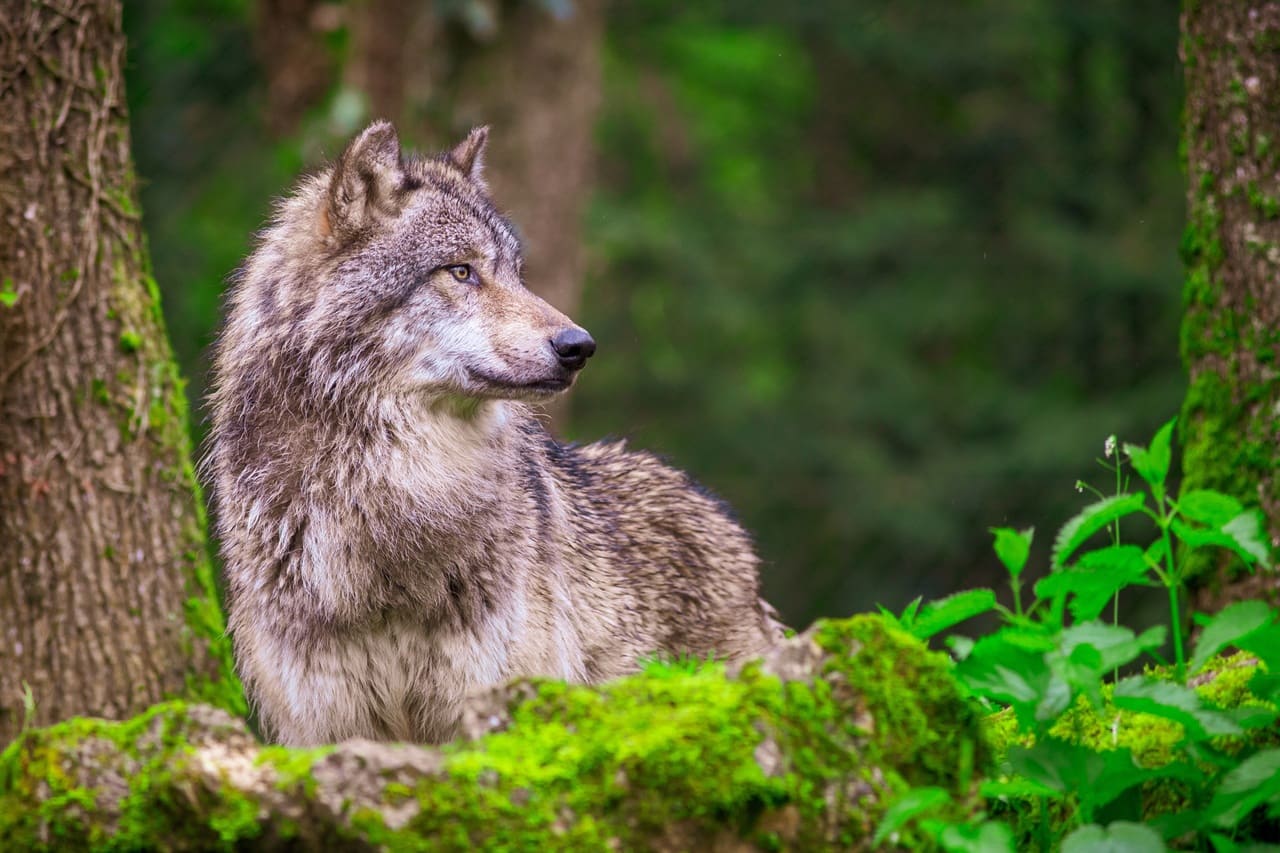
Problem Politicians Instead of Problem Wolves: Switzerland Is Hunting the Wrong Animal
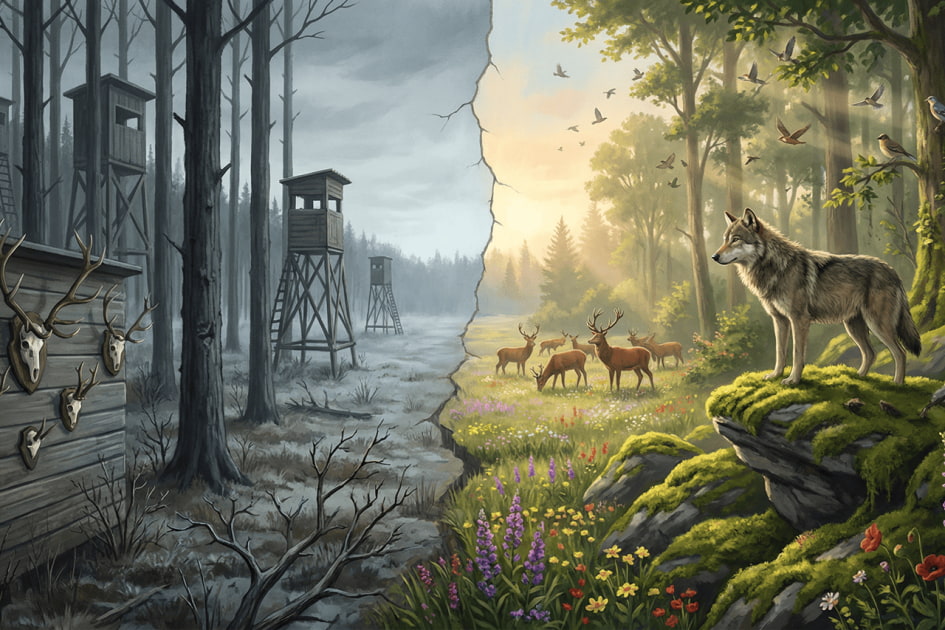
Parliament in Bern has tightened the screws on wolf regulation once again: so-called problem wolves are to be shootable year-round in future, even in hunting ban areas. While lobby groups celebrate, one thing above all becomes clear: the real problem is not standing in the forest — it is sitting in parliament.

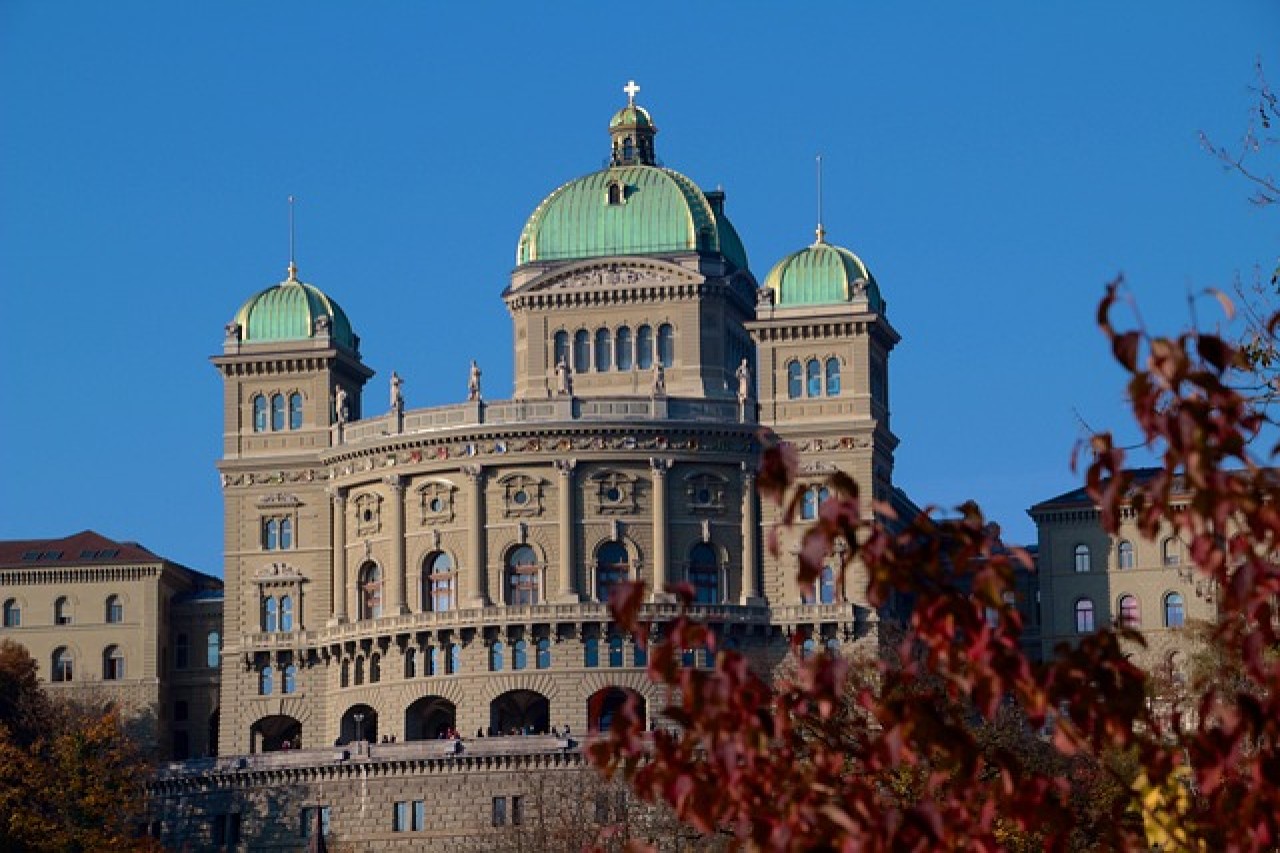
On 3.12.2025, parliament went big-game hunting again.
Not in the forest, but in the Federal Palace. The official quarry was the wolf; unofficially, it was the last remaining reserves of reason. The National Council resolved that so-called problem wolves may henceforth be shot year-round, and that culls should even be permitted in hunting ban areas.
The animal making the most noise, however, is not the wolf. It is the problem politician.
Parliament in Hunting Fever
With clear majorities, the National Council waved through two motions: one demands that wolves with a shooting permit may also be killed in hunting ban areas. The other seeks to allow so-called problem wolves to be shot throughout the entire year, even if they are part of a pack.
In doing so, parliament is once again tightening wolf policy. Even with the revision of the Hunting Act, the threshold for culls was lowered and preventive regulation enabled — despite the wolf continuing to be classified as a protected species.
Tellingly, even Environment Minister Albert Rösti was opposed to this latest tightening and wanted to wait and see the effect of the new ordinance first. He — not exactly known as a friend of wolves — briefly appeared to be the only rational livestock guardian dog in the room. He was outvoted nonetheless.
Who, exactly, is the problem animal here?
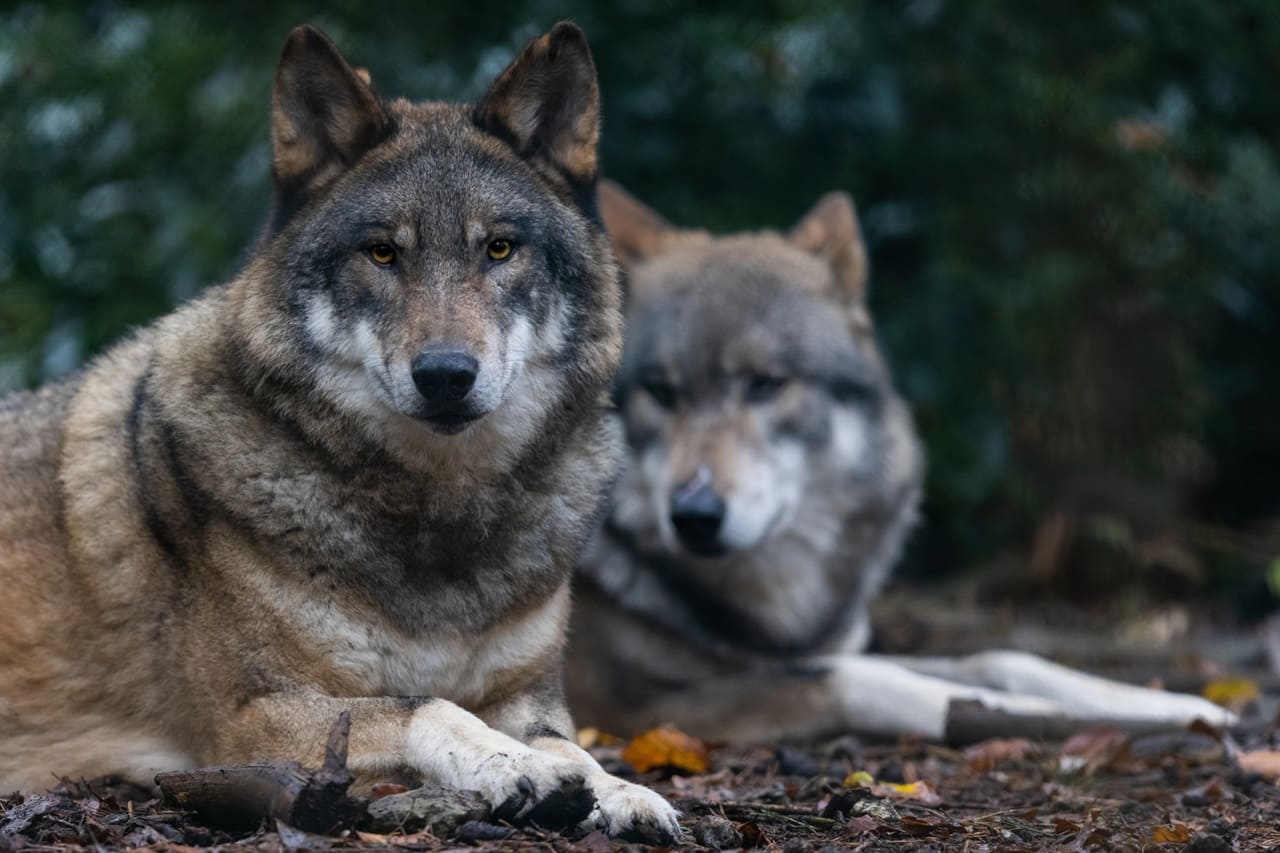
Officially, the term used is problem wolves. This sounds like highly dangerous beasts that prowl through villages at night and sabotage tourism by day. In reality, we are talking about predators that kill deer, stags and occasionally unprotected livestock, because that is precisely what they are evolutionarily equipped to do.
When a wolf behaves like a wolf, it becomes a problem wolf. When a politician behaves like a lobbyist, it is called democracy. Convenient.
The choice of words is no coincidence. Whoever declares an animal a problem simultaneously declares themselves the solution. In the end, politicians stand in front of cameras and claim to have restored order through culling. In reality, they have only fired twice: once at the wolf, and once at common sense.
The staging of the threatened Alpine idyll
The narrative is familiar: Alpine farming is on the verge of collapse because of the wolf, the ecosystem is being thrown into disarray, and traditional land management is under threat. Such, at least, is the dramatisation presented in the parliamentary chambers.
What this staging conveniently leaves out:
- Herd protection measures work where they are consistently implemented. Studies and monitoring data show that livestock losses in well-protected herds are significantly lower than in unprotected ones.
- Most sheep in the Alps do not die at the hands of wolves, but from disease, falls and neglect. On balance, the wolf has actually saved more sheep since its return, thanks to improved herding practices.
And yet the wolf is cast as the primary culprit. Not because it is factually accurate, but because it is politically expedient. A predator with yellow eyes makes for a far better scapegoat than an invisible climate crisis or decades of misguided agricultural policy incentives.
Hunting reserves: protected areas with a shoot-to-kill order
The new policy direction becomes particularly absurd when it comes to hunting reserves. These areas exist to give wildlife a sanctuary from disturbance. In future, however, hunting may take place within them — provided the right name appears on the form: wolf.
The message to nature is unambiguous: protection applies only as long as no lobby seriously objects. Today it is wolves in wildlife sanctuaries, tomorrow perhaps other inconvenient species that threaten the pristine image of an Alpine idyll, where cows pose decoratively against a mountain backdrop and ideally never die. At least not visibly. The same politicians who debated so irrationally yesterday send more than 80 million animals to the slaughterhouse in Switzerland every year.
Problem Politicians: An Invasive Species
While the wolf slowly and laboriously reclaims its place in a severely disrupted Alpine ecosystem, problem politicians have long since established stable populations in Bern. Their characteristics:
- High adaptability to any camera
- Strong ties to hunting and agricultural lobbies
- Low inhibition threshold when it comes to facts
- Conspicuous willingness to water down wildlife protection regulations
The populations of this species are not considered endangered. On the contrary: their reproduction rate rises in proportion to the number of emotionally charged debates in which terms such as homeland protection, tradition and security collide in rapid succession.
Whenever a sheep is killed somewhere, the problem politician smells political capital. They appear faster than any wolf, armed with a press release and a pre-drafted motion.
Population Management in the Federal Palace
In the world of problem wolves, the answer to complex questions is remarkably simple: shoot. More regulation, more culls, more signals to the outrage base in rural areas. The fact that international commitments, species protection and animal welfare legislation are increasingly being pushed to the margins is filed away as collateral damage.
If one were to apply this logic to the Federal Palace, some intriguing consequences would follow:
- Where the population density of problem politicians is particularly high, democratic erosion damage is a real threat.
- Noise levels in debates and the density of lobby whispers could serve as criteria for proactive regulation.
- Periodic evaluations asking the question: do these individuals radiate more fear or more solutions?
Do not worry, this is satire. Unlike the wolf, nobody seriously wants to open problem politicians up for culling. Least of all year-round and in a protected area. But most certainly at the next election.
What the wolf truly reflects
At its core, the wolf does only one thing: it holds a mirror up to Switzerland.
- It reveals how difficult it is for this country to accept wilderness as anything other than decoration for tourism brochures.
- It exposes a policy that prefers to shoot rather than consistently invest in functional livestock protection and ecological corridors.
- It makes visible how far certain conservative forces are prepared to go in defence of their vision of hunting and agriculture.
In the end, what remains is a bitter joke: a protected animal is declared, step by step, a moving target, while the truly dangerous species remains completely unregulated.
This species confirms at every parliamentary session why it is the real problem: it can talk, it can decide, it can delegate responsibility away. And it can destroy an ecosystem without ever taking a single bite out of a sheep.
It is not the wolf that is out of control
With their recent resolutions, the federal chambers have once again demonstrated that wolf policy is driven not by facts, but by symbolism. The wolf stands at the end of a long chain of political failures and ideological reflexes.
Those who speak of problem wolves should first talk about problem politicians. Because the wolf cannot help being a wolf. For humans, the excuse is considerably weaker.
The distortion of fear: deaths in the forest, but not caused by wolves
If one looks not only at gut feeling but also at the statistics, the picture shifts rather quickly. Every year in Switzerland, around 40’600 leisure accidents involving animals occur, and the trend is rising. Dogs and horses are involved most frequently after insects and ticks, which account for even more incidents.
When it comes to dogs, we are far from talking about isolated cases. As early as 2007, more than 4’200 biting incidents were reported across Switzerland, of which 2’678 involved injured people. A later analysis by SRF shows more than 7’000 incidents involving dogs in a more recent year, an increase of almost 20 percent since 2016. In other words, thousands of people are injured every year by man's best friend, from facial injuries in children to severe bite wounds.
Recreational hunting itself is also far from harmless. Official figures cite around 300 hunting accidents per year, averaging 3–4 fatalities annually, along with several cases resulting in permanent disability.
And the wolf in this bloody ranking of danger sources for humans? Specialist bodies such as KORA and various media analyzes soberly note that attacks by wolves on people in Europe are rare, and no confirmed cases are known in Switzerland to date. Wolves avoid humans when they are not fed and their natural shyness is not destroyed.
Nevertheless, politicians treat the wolf as though it were diving after children every Sunday at the local swimming pool. The imbalance is obvious: where real deaths and thousands of injuries are recorded every year, there is a remarkable silence. Where the statistics are almost empty, the grand security debate is staged. It is as though, when a storm warning is issued, people demonize the hair dryer while forgetting that next door someone is sawing off the roof.
Further articles
- Swiss meadows are losing biodiversity at an alarming rate
- When sheep, cattle and others occupy wildlife habitat
- Swiss animal protection organisation criticizes planned wolf culls as a threat to pack structures and livestock protection
- Wolf incompetence runs rampant in Graubünden
- Val Fex: When the livestock protection concept has more holes than the fence
- Culling instead of protection – Switzerland on the path to silent wolf extermination
- Communication failures at the Office for Hunting and Fishing Graubünden
- Illegal wolf hunting in Switzerland
- Wolf pups in Switzerland caught in the crossfire
- Switzerland sells massacre of wolves as a success
- Sloppiness in the office of Katrin Schneeberger
- Livestock grazing alters the soil, plant life and insect populations
- The insane hunt for wolves in Switzerland
- The truth about sheep mortality in Switzerland: causes and statistics
- Wolf culls in Switzerland: concerns about party politician Albert Rösti
- Let us stop the SVP’s destructive fury
- Participatory campaign: An appeal for change in Switzerland
- 200 environmental organisations from 6 continents call on the Swiss government: Stop the wolf cull
- Federal Council faces sharp criticism from wolf experts
- The consequences of controversial wolf management in Switzerland
- Wolf: Federal Councillor Rösti (SVP) circumvents law and order
- Es Burebüebli mahn i nit
- Are BAFU and the hunting authorities still operating responsibly?
- Federal Councillor Albert Rösti tramples on the will of the people
- The consequences of controversial wolf management in Switzerland
- Too many sheep are harming biodiversity
- Agricultural use destroys alpine meadows
- Livestock losses despite herd protection – how is that possible?
- The rotten apple in St. Gallen's hunting administration
- Pro Natura demands comprehensive strategy for summer sheep grazing
- According to Agridea study, livestock protection with dogs works well
- Thanks to livestock protection, wolves kill fewer farm animals in Switzerland
- Farmers treat fields as disposal sites
- Biomass of wildlife
- On sheep farmers and vague authorities
- The double standards of wolf opponents