The Grisons electorate has spoken
The golden parachutes for the government are history. Officially, the issue was frugality, privilege, and fairness toward taxpayers. Unofficially, however, this vote was also a barometer of public sentiment. And the mood is bleak.


On 30 November 2025, the Grisons electorate clearly approved the cantonal popular initiative «End the golden parachute for government members – No to lifetime pensions».
Around 65.4 percent voted yes, 34.6 percent no. The Grand Council’s counterproposal was rejected with 52.8 percent voting no. With yes-majorities in 98 out of 100 municipalities, this result looks like more than just a technical correction to a compensation law. It smacks of fundamental frustration with political elites.
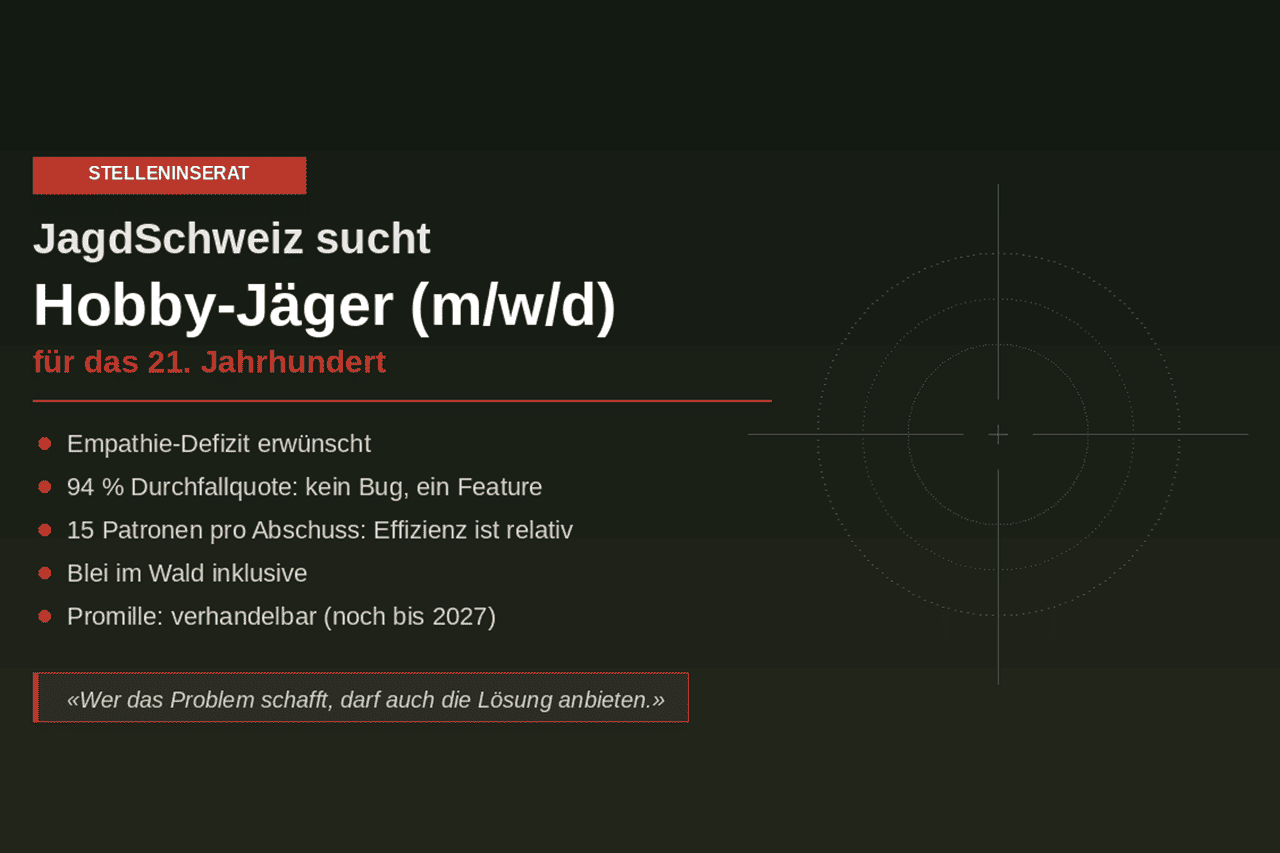
Anyone who has followed Grisons politics in recent years will recognise a pattern: politics listens above all to those who speak the loudest, and does not shy away from spreading falsehoods. On the wolf, on hunting, on agriculture. Whoever complains the loudest, dramatises the most, and issues the most threats, prevails. Whoever stands up for animal welfare, respect for wildlife, and a modern wildlife policy loses one popular vote after another.
Into this climate now falls the decision to strip government members of their retirement pension. It would be naive to believe that people voted solely on a technical question of compensation. There are no empirical data on this, but much suggests that many voters had something else in mind at the ballot box: a government that listens to the loudest lobbyists on the wolf issue, ignores scientific facts, and declares wildlife to be a problem. Why should precisely these people be allowed to secure a special pension for life.
The message from the municipalities is clear: privileges for “those at the top” are no longer justifiable. Least of all when that same political class pursues a policy towards wildlife that appears backward, one-sided, and evidence-free. Those who make the wolf a political scapegoat should not be surprised when the public eventually loses patience.
For the Grisons government, this decision is more than a financial cut. It is a vote of no confidence. Not legally, but politically. And this distrust has much to do with the way wildlife is treated in this canton. Those who systematically dismiss the concerns of animal welfare and modern wildlife ecology send a signal to the public: we represent interests, not principles.
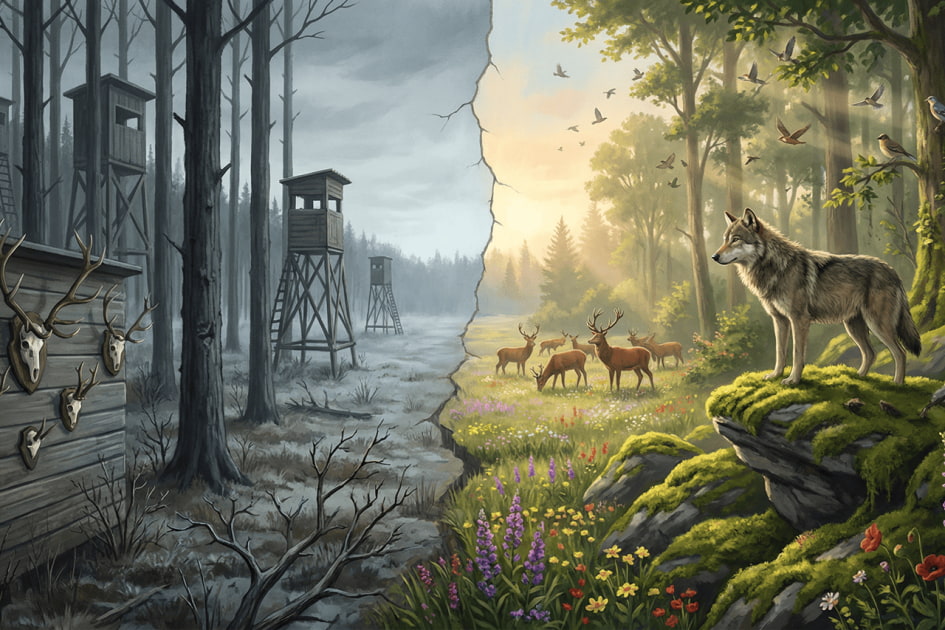
There is an irony here: the wolf is sacrificed in the hope of securing peace, yet unrest emerges elsewhere. The government could long have recognised that a policy which gives greater weight to the loudest gun than to the quieter but broader desire for respect towards wildlife comes at a cost to public trust. Now the bill is due. First with the retirement pension. Tomorrow, perhaps, with other proposals.
Officially, this vote has nothing to do with wolf policy. Politically, however, it is a warning signal. Those who are so clearly rebuked by the electorate on a matter affecting their own wallets should honestly ask themselves where else trust has been squandered. A serious analysis of Grisons’ wolf policy is an indispensable part of that reckoning. The wolf is officially regarded as the number-one concern, yet at the same time a large majority wants it to remain. The real problem is a policy that listens to loudmouths and symbolic gestures.
If the government takes this rebuke seriously, two lessons emerge:
- Reducing privileges is not enough. What is needed is greater humility and greater respect for a public that is more sensitive to animal welfare and nature than some lobbyists are willing to acknowledge.
- On the wolf and on recreational hunting, the loudest group must no longer be allowed to set the tone. What is needed is a policy guided by facts, ethics, and the long-term protection of biodiversity — not by short-term emotions.
The people of Graubünden have shown that they can strip the government of financial privileges. Perhaps it is time for that same government to finally question the privileges that have been defended for decades surrounding hobby hunting and the treatment of wildlife. Those who treat the wolf politically like a pest will ultimately become a disruptive factor themselves in public trust in politics.
This vote was a yes to the abolition of retirement pay. Between the lines, it was also a no to a politics that repeatedly sacrifices the protection of wildlife to the loudest voices. Those who are so clearly reined in on their own retirement pay should listen more carefully when it comes to the wolf and hobby hunting. And not only to those who would most like to shoot.
Further articles
- Swiss meadows are losing biodiversity at an alarming rate
- When sheep, cattle and others occupy the space of wildlife
- Swiss animal protection organisation criticises planned wolf culls as a threat to pack structures and livestock protection
- Wolf incompetence rages in Graubünden
- Val Fex: When the livestock protection concept is more full of holes than the fence
- Shooting instead of protection – Switzerland on the path to quiet wolf extermination
- Communication failure at the Office for Hunting and Fishing in Graubünden
- Illegal wolf hunting in Switzerland
- Wolf cubs in Switzerland under fire
- Switzerland sells wolf massacre as success
- Sloppiness in the office of Katrin Schneeberger
- Livestock grazing alters the soil, plant life and insect populations
- The insane hunt for wolves in Switzerland
- The truth about sheep mortality in Switzerland: causes and statistics
- Wolf culls in Switzerland: concerns over party politician Albert Rösti
- Let us stop the SVP’s destructive rage
- Participation campaign: An appeal for change in Switzerland
- 200 environmental organisations from 6 continents call on the Swiss government: Stop the wolf cull
- Federal Council faces sharp criticism from wolf experts
- The consequences of controversial wolf management in Switzerland
- Wolf: Federal Councillor Rösti (SVP) circumvents law and order
- Es Burebüebli mahn i nit
- Are BAFU and the hunting authorities still operating responsibly?
- Federal Councillor Albert Rösti tramples on the will of the people
- The consequences of controversial wolf management in Switzerland
- Too many sheep harm biodiversity
- Agricultural use destroys alpine meadows
- Predation despite livestock protection – how is that possible?
- The rotten apple in the St. Gallen hunting administration
- Pro Natura calls for comprehensive strategy for summer sheep grazing
- According to Agridea study, herd protection with dogs works well
- Thanks to herd protection, wolves kill fewer livestock in Switzerland
- Farmers treat fields as disposal sites
- Biomass of wildlife
- On sheep farmers and vague authorities
- The double standards of wolf opponents