Podcast episode: Hunting in Grisons and wolf policy
To whom are hunting rules and wolf management ultimately accountable: to wild animals, to the public, or to the interests of hobby hunting?

Podcast episode: Hunting in Grisons and wolf policy
In this episode, Wild beim Wild examines the 2026/27 hunting season in Grisons.
The focus is on contradictions in the hunting regulations and on political responsibility for proactive wolf regulation.
A recurring pattern emerges in the hunting rules: night vision and thermal imaging technology, drones and the baiting of cloven-hoofed game are prohibited in principle, yet as soon as more efficient kills are desired, exceptions appear. Thermal imaging technology is permitted for night-time wild boar hunting in the Mesolcina; for the fox, an equivalent ban on baiting sites is missing. The use of mobile phones for hunting purposes was once clearly prohibited too, but is no longer regulated with the same clarity in today's wording of the ordinance. The claim to fairness towards wild animals is thus made subject to reservations.
The episode also asks about the purpose of a form of hobby hunting whose own former association leadership described small game hunting for fox, badger and hare as «not necessary, but justified». If ecological necessity is lacking, the question remains open as to whether the body of rules protects wild animals or primarily organises a leisure interest.
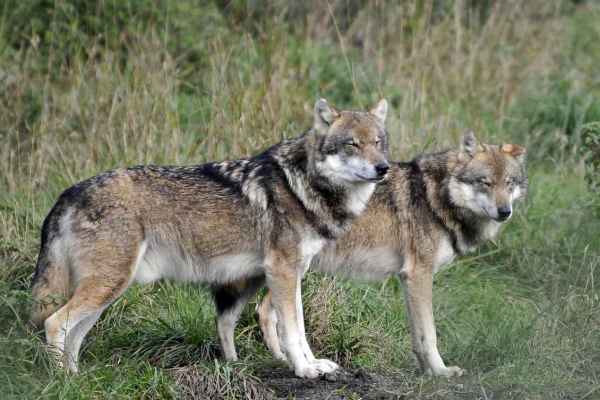
The second focus is wolf regulation. For the period from 1 September 2026, the BAFU has authorised kills in twelve wolf packs in Grisons; in four further packs they are possible once offspring have been confirmed. In addition, Grisons is applying for the complete removal of the Calderas pack – even though livestock kills up to the end of July had more than halved compared with the previous year.
Adrian Arquint, co-head of the Office for Hunting and Fishing, justifies the interventions partly with falling numbers of livestock kills. The decline, however, had already begun before the new basis for preventive kills came into force in December 2023. Arquint himself cites the expanded herd protection as an important factor. At the same time he says that entire packs should not be wiped out, while his own office is applying for the complete removal of the Calderas pack.
The episode also examines Arquint's dual role as a passionate hobby hunter and as a senior representative of the very authority that decides on wolf regulation. Nature conservation associations criticise the practice as a policy of extermination; the research commission of the Swiss National Park warned back in 2024 that complete pack removals are not scientifically indicated. Across Switzerland, according to the ticker, the number of wolf packs rose from 35 to 40 despite 226 wolves being killed over three regulation periods.
All articles are written by IG Wild beim Wild as well as by external co-authors. Research, structuring and editorial processes may be supported by AI-assisted tools.
Support our work
With your donation you help to protect animals and give their voice a hearing.
Donate now →