Neonicotinoids detected in sparrow feathers
Neonicotinoids are being detected in the feathers of sparrows. The pesticides enter the birds' bodies through the food chain and weaken them.


Researchers at the University of Neuchâtel examined the feathers of sparrows living near agricultural land for pesticides.
And found neonicotinoids. These chemicals are considered a possible cause of insect decline.
Neonicotinoids are intended to protect crops from harmful insects, but they are a source of concern for conservationists because they also negatively affect beneficial insects such as bees and butterflies. Because these insect neurotoxins spread throughout the entire plant, including pollen and nectar, they can disperse into the environment. Now researchers at the University of Neuchâtel have also detected the insecticides on sparrow feathers.
Under the supervision of Fabrice Helfenstein, Ségolène Humann-Guilleminot investigated, as part of her master’s degree, whether birds that feed on seeds or insects are exposed to neonicotinoid contamination. The researchers report their findings in the journal «Science of the Total Environment». Further information on related topics can be found on the Studies.
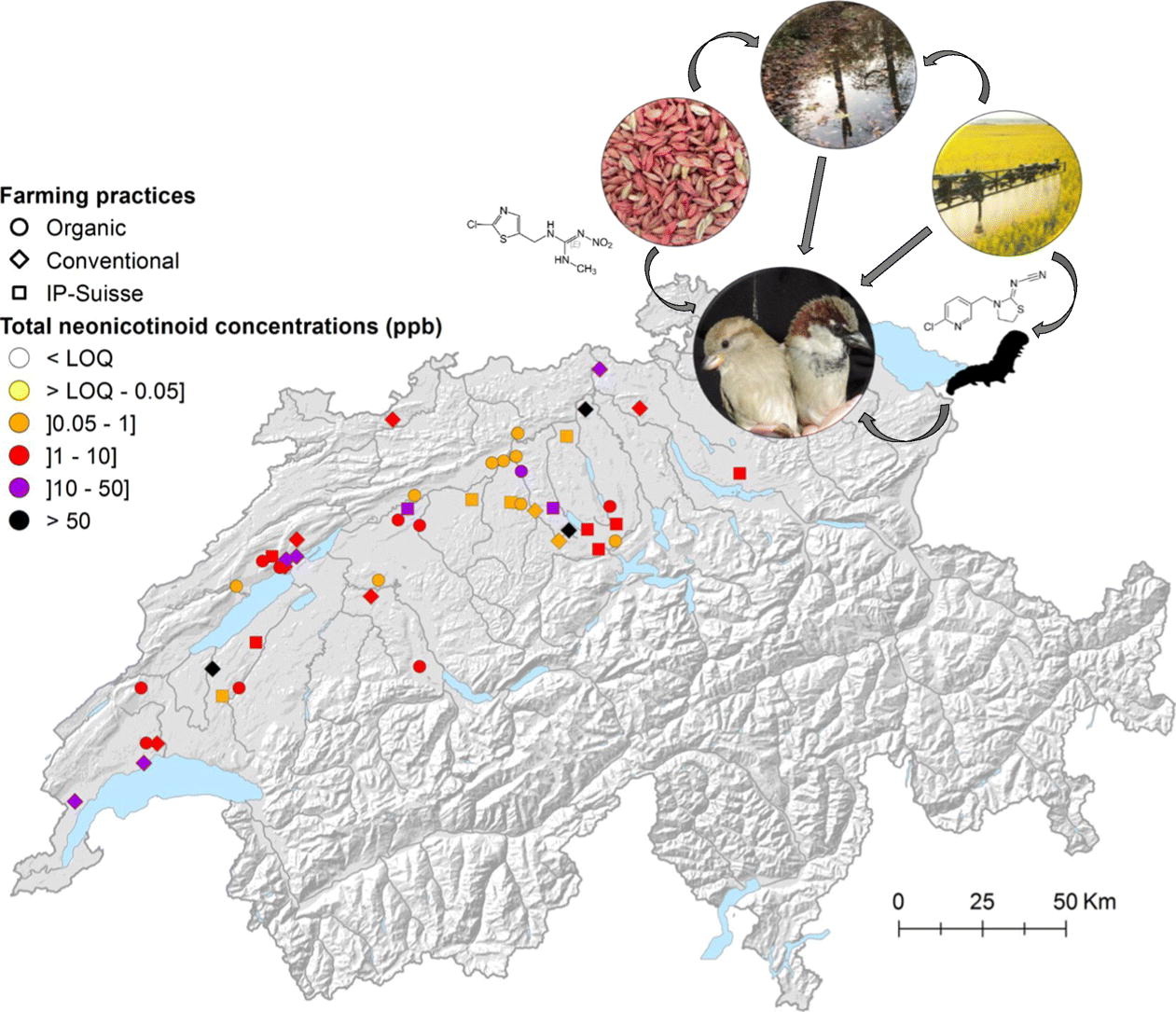
Sparrows were particularly well suited for this purpose because they are highly site-faithful and never stray far from their breeding site. They forage for food close by. The researchers around Humann-Guilleminot therefore selected sparrows living near 47 agricultural farms in the Swiss Mittelland and collected their feathers. These included both conventional and organic farms as well as farms operating under integrated production (IP-Suisse).
Neonicotinoids in all samples
The researcher found at least one neonicotinoid in all of the approximately 600 samples, even though concentrations varied considerably. On average, values ranged from 1.7 to 9.2 nanograms of neonicotinoid per gram of feathers. The lowest values were found in feathers from sparrows near organic farms and IP-Suisse farms, and the highest in feathers from conventionally managed farms.
«In some samples, however, we measured high concentrations,» Helfenstein was quoted as saying. They had measured up to 140 nanograms of neonicotinoid per gram of feathers, which raises concerns about the health of the birds.
Earlier studies had already shown that neonicotinoids can cause severe neurological disorders in birds when ingested. In this way, neonicotinoids could further harm bird populations that are already facing reduced food availability due to insect decline.
High Contamination Risk
One neonicotinoid appeared in 99 percent of the samples tested, even in those from organic farms. The chemical known as thiacloprid, which is considered far less toxic to bees than other neonicotinoids, remains approved, while the use of three other insecticides — clothianidin, thiamethoxam, and imidacloprid — has been banned in Switzerland due to declining bee populations.
However, with the ban on these three substances, the use of thiacloprid is increasing, the University of Neuchâtel wrote. «Furthermore, thiacloprid is sprayed onto plants, which increases the risk of environmental contamination and could explain the presence of this substance in all feather samples,» said Helfenstein. More on this topic Environment & Nature Conservation.
More on the subject of recreational hunting: What the research says about this is shown by Hunting fact-checked: the state of research.
The position of IG Wild beim Wild: IG Wild beim Wild rejects recreational hunting. Our model is the canton of Geneva, which has managed without recreational hunting since 1974: without hunting seasons, without hunting dogs, without driven hunts, without high seats, without the animal cruelty and crime that go hand in hand with hunting season elsewhere. What has worked there for over fifty years disproves every position paper by JagdSchweiz. An association that bases its policy on claims it refutes in its own documents is not a professional organisation, but a factory for misinformation.