Meat consumption destroys rainforests
Every year, an average of 10 million hectares of forest are destroyed, primarily due to agriculture.

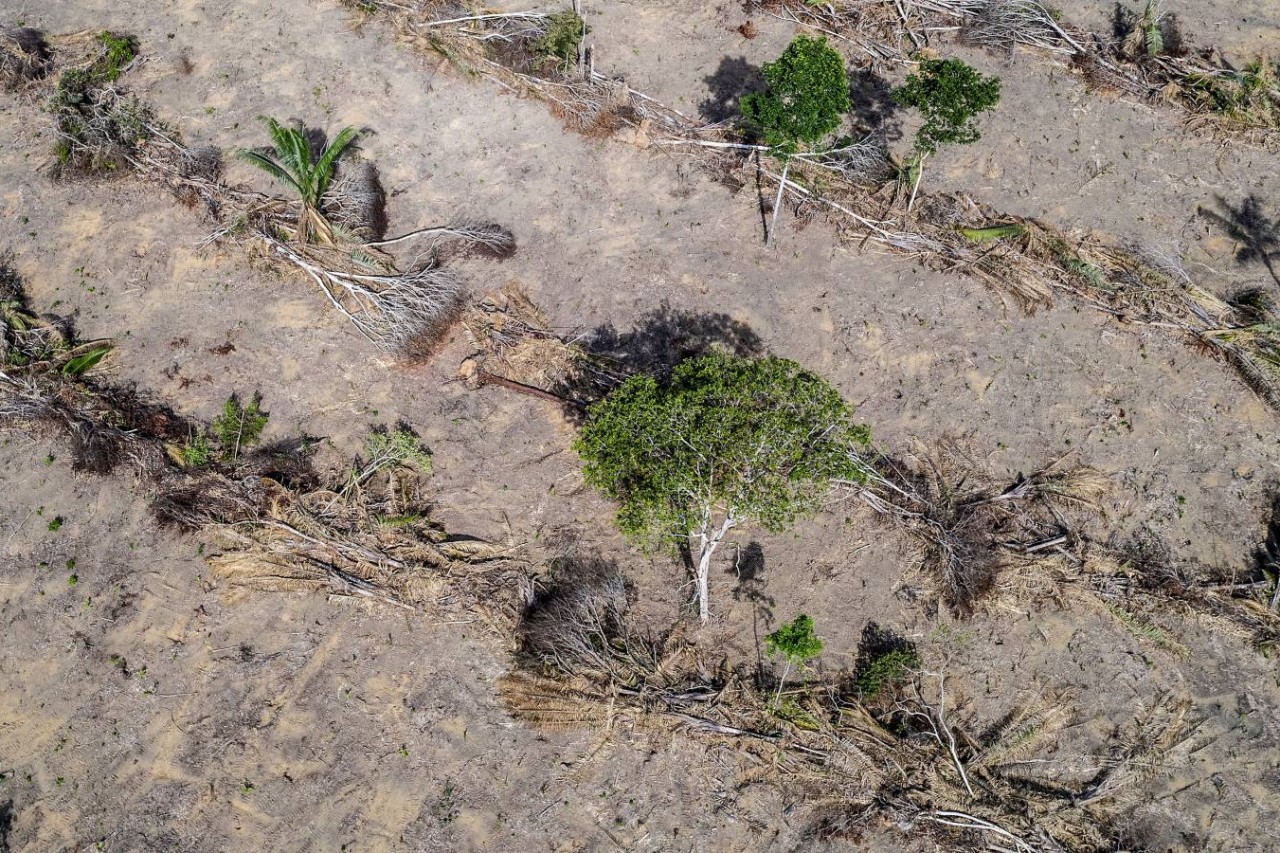
Cattle production displaces far more forest than any other sector.
According to a WWF report published in July 2021, current corporate measures are insufficient to halt the destruction of the world's most valuable ecosystems. Forests, savannas, and grasslands continue to disappear at a rapid pace.
While growing public awareness has pushed companies to act — and many have made voluntary commitments — the report finds that this progress is not delivering the desired results: Only 41–46% of companies report on progress toward meeting their commitments, and only 55% have achieved their targets, highlighting a significant implementation gap. Moreover, processors and traders — the parts of the supply chain with the greatest influence over positive change — have so far made the fewest commitments.
Between 2001 and 2015, the production of agricultural commodities contributed to 39% of global tree cover loss. Every year, an average of 10 million hectares of forest are destroyed, primarily due to agriculture. The report highlights four key commodities — soy, palm oil, beef, and wood fiber plantations — which were at the centre of the CGF's zero net deforestation commitment in 2010. The link between these commodities and the leading deforestation and conversion fronts is striking. The analysis shows that cattle production displaces far more forest than any other sector and was responsible for 37% of agriculturally driven deforestation between 2001 and 2015. Together with soy production, it is the leading driver behind the conversion of grasslands and savannahs, for example in Latin America's Chaco and Cerrado regions. Soy is the commodity for which the fewest companies have committed to zero deforestation and conversion. WWF wishes to highlight this particularly in the run-up to the UN Food Systems Summit pre-summit taking place at the end of July, which calls for action at all levels of the food system to achieve the Sustainable Development Goals (SDGs) by 2030.
Voluntary corporate commitments are crucial but insufficient to drive the necessary change. The report calls for greater leadership, transparency, traceability, and verification from companies, buyers, and producers — alongside strong government legislation to ensure deforestation- and conversion-free supply chains. Furthermore, commitments from financial institutions are needed to drive systemic change.
Romain Deveze, commodity expert at WWF Switzerland:
«Swiss companies play a decisive role when it comes to halting and reversing the loss of nature. This starts with committing to zero deforestation and conversion.»
«The latest WWF report shows that existing voluntary corporate commitments currently face traceability hurdles. These hurdles must be removed. Because we urgently need to pick up the pace to stop the alarming impacts on nature.»
Unterstütze unsere Arbeit
Mit deiner Spende hilfst du, Tiere zu schützen und ihrer Stimme Gehör zu verschaffen.
Jetzt spenden →