Ticino Recreational Hunters: Violations Without Borders
In Valsolda, in the district of Pian di Scagn, another incident has occurred that reignites the already heated debate over hunting-related border violations.

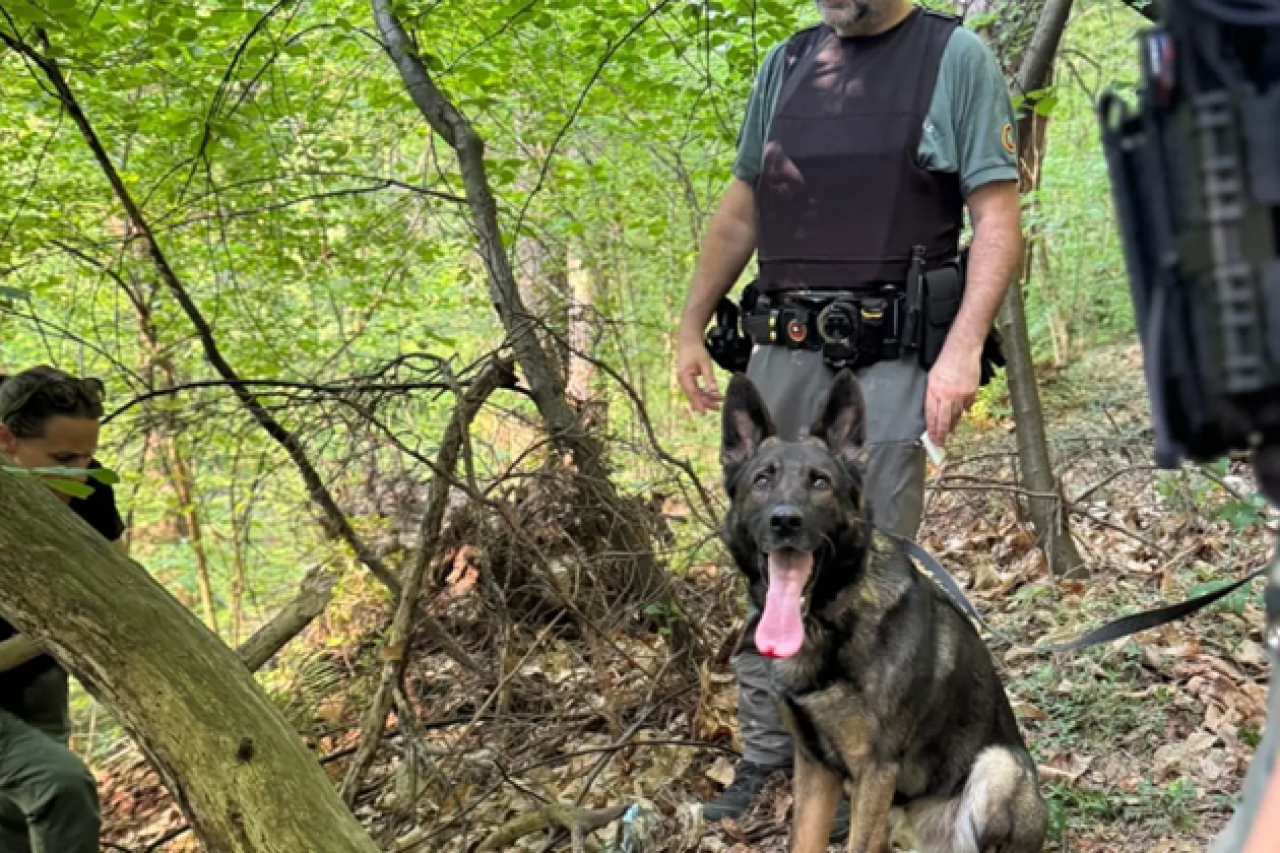
A recreational hunter from Lugano, aged over sixty, was stopped by the provincial police.
He too was travelling in Italy without the firearms permit required under EU law, and was accompanied by a dog that witnesses say was barely under control. A charge of trespassing is also under consideration. This is already the latest in a series of documented cases of this kind, following two similar violations reported in the Bisbino area in the preceding days, according to Italian media.
Commander Marco Testa, head of the provincial police, describes the operation as an example of effective cross-border cooperation. His Ticino colleagues, he notes, made a decisive contribution to the swift resolution of the case. He characterises the recent findings as an indication that such violations are committed not by chance, but with a striking degree of carelessness. According to Testa, the incidents reveal how frequently recreational hunters from Ticino enter Italian territory without authorisation and how dismissively international regulations are treated in the process.
The incident has legal consequences for the man from Lugano. He must answer for having disregarded regulations governing the import of firearms into Italy. Testa regards this as a serious offence, particularly because it was committed in an area that is subject to close monitoring due to its location.
The case takes on particular significance because the surrounding alpine terrain is home to sensitive populations of alpine wildlife. These species face threats on multiple fronts and require protected spaces that must not be jeopardised by uncontrolled recreational hunting or border violations. According to Testa, this justifies an expansion and intensification of controls.
For animal welfare advocates and critical observers of hunting, recent events confirm how important consistent monitoring and transparent prosecution are. Every violation demonstrates how fragile the balance between protected areas, international law, and hunting interests remains.
In the view of IG Wild beim Wild, hobby hunters require annual medical-psychological fitness assessments modeled on the Dutch approach, as well as a binding upper age limit. The largest age group among recreational hunters today is 65+. Within this group, age-related limitations such as declining visual acuity, slower reaction times, difficulty concentrating, and cognitive deficits increase statistically and significantly. At the same time, accident analyses show that the number of serious hunting accidents involving injuries and fatalities rises markedly from middle age onward.
The regular reports of hunting accidents, fatal errors of conduct, and the misuse of hunting weapons illustrate a structural problem. The private possession and use of lethal firearms for recreational purposes largely evades continuous oversight. From the perspective of IG Wild beim Wild, this is no longer justifiable. A practice based on voluntary killing that simultaneously generates considerable risks for humans and animals forfeits its social legitimacy.
Recreational hunting is furthermore rooted in speciesism. Speciesism describes the systematic devaluation of non-human animals solely on the basis of their species membership. It is comparable to racism or sexism and can be justified neither culturally nor ethically. Tradition is no substitute for moral scrutiny.
Critical scrutiny is especially indispensable in the field of recreational hunting. Hardly any other domain is so thoroughly shaped by euphemistic narratives, half-truths, and deliberate disinformation. Where violence is normalized, narratives frequently serve as justification. Transparency, verifiable facts, and open public debate are therefore essential.
More on the subject of recreational hunting: In the dossier Poaching and hunting crime in Switzerland we document cases, legal questions and recurring patterns. The scientific evidence is presented in the overview Studies on the Effects of Recreational Hunting.
The position of IG Wild beim Wild: IG Wild beim Wild rejects recreational hunting. Our model is the canton of Geneva, which has managed without recreational hunting since 1974: without hunting seasons, without hunting dogs, without driven hunts, without high seats, without the animal cruelty and crime that go hand in hand with hunting season elsewhere. What has worked there for over fifty years disproves every position paper by JagdSchweiz. An association that bases its policy on claims it refutes in its own documents is not a professional organisation, but a factory for misinformation.