Recreational hunting ethically justifiable? ARTE asks
The question is simply posed, the answer is not: Is recreational hunting needed to maintain ecological balance – or is that a myth the hunting lobby has cultivated for decades?

«Silence after the shot»
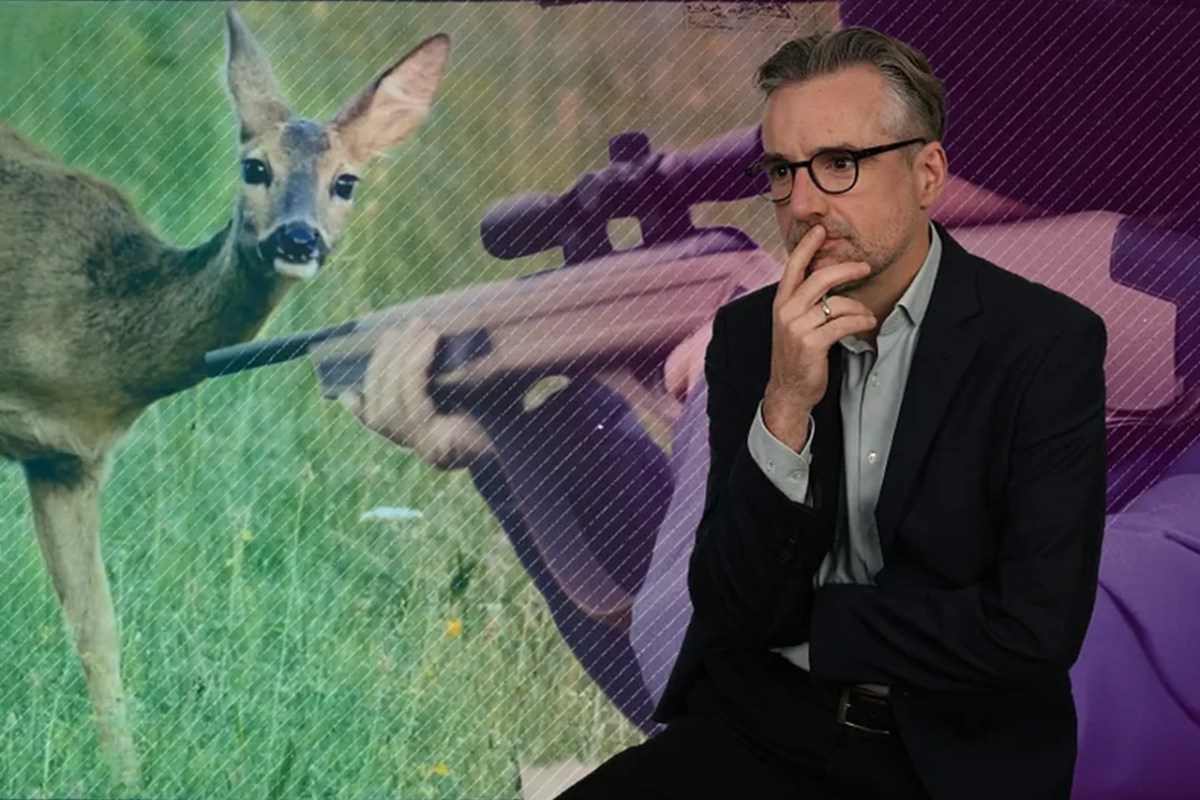
The television channel ARTE addresses exactly this question in the new episode of the science series «Agree to Disagree!», which has been available since March 9, 2026. The 27-minute discussion is moderated by psychologist Prof. Dr. Bertolt Meyer, who brings together two researchers with opposing positions.
The ARTE documentary overview
The program examines recreational hunting as a controversial social issue from three perspectives: tradition (hunting as cultural heritage), animal welfare (ethical objections) and science (search for alternatives). The central question is: Can ecological balance be guaranteed naturally, without firearms? Recreational hunter Dr. Florian Asche has once again distorted facts with confused ideologies.
Sanitary and therapeutic culling by the approximately 12 wildlife wardens in the Canton of Geneva is not the same as regulatory hunting based on hunting folklore or misunderstood nature experience of recreational hunters.
Before the hunting ban for recreational hunters in Geneva over 400 hunting licenses were sold per year. Three full-time positions are now necessary for wildlife regulation and prevention, which represents an enormous gain for biodiversity that is also scientifically documented and visible. Typical Swiss values like safety, animal welfare and ethics are the guiding principles in Geneva. Overall, the Canton of Geneva must spend around one million francs including wildlife damage per year for wildlife management. In comparison, fishing would cost significantly more, even though licenses are sold there.
These wildlife wardens have state-recognized professional training that goes far beyond what a recreational hunting license requires. Regulatory culling takes place exclusively at night, with light amplifiers, after individual identification of the animal. 99% of cullings are immediate killing, no hunting, no hunting accidents. There are years when not a single deer, fox, hare, etc. is shot in the Canton of Geneva.
The wild boar surge is also homemade through incorrect hunting by recreational hunters in Germany. The same can be observed with raccoons, foxes and other species.
Recreational hunters are not allowed to kill their own hunting dogs, that would be a criminal offense under § 17 Animal Welfare Act (TierSchG), as there would be no 'reasonable cause'. Hunting dogs are property and legally domestic animals.
What Switzerland has long proven
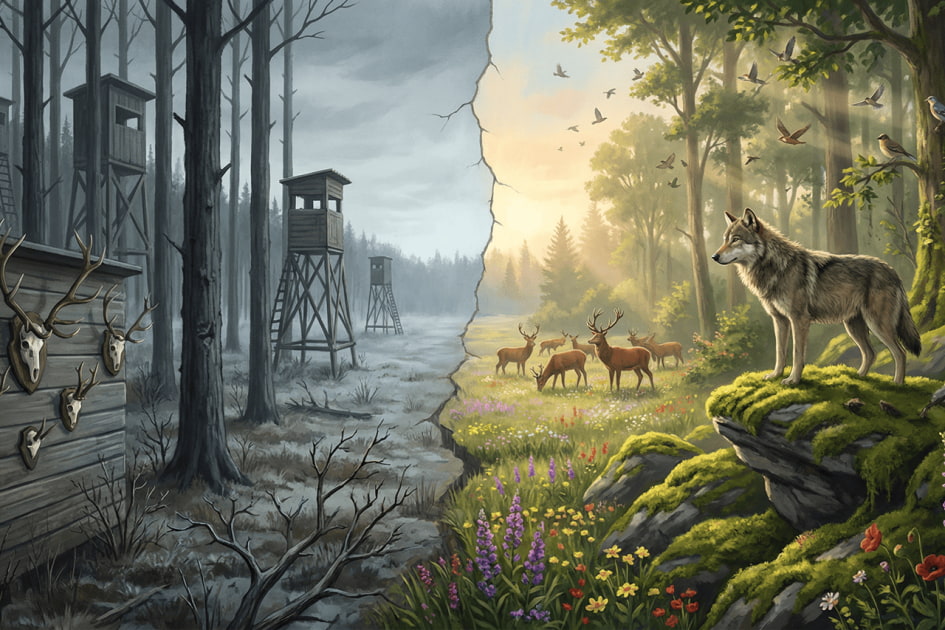
Switzerland has been answering this question for over 50 years with a clear practical example: In the Canton of Geneva, recreational hunting has been banned by popular vote since 1974. Since then, state wildlife wardens regulate wildlife populations, and the result refutes the core dogma of the hunting lobby: Biodiversity has improved, wildlife populations have stabilized, and the bird life at Lake Geneva grew from a few hundred to 30,000 winter guests. Geneva also now has the largest field hare population density and the last partridge population in all of Switzerland.
The Swiss National Park has been hunting-free since 1914 and intensively monitored scientifically. Here too, decades of research show: Neither in untouched nature parks nor in densely populated cultural landscapes is population control by recreational hunting necessary.
Wildlife wardens instead of recreational hunters: the model of the future
What Geneva has been practicing for 50 years can be transferred to other cantons. Professional wildlife warden structures following the Geneva model replace the armed militia with state-employed specialists who act according to clear ecological criteria, transparently, in compliance with animal welfare and without trophy logic.
The City of Bern also states: It is important to evaluate and implement non-violent approaches in wildlife management, including hunting ban areas, promotion of predators like the lynx, and increased cooperation with scientific institutions.
The ARTE documentary raises the right questions. The answers for Switzerland have long been on the table. Those who want to deepen the discussion will find on wildbeimwild.com the dossier Alternatives to recreational hunting as well as the dossier Ending recreational violence against animals, with concrete political action options for cantons and Template texts for political work.
Why pleasure in killing is not a harmless recreational motive
People who take pleasure in killing living beings and paying to do so demonstrate, from a psychological perspective, abnormal recreational behavior. This behavior contradicts fundamental mechanisms of empathy, compassion and moral inhibition that are present in the majority of mentally healthy individuals. Psychologically, this constitutes deviant violent behavior, even when it is politically or culturally tolerated.
Taking pleasure in killing is a classic characteristic of lust-based violence. The act of violence itself is rewarding. Not the outcome, not the necessity, but the killing. This is not a marginal phenomenon, but clearly described in the psychology of violence.
Those who experience recreational hunting as pleasure display a psychologically problematic motivation for violence that is historically and structurally related to authoritarian and devaluing ideologies.
More on the subject of recreational hunting: In our dossiers on the criticism of recreational hunting gather fact-checks, analyses and background reports. What the research says about this is shown by Hunting fact-checked: the state of research.
The position of IG Wild beim Wild: IG Wild beim Wild rejects recreational hunting. Our model is the canton of Geneva, which has managed without recreational hunting since 1974: without hunting seasons, without hunting dogs, without driven hunts, without high seats, without the animal cruelty and crime that go hand in hand with hunting season elsewhere. What has worked there for over fifty years disproves every position paper by JagdSchweiz. An association that bases its policy on claims it refutes in its own documents is not a professional organisation, but a factory for misinformation.
Support our work
With your donation you help protect animals and give voice to their concerns.
Donate now →