Graubünden: Farmers' Association Organises Vigil Fires
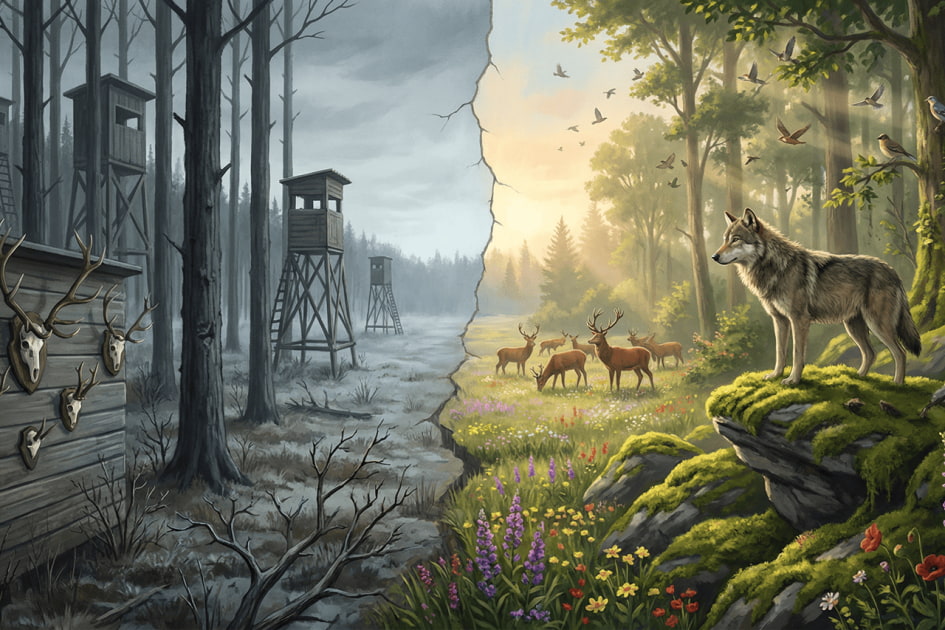
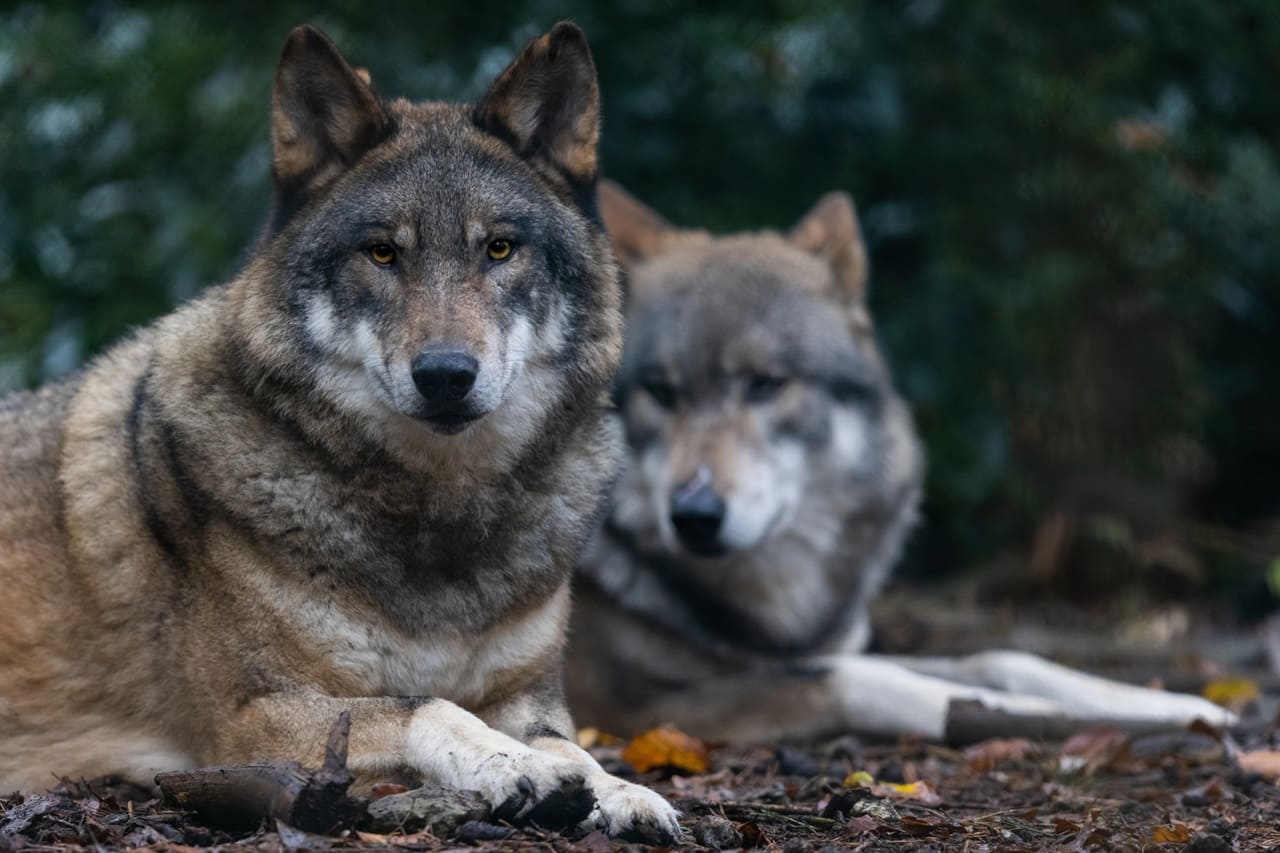
In Switzerland, the wolf has been a subject of controversy since its return in the 1990s. Supporters see it as an indispensable part of the ecosystem, while opponents regard it as a threat to livestock and rural traditions. Yet on closer inspection, it becomes clear: the number of wolf kills is small relative to total livestock farming, while other causes and social contradictions are barely addressed.

In the Graubünden Alps, many sheep and goats are summered by the farmers' association each year — that is, released onto alpine pastures in the high mountains for several summer months.
It is not uncommon for animals to fail to return unharmed or to be found dead. But what are the reasons? And how large is the proportion of deaths that can be clearly attributed to wolf kills?
The majority of livestock that perish in Graubünden die clearly not because of the wolf, but due to illness or neglect. These problems are often compounded by stress — for instance from long journeys to the alpine pastures, inadequate care, or adverse weather conditions.
Wolf kills are — compared to the millions of livestock slaughtered — negligible in number. Farmers' associations, however, prefer to exploit the wolf as a means of distracting from their own failures.
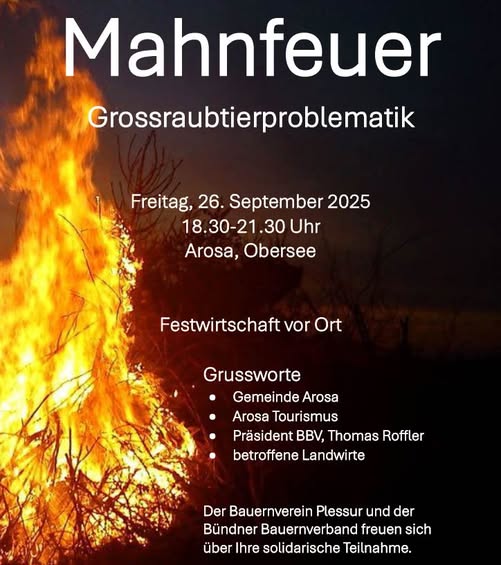
So too the Graubünden Hypocrites' Association, which has organised 20 vigil fires across the canton for Friday evening, 26 September 2025. According to their announcement, the fires are intended to commemorate the sheep, goats, cattle and horses that have not returned from the alpine pastures. The aim, they say, is to draw attention to the threat posed by predators to pastoral farming. This year's main fire will be lit in Arosa and hosted by the Bauernverein Plessur.
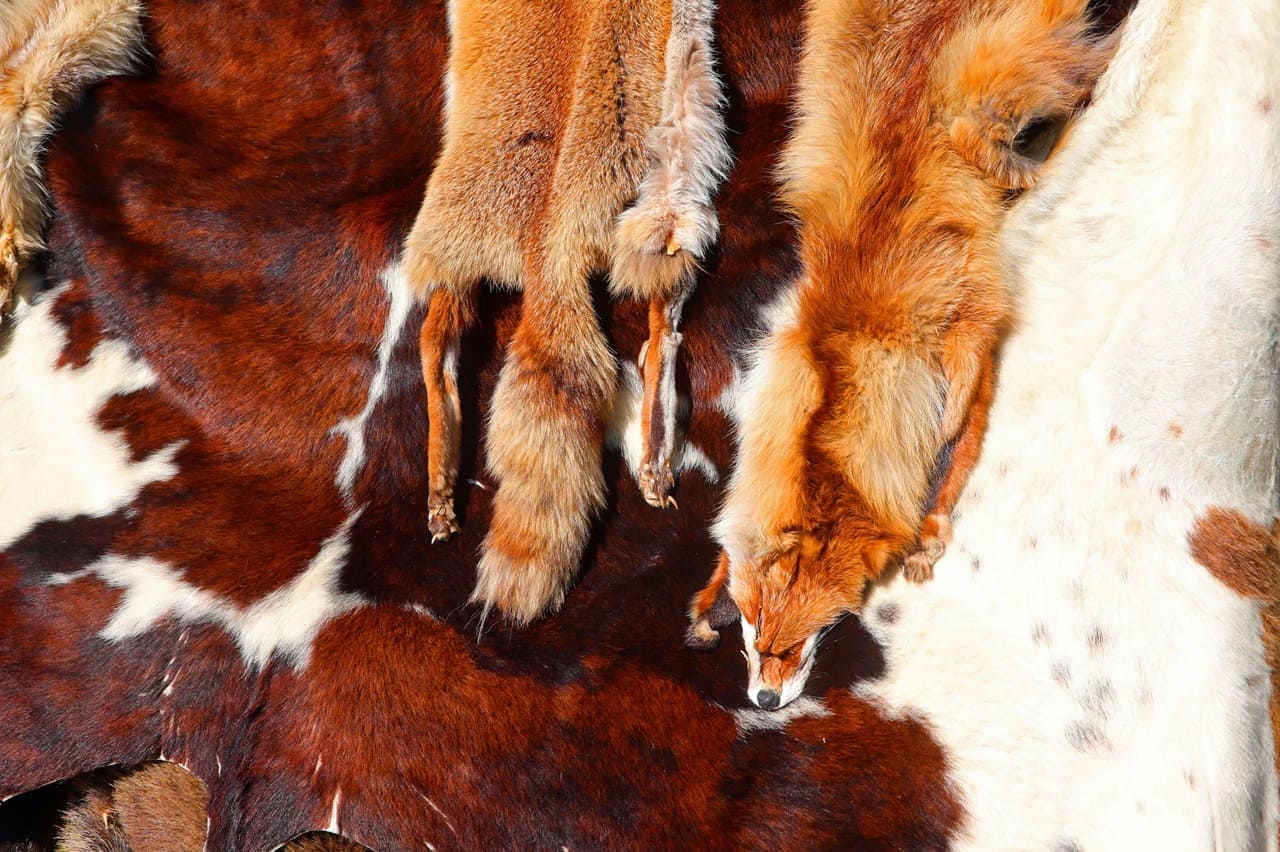
According to figures from the Federal Statistical Office, approximately 84 million livestock were slaughtered in Switzerland in 2022.
In the same year, wolves killed a few hundred grazing animals — the vast majority sheep. The kills occurred mostly in herds without adequate herd protection. In Graubünden too, it is well documented that where herd protection measures are in place and correctly implemented, hardly any kills occur. Herd protection is essential – both for livestock keepers and for the protection of the animals.
IG Wild beim Wild has been pointing out for years that the main causes of death among grazing animals are disease, falls, and weather conditions – not the wolf. The IG also repeatedly emphasizes that herd protection measures (guard dogs, fences, shepherding, night enclosures) can significantly reduce the number of wolf kills. The number of kills does not depend on the wolf population, but on herd protection measures.
IG Wild beim Wild also criticizes the fact that in public debate the wolf is frequently made into a scapegoat. It points to the following contradictions:
- While opponents of the wolf emphasize its dangerousness, the scale of livestock farming – with millions of animals slaughtered every year or kept under sometimes poor conditions – remains largely unnoticed.
- The ecological consequences of livestock farming, particularly methane emissions and feed imports, are many times greater than the consequences of the wolf's presence.
- The transformation of the landscape through grazing fences, alpine farming, and feed cultivation affects habitats and biodiversity loss far more than the wolf does.
This discrepancy is described by IG Wild beim Wild as double standards and speciesism – that is, the devaluation of animals solely on the basis of their species membership.
The role of the wolf in the ecosystem
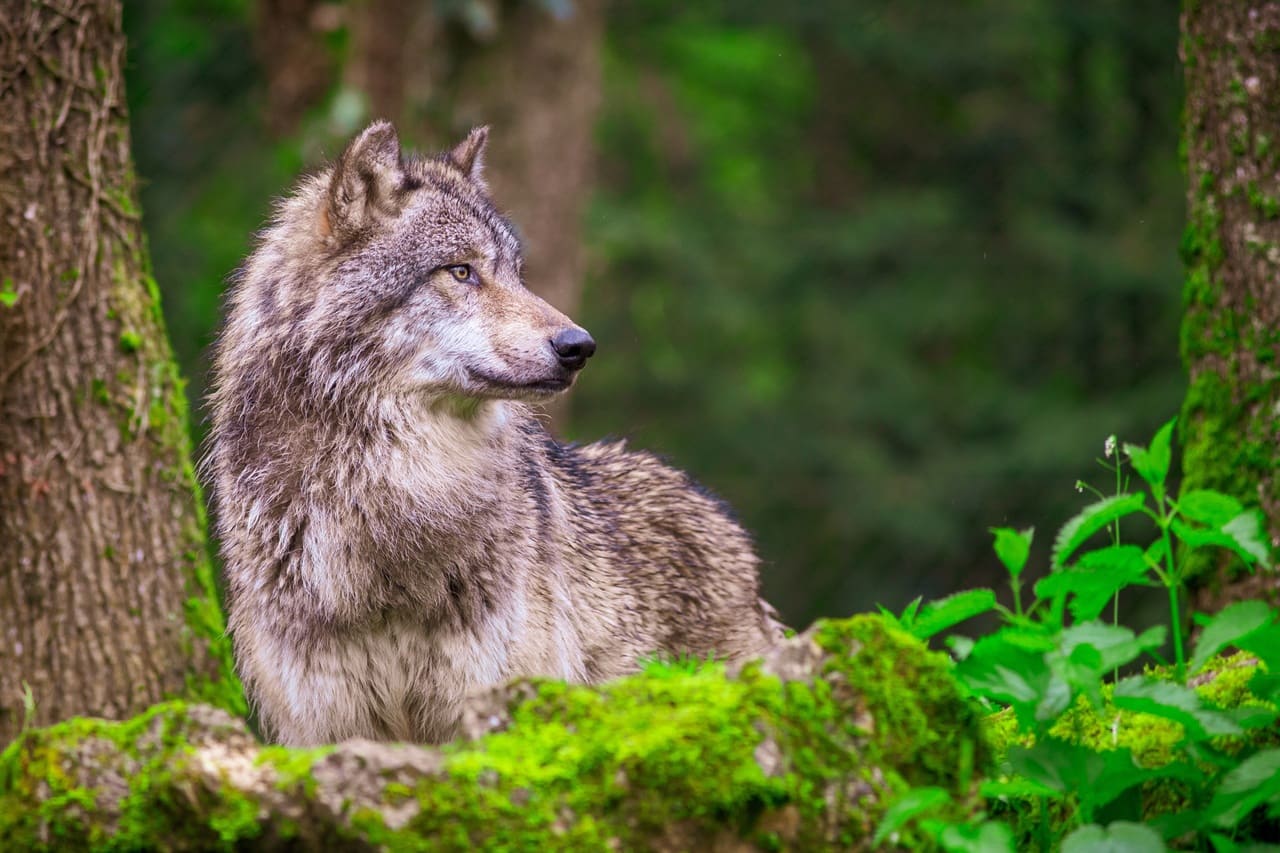
Advocates of the wolf emphasize its ecological function: it regulates wildlife populations, can help prevent excessive wildlife browsing in forests, and strengthens the long-term health of wild populations. In many countries it is therefore regarded as a keystone species. Wolves fulfill an important ecological and economic role. Almost half of all forests in Switzerland protect settlements or infrastructure from natural hazards.
The majority of livestock that die in Switzerland do not perish at the hands of the wolf, but as a result of industrial livestock farming itself.
Wolf kills are – compared to the millions of livestock animals killed by farming associations – small in number.
The debate over the wolf points to broader societal questions: our meat consumption, our agricultural policy, and our relationship with wilderness.
Further articles
- Swiss meadows are losing biodiversity at an alarming rate
- When sheep, cattle and others occupy wildlife habitat
- Swiss animal protection organization criticizes planned wolf culls as a threat to pack structures and livestock protection
- In Graubünden, wolf mismanagement runs rampant
- Val Fex: When the livestock protection concept is more full of holes than the fence
- Shooting instead of protection – Switzerland on the path to silent wolf extermination
- Communication failure at the Office for Hunting and Fishing Graubünden
- Illegal wolf hunting in Switzerland
- Wolf cubs in Switzerland under fire
- Switzerland sells wolf massacre as success
- Sloppiness in the office of Katrin Schneeberger
- Livestock grazing alters the soil, plant life, and insect populations
- The senseless hunt for wolves in Switzerland
- The truth about sheep mortality in Switzerland: causes and statistics
- Wolf culls in Switzerland: concern over party politician Albert Rösti
- Let us stop the SVP's destructive rage
- Participatory campaign: An appeal for change in Switzerland
- 200 environmental organizations from 6 continents call on the Swiss government: Stop the wolf cull
- Federal Council faces sharp criticism from wolf experts
- The consequences of controversial wolf management in Switzerland
- Wolf: Federal Councillor Rösti (SVP) circumvents law and order
- Es Burebüebli mahn i nit
- Are FOEN and hunting authorities still operating responsibly?
- Federal Councillor Albert Rösti tramples on the will of the people
- The consequences of controversial wolf management in Switzerland
- Too many sheep are harming biodiversity
- Agricultural use destroys alpine meadows
- Livestock losses despite herd protection – how is that possible?
- The rotten apple in the St. Gallen hunting administration
- Pro Natura calls for comprehensive strategy for summer sheep grazing
- According to Agridea study, herd protection with dogs works well
- Thanks to herd protection, wolves kill fewer livestock in Switzerland
- Farmers treat fields as a disposal dump
- Biomass of wildlife
- On sheep farmers and vague authorities
- The double standards of wolf opponents